Accelerating Claims Accuracy and Efficiency with AI-Powered Decision Support

AI-Powered Cp Hero Dot Workers’
Compensation Medical Claim Settlement Platform

Discover how MindInventory built an AI platform that transforms unstructured medical
guidelines into accurate workers’ compensation claim decisions.
AI-Powered Workers’ Compensation Medical Claim Settlement Platform
Tech Stack
React
TypeScript
Node.js
NestJS
SQL
MongoDB
AWS

Project
Overview

Bringing Structure to Complexity
AI-Driven Claim Processing Transformation

What We Do?

A US-based medical claim processing management company set out to simplify and speed up workers’ compensation claim settlement across the United States. The challenge was not the lack of data but the lack of structure, consistency, and real-time usability across state-specific treatment guidelines published by multiple authorized bodies.

MindInventory partnered as the technology, data, and AI execution partner, translating the client’s product vision into a scalable, production-ready platform. The engagement focused on building a unified data and AI foundation that could convert unstructured medical and regulatory content into clear, actionable claim decisions for insurance providers operating nationwide.

Recruitment

The client envisioned a single, intelligent
pipeline that could:
No Objectives
(01) Ingest unstructured treatment and injury data
(02) Understand medical intent
(03) Match treatments with the correct state-wise guidelines
(04) Provide insurers with a clear basis for claim settlement decisions
(05) Act as a single source of truth for guideline-driven settlements
AI-Powered Workers’ Compensation Medical Claim Settlement Platform

Challenges

Lack of structured, consistent, and real-time
data slowed claim processing efficiency.
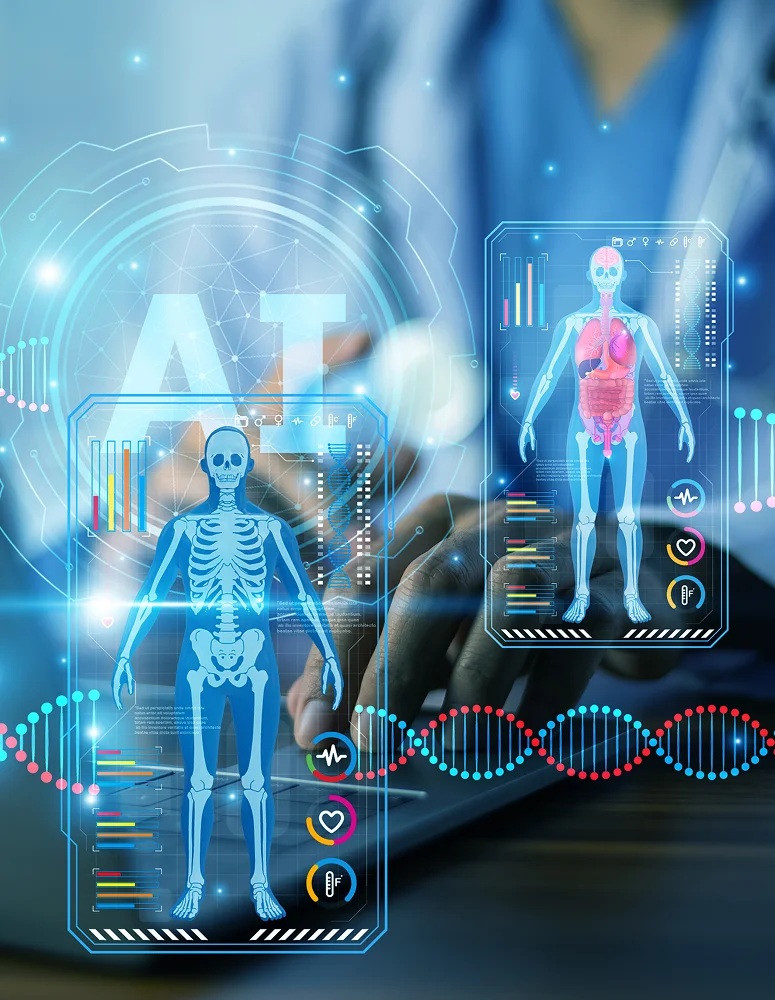
State-Specific Treatment Variability
Workers’ compensation treatment guidelines vary significantly across states, creating complexity for insurers operating in multiple jurisdictions.
Unstructured Medical & Regulatory Data
Most treatment guidelines and clinical inputs existed in unstructured text formats, requiring manual interpretation by domain experts and slowing down claim authorization timelines.
Inconsistent Medical Terminology
Medical descriptions varied widely between doctors, insurers, and guideline publishers. Differences in vocabulary made it difficult to reliably map treatments to standard coding systems such as ICD-10, CPT, HCPCS, and RxNorm.
Disconnected Guideline Sources
Treatment guidance was spread across 18+ authorized publishers, forcing claims teams to search multiple sources to validate decisions adding time, effort, and risk of inconsistency.
Limited Automation In Decision Support
Without a centralized system, approvals depended heavily on manual reviews, limiting scalability and increasing operational costs for insurers and utilization review teams.
AI-Powered Workers’ Compensation Medical Claim Settlement Platform

Solution


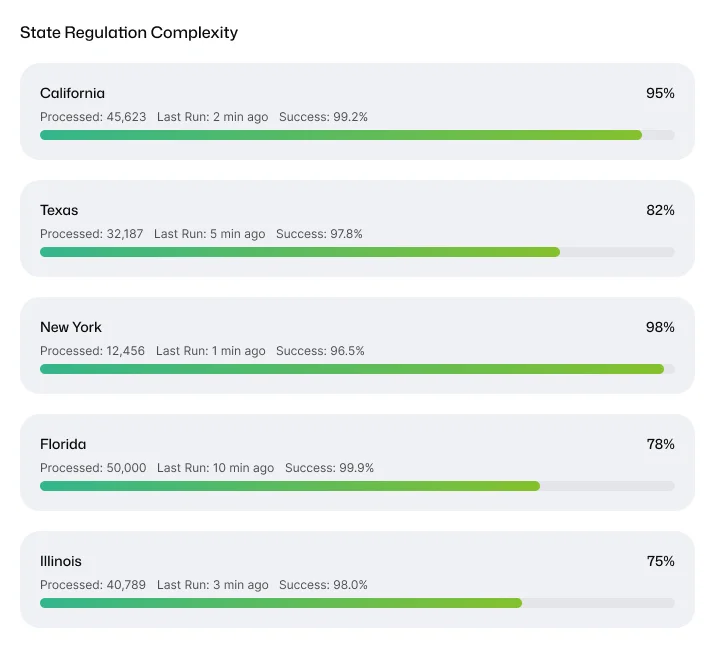
Built a rule engine that dynamically applies state-specific treatment guidelines to each claim, enabling accurate, jurisdiction-aware decision recommendations without manual cross-referencing.
State-Aware Claim Decision Logic automation interface
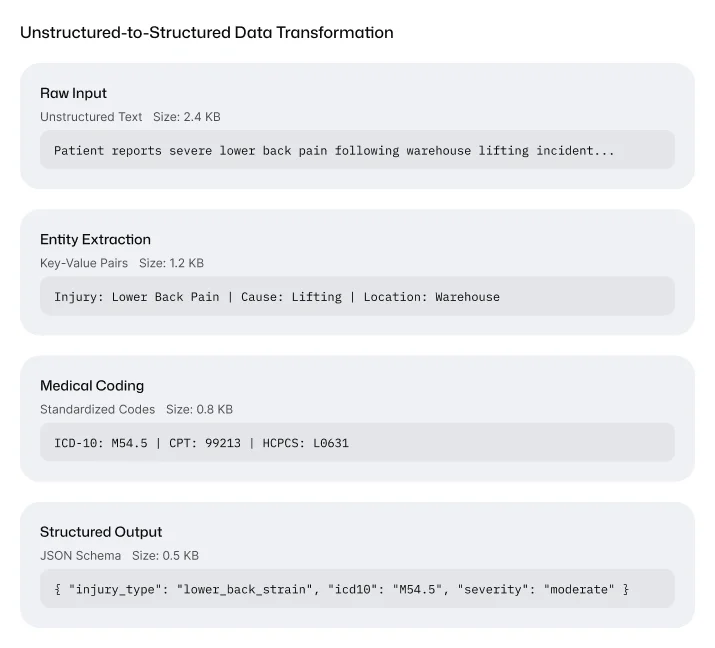
Developed NLP-powered pipelines to extract, parse, and standardize clinical data from raw PDFs and text documents, converting unstructured content into structured, queryable medical records.
Unstructured-to-Structured Data Transformation process via NLP
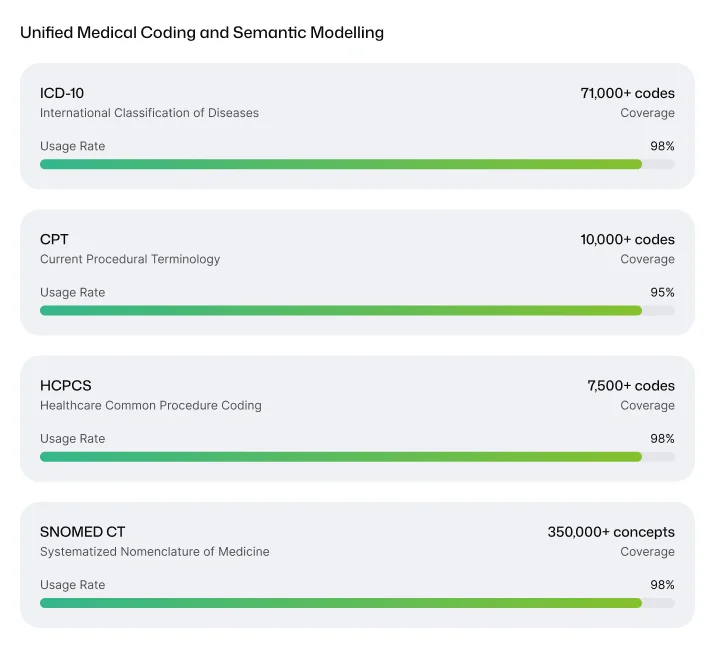
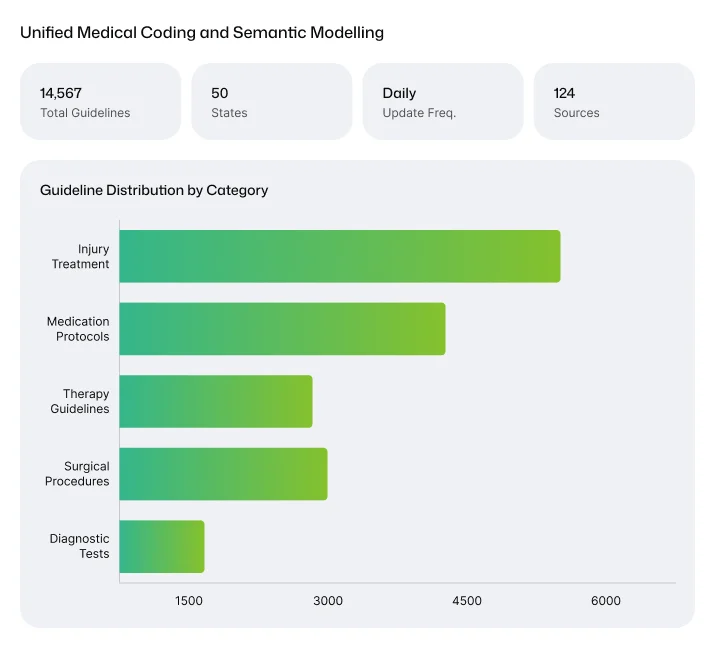
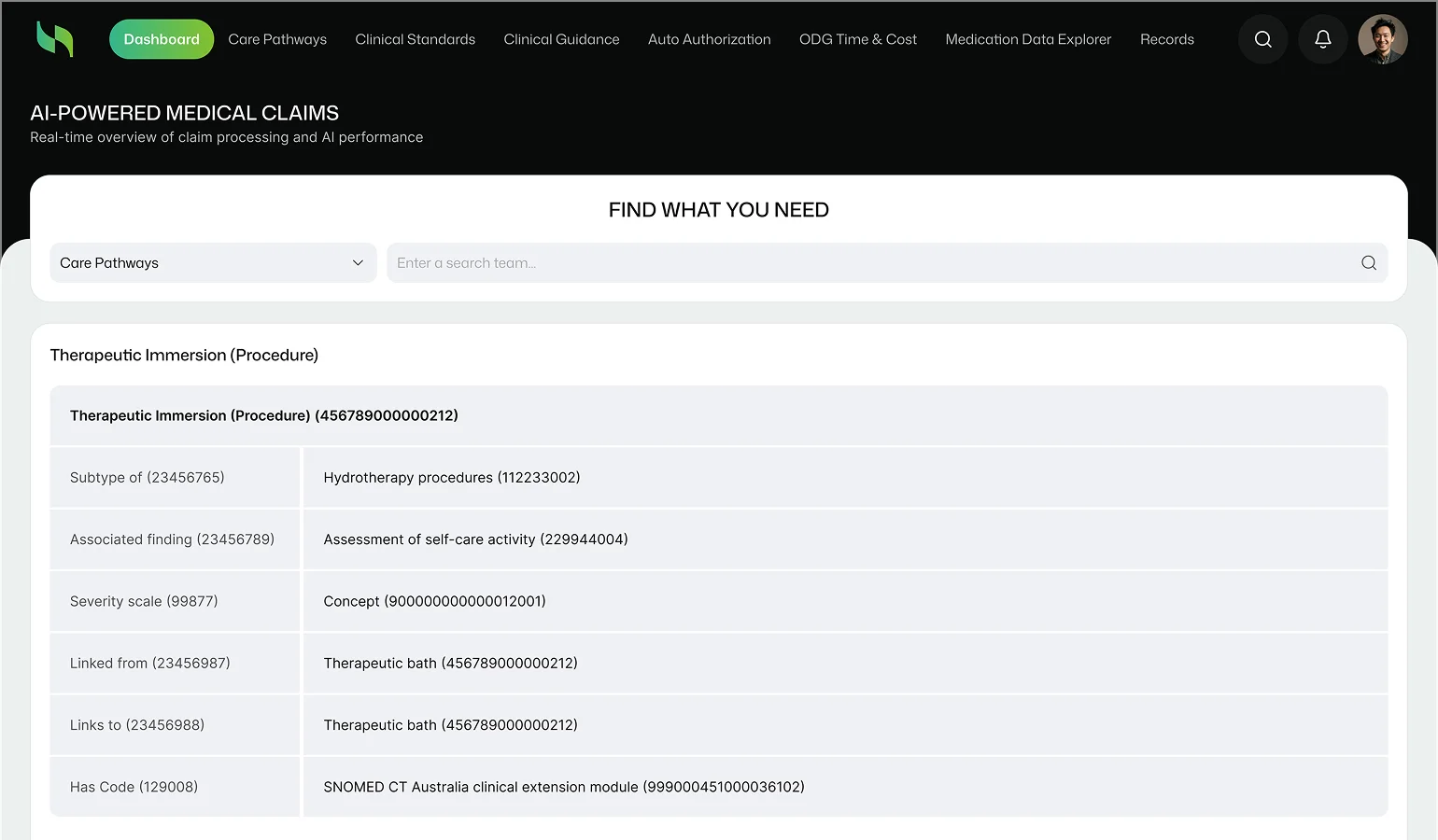
Implemented standardized mapping across ICD-10, CPT, HCPCS, RxNorm, and SNOMED relationships, creating a consistent vocabulary across the platform.
Unified Medical Coding and Semantic Modelling standardizing clinical terms
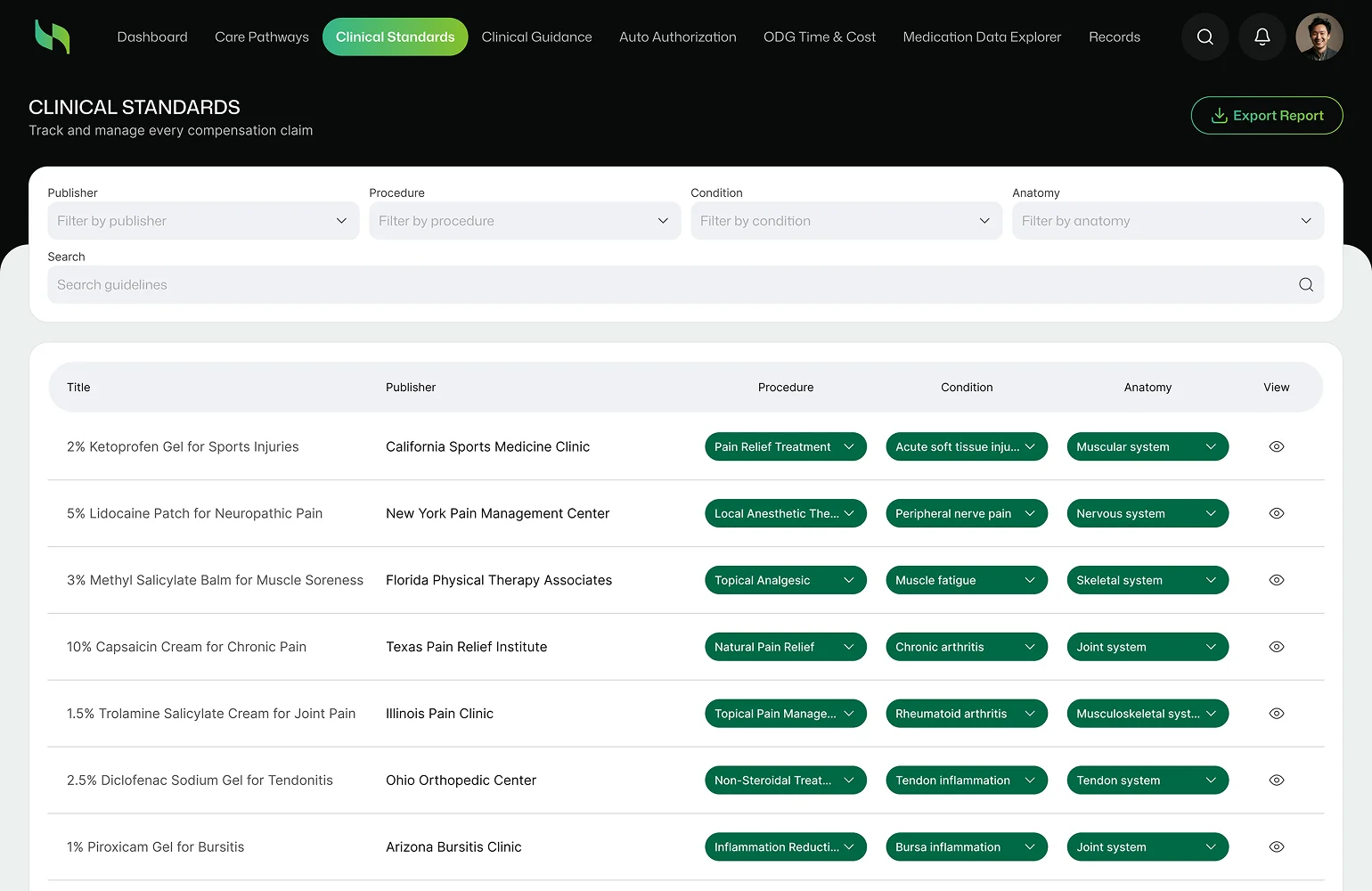
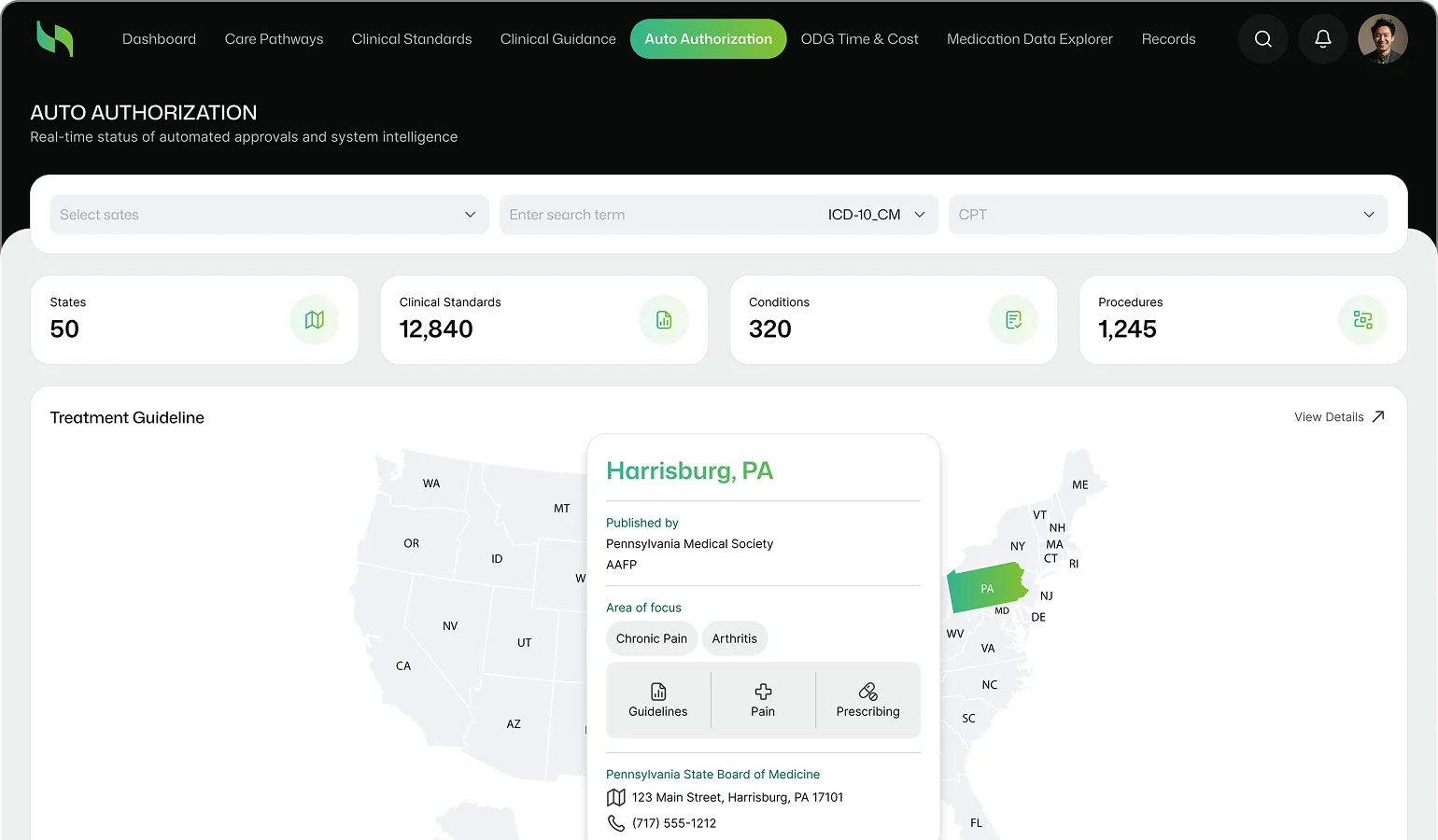
Aggregated guidelines from 18+ authorized publishers into a single searchable repository, giving claim teams instant access to the most current and relevant treatment standards.
Centralized Guideline Repository from authorized publishers
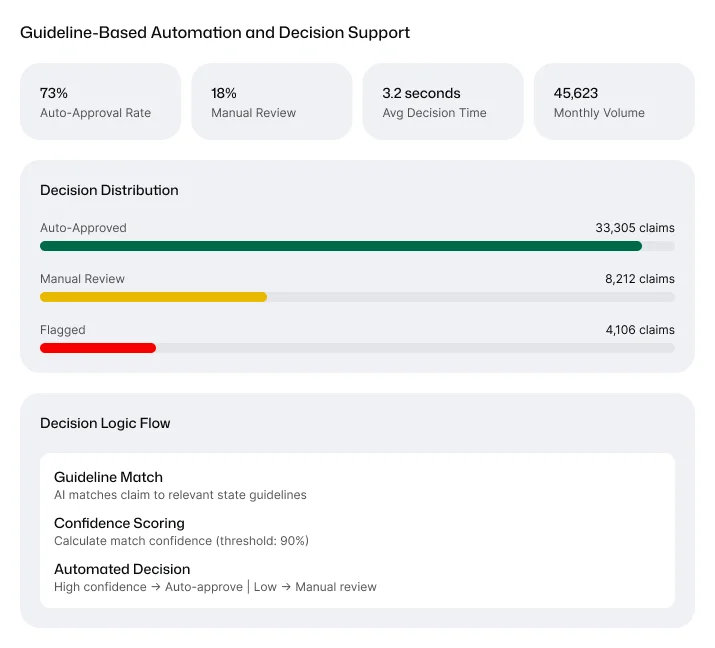
Automated claim decision recommendations by matching clinical inputs against standardized guidelines, reducing manual review dependency and accelerating insurer response times.
Guideline-Based Automation and Decision Support accelerating response times
AI solution architecture for Workers' Compensation Medical Claim Settlement

Strategic
Approach


Data Engineering &
Continuous Updates
  • Automated extraction of treatment guidelines from authorized publishers
  • Regular updates to reflect changes in state regulations and evidence-based standards
  • Centralized storage ensuring a single source of truth
Medical Data
Structuring
  • Hierarchical modeling of anatomy, conditions, and procedures
  • Classification of procedures into therapeutic and surgical categories
  • Mapping to ICD-10, CPT, HCPCS, RxNorm, and SNOMED relationships
AI & Prompt
Engineering
  • Prompt-driven interfaces for claim and utilization review teams
  • Natural language input translated into structured, guideline-aligned outputs
  • Reduced dependency on manual coding and clinical expertise
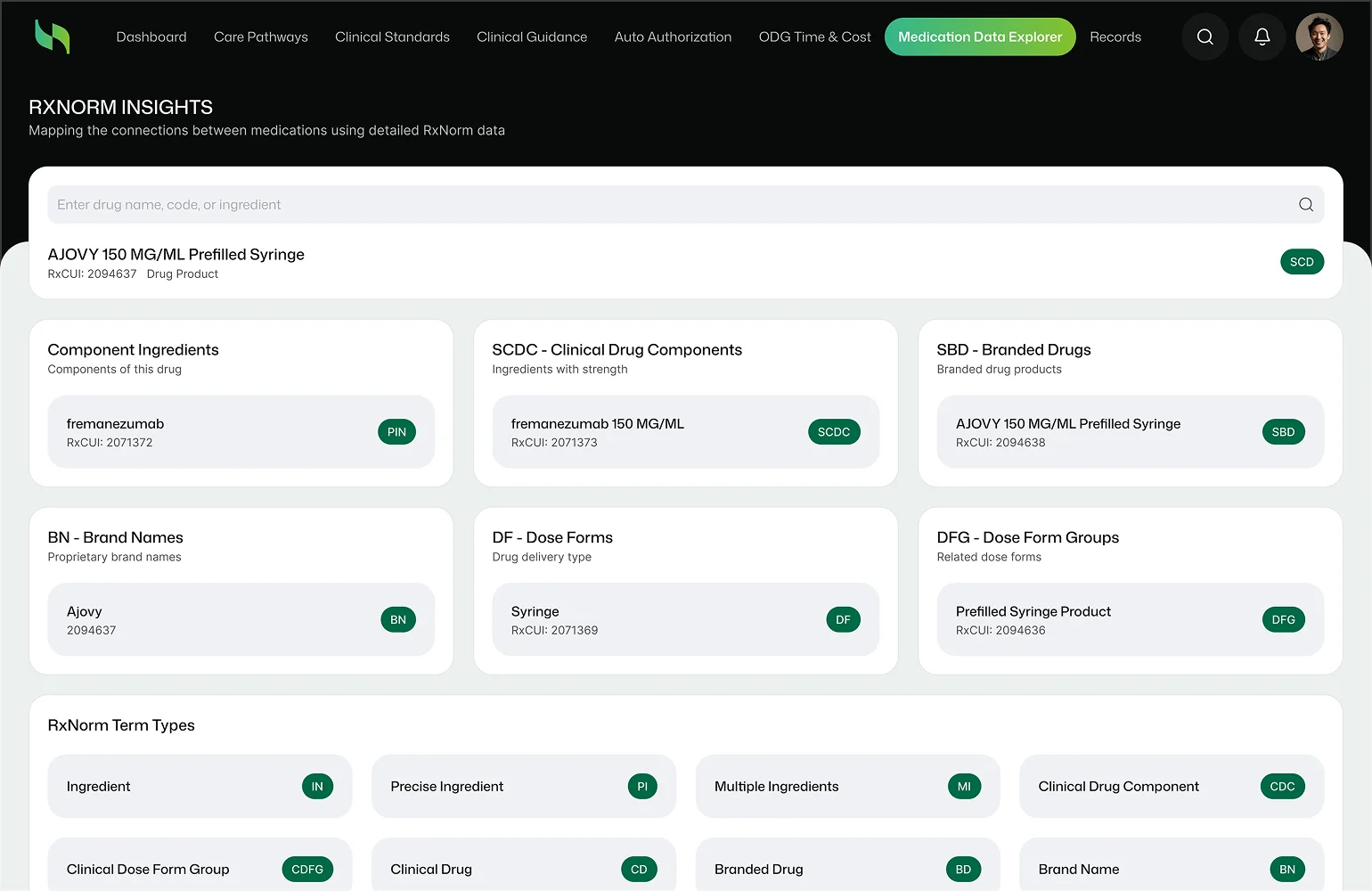
Strategic approach for medical claim processing including Data Engineering, Medical Structuring and AI

Impact


20%
reduction in claim
processing duration
33%
lower overall claim costs
25%
decrease in manual claim
handling
Financial and operational impact of AI-Powered Workers’ Compensation claim settlement

Managing Complex, Regulation-Heavy Processes Across Geographies?

Discover how AI-led data engineering and scalable software platforms can bring clarity, speed, and control to enterprise decision-making.
Abstract DNA genetic engineering visualization for enterprise medical AI platforms