LLM Development Company for Production LLM Applications

MindInventory builds LLM applications for systems where a wrong answer costs money, time, or compliance standing. You get a large language model wired into the software you already run, tuned only as far as your own test data justifies, and an evaluation harness that transfers to your team at handover, so you can verify quality long after we leave.

Trusted By Global Clients, Including Fortune 500 Companies

Built by our team, in production today
12.5M+ minutes

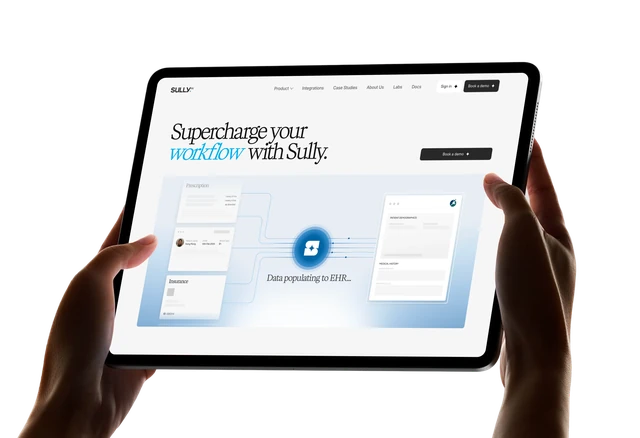
of clinical documentation automated on the Sully AI platform, where our team built the LLM layer that routes each task to OpenAI or Llama models

50 to 70% less

manual data entry at document intake on a US tax advisory platform, where Claude interprets what Amazon Textract extracts

Two model providers

routed by task in a single production system, because a scheduling exchange and a clinical note carry different accuracy and latency requirements

What you get, and when you get it
Before development

A model decision record: which model families were tested, how each scored on your data, and the estimated run cost at your volume

Before any tuning

An evaluation set built from your own examples, so fine-tuning is a decision with evidence behind it

At handover

The evaluation harness, prompts, datasets, adapters, and pipelines, owned by you. Your data never trains models for anyone else

70+

AI and ML specialists

300+

Engineering specialists

2700+

Projects delivered

1800+

Clients served

15+

Years in business

ISO 42001: 2023

ISO 42001: 2023

ISO 27001: 2022

ISO 27001: 2022

ISO 9001: 2015

ISO 9001: 2015

SOC2 Type II

SOC2 Type II

HIPAA

HIPAA

GDPR

GDPR

LLM Application Development Services We Deliver

Four services make up LLM application development at MindInventory, and most engagements use two or three of them. Integration and prompt and context engineering are part of almost every build. Fine-tuning and distillation are added only when your evaluation results show a measured gap that prompting cannot close.

LLM integration into systems you already run

LLM integration connects a model to your applications, data, and access controls so it can work inside real workflows. You receive a gateway layer with pinned model versions, provider fallback, and rate limits; structured output through JSON schema or function calling, so responses arrive in a shape your code can use; identity passthrough, so the model sees only what the requesting user may see; and call-level tracing with OpenTelemetry or Langfuse. Input and output checks built with NeMo Guardrails or Llama Guard screen for prompt injection and data leakage, and the design follows the OWASP Top 10 for LLM Applications. The result is an LLM your operations and security teams can approve for production.

Prompt engineering and context engineering

Prompt engineering is the design and testing of the instructions, examples, and output formats a model receives. Context engineering decides what information enters each call and in what order: instructions, reference passages, tool results, conversation history, and user-specific permissions, all within a token budget. Both matter because longer context is never free. Cost and latency rise with every token, and models can overlook details buried deep in a long input. We keep stable instructions at the front so providers can cache them, trim history the task does not need, and test every prompt version with Promptfoo or DeepEval. You receive a prompt library you can change safely, with a test suite that shows what each change did.

LLM fine-tuning with LoRA and QLoRA

LLM fine-tuning further trains a model on your examples to change how it behaves: a required output format, your terminology, a house tone, or a classification scheme. It is a poor way to teach facts that change, which belong in retrieval. We use supervised fine-tuning and preference tuning with Hugging Face TRL, and train LoRA or QLoRA adapters on open-weight families such as Llama, Mistral, Qwen, and Gemma using Axolotl or Unsloth. Adapters are small files, and one base model served with vLLM can host several of them. You receive the curated dataset, the trained adapter, and a report comparing the tuned model against the base model and the best prompt-only result. If the tuned model does not win, the report says so, and you do not deploy it.

Model distillation for cost and latency

Model distillation trains a smaller student model on the outputs of a larger teacher model for one narrow task. It pays off when a task is stable, request volume is high, and latency or self-hosting requirements rule out a large model on every call. Before starting, we confirm that the teacher model’s license and provider terms permit using its output to train another model, because several do not allow every use. The student model is scored on the same evaluation set as the teacher, and it ships only if it stays inside the accuracy tolerance you agreed in advance. You get a model you can run at a fraction of the size, with evidence of exactly what it gave up.


LLM Applications We Have Put Into Production

At MindInventory, we have put LLM systems into clinical and financial workflows where a wrong output reaches a patient record or a tax calculation. The build below shows what that gives you: each task routed to the model that fits it, a person accountable for every consequential output, and accuracy measured continuously after launch.

Sully AI: task-routed LLMs for clinical documentation

Health systems needed documentation, coding and triage that stayed accurate across specialties, with every interaction touching patient data auditable. As Sully AI's dedicated build team, we helped deliver six agents on an LLM layer that routes each task to OpenAI or Llama models, with a licensed provider approving every note before it enters the record.

Outcomes:

12.5M+minutes of clinical documentation automated
2xProviders handling the workload without additional hours
NativeEpic and athenahealth integration
Check Case Study

What LLM development changes in your business

LLM development services turn a general-purpose large language model into a dependable part of your product or operations. The work covers choosing and routing models, engineering the prompts and context each call receives, connecting the model to your systems and permissions, and fine-tuning or distilling a model only when measured results show prompting has reached its limit.
What you get

A working LLM application inside your systems of record. It reads and writes through your existing APIs, and every call respects your current user roles.

A versioned prompt and context library in your repository. Each prompt carries regression tests, so a wording change is reviewed and tested like a code change.

An evaluation harness built from your own examples before model work starts. It transfers to you at handover and scores any future model, prompt, or provider change against the same cases.

A model decision record. It lists which model families were tested, how each scored on your evaluation set, and the estimated run cost at your expected volume.

Ownership of everything we build. Prompts, datasets, pipelines, adapters, and weights where the model license allows it. Your data never trains models for anyone else.

Where you are now
Where you are after launch

Our LLM prototype impressed in demos and breaks on real inputs.

Real failure cases sit in an evaluation set, get fixed, and are retested on every release.

A provider model update changed our output without warning.

Model versions are pinned, and any upgrade must pass your evaluation set before users see it.

Our model API bill grows faster than our usage.

Simple requests route to smaller models and repeated context is cached, so cost follows the work each request needs.

The model returns text our application cannot parse.

Responses are validated against a schema, and invalid output is retried or rejected before it reaches your application.

Nobody can explain why the model gave a particular answer.

Every call is logged with its prompt version, context sources, and model, so any answer can be traced months later.

Why teams choose us for LLM builds

Evaluation before training

You receive a scored evaluation set from your data before we recommend fine-tuning, so you pay for training only when it measurably beats a better prompt.

No lock-in to one provider

Model calls pass through a gateway such as LiteLLM or Portkey, the pattern behind Sully AI's task routing, so switching model families does not mean rewriting your application.

Human approval where errors cost money

Review gates like those on Sully AI and the tax platform ship as standard on consequential output.

A harness you keep

The evaluation harness transfers at handover, so your team can check every future model change without us.

Trust factors

LLM Development Cost And Engagement

Most LLM application builds fall in the Blueprint "Focused AI solution" band: $25,000 to $60,000, delivered in 8 to 14 weeks. That covers one application integrated with your systems, a prompt and context library, and an evaluation harness. Regulated deployments and multi-system programs sit in larger bands, listed in full on our AI development services page.

Three factors move your number most: how ready your data is, including whether labeled examples already exist; how many systems the model must read from and write to; and the regulatory requirements the deployment must meet. Fine-tuning adds labeling effort, which is usually the largest line in a tuning estimate. Run cost is separate from build cost. It scales with tokens per request multiplied by volume, and your model decision record estimates it before development starts, along with the levers that reduce it: routing, caching, distillation, and self-hosting.

Explore AI Services

How an engagement runs

A Stalled Pilot Review of an existing system, or an AI Feasibility Assessment of a new use case.
We build the evaluation set from your examples with your domain experts.
The application, gateway, guardrails, and prompt library, tested against the evaluation set.
Fine-tuning or distillation, only where results show a measured gap.

Monitoring, the evaluation harness, and documentation transfer to your team, with ongoing support for keeping models accurate after launch.

Prompting, Fine-Tuning, Or A Custom LLM?

Start with the least expensive approach that passes your evaluation set, and move down this table only when measured results fall short. Most enterprise LLM applications ship on prompt and context engineering, add retrieval when answers depend on your documents, and use fine-tuning only for behavior that prompting cannot hold.

Approach
Prompt and context engineering
Retrieval over your documents (RAG)
Fine-tuning or distillation
Training a model from scratch
Choose it when
The model already knows the task and needs instructions, examples, and the right inputs
Answers depend on your policies, records, or knowledge that changes often
Behavior must be consistent at volume, or a smaller model must match a larger one on one task
You are a model lab with research funding and unique data at very large scale
It is the wrong choice when
Output still fails your evaluation set after structured prompting and testing
The problem is output format or tone, not missing knowledge
Your facts change weekly, or you have no evaluation set to prove the gain
Almost every enterprise use case. MindInventory does not train foundation models
What you maintain afterward
A versioned prompt library and its tests
Indexes, source content freshness, access rules
Training data, adapters or weights, retraining schedule
A research program, not an application

When LLM development is the wrong purchase

LLM development is the wrong purchase if your core problem is finding the right passage in a large document collection, which is retrieval-augmented generation work, or if the system must plan and carry out multi-step actions across tools, which means building AI agents. It is also the wrong purchase if:

You want the cheapest possible build on a three-week timeline

You need a foundation model trained from scratch or frontier model research

You want a GPU cluster designed and operated as a managed service

You want fine-tuning before anyone has defined what a correct answer looks like

An off-the-shelf assistant already meets the need and nobody owns a business metric a custom build would move

Get a Stalled Pilot Review of your LLM project

Send us the LLM prototype that stopped progressing. In 5 working days, at no cost, you receive a findings document covering the model, data pipeline, evaluation coverage, and integration surface, naming what is missing and what it would take to reach production.

Get an LLM Assessment A friendly white AI robot mascot waving

LLM development FAQs

It depends on what you are changing. Tens to hundreds of reviewed examples can shift output format or tone, while a new classification scheme or heavy domain vocabulary usually needs more. Quality matters more than volume: a small set your experts agree on outperforms a large scraped one. We size the dataset against your evaluation results, and labeling is typically the largest cost in a fine-tuning estimate.

Yes, where the provider offers it. OpenAI and Google provide managed fine-tuning for some GPT and Gemini models, and some Claude models have been tunable through Amazon Bedrock, with availability varying by model and region. The tuned model stays on the provider’s platform and is reachable only from your account, so you own the dataset and results but not downloadable weights. If you need the weights, we tune an open-weight model instead.

Yes, and most production systems should be designed for it. A gateway sends each request to the model that fits its accuracy, latency, and cost needs, and fails over to a second provider during an outage. Sully AI routes tasks across OpenAI and Llama models this way. The evaluation harness keeps this safe, because every model in the route is scored against the same test cases.

We set a latency budget per feature and meet it with the least expensive mix of choices: a smaller or distilled model, streamed responses so users see output immediately, prompt caching for repeated context, shorter context, and parallel calls where steps are independent. For self-hosted models, serving engines such as vLLM or SGLang use continuous batching to raise throughput on the same GPUs.

Yes, through controlled paths. The model either generates a query or calls a predefined function, and the query runs against read-only, permission-scoped views after validation. The model never holds write access or credentials broader than the requesting user’s. For recurring questions, predefined functions are safer and cheaper than free-form query generation, because every possible query is known in advance. We define that function set with your data owners during the build.

Yes, in two common ways. You can use a hosted model family through your own AWS Bedrock, Vertex AI, or Azure AI Foundry account, which keeps traffic inside your existing cloud agreement and region. Or you can run an open-weight model such as Llama, Mistral, or Qwen inside your own VPC or data center, which keeps every token on your infrastructure and moves GPU capacity planning to you. We confirm each provider’s data retention terms in writing before any production data is sent.

Read access to the repository, the prompts and model configuration, a sample of real inputs with the outputs you expected, and a working session with the engineer who knows the system best. Production data can be masked. Within five working days you receive a findings document covering the model, data pipeline, evaluation coverage, and integration surface.
RELATED AI SERVICES

Explore our other related services to enhance the performance of your digital product

AI Development Services

The full build practice, with cost bands, delivery process and production case studies.

RAG Development

When answers must be grounded in your own documents and cite them.

AI Agent Development

Build intelligent AI agents that automate tasks, make decisions, and improve workflows.

Generative AI Development

Create generative AI solutions for content, automation, personalization, and innovation.

AI insights from our engineering team
Written by the people doing the work, for the questions that come up before a project starts.
post
How to Build an LLM? Definition, Use Cases, and Steps

Developing your enterprise-grade AI solution and need to make it live faster? Let’s opt for ready-to-integrate, general-purpose LLMs! But wait, are you ready to tackle challenges generic LLMs create, like…