








AI Development Company

Struggling to turn AI opportunities into measurable business outcomes? MindInventory provides AI development services to help you identify high-value use cases, build custom AI solutions, and integrate intelligent systems into your existing workflows. From machine learning and predictive analytics to Generative AI, AI agents, and computer vision, we engineer secure, scalable AI solutions built around your business goals.

Trusted By Global Clients, Including Fortune 500 Companies

Discovery first

Every engagement opens with discovery that produces a fixed estimate before development begins.

PoC before production

No production build starts without a validated proof of concept on your own data.

Day one

Full IP ownership, including model weights, pipelines and evaluation harnesses.

After launch

MLOps, drift monitoring and retraining, so accuracy holds twelve months later.

70+

AI and ML specialists

300+

Engineering specialists

2700+

Projects delivered

1800+

Clients served

15+

Years in business

ISO 42001: 2023

ISO 42001: 2023

ISO 27001: 2022

ISO 27001: 2022

ISO 9001: 2015

ISO 9001: 2015

SOC2 Type II

SOC2 Type II

HIPAA

HIPAA

GDPR

GDPR

Custom AI Development Services for Real-World Business Challenges

From machine learning and predictive analytics to Generative AI, MindInventory develops custom AI solutions around your business requirements. Our end-to-end custom AI development services cover AI model development, intelligent applications, automation, and AI integration, helping organizations apply AI across products, operations, customer experiences, and decision-making while fitting existing technology environments.

Connecting models to ERP, HRMS, EHR and claims systems without replacing them

Systems that execute multi-step tasks, not just answer questions

AI Copilot Development

Assistants embedded inside software you already ship

AI Voice Agent Development

Real-time voice agents handling live call volume

Document-to-decision workflows, including RPA modernisation

Support and internal assistants with grounded retrieval

Content, summarisation and knowledge-work systems with source attribution

Enterprise search, structured extraction, and tuning when prompting is not enough

Retrieval that grounds answers in your own documents and cites them

Forecasting, risk scoring, recommendation and anomaly detection

MLOps Consulting

Evaluation suites, drift monitoring, retraining and rollback

Demand, capacity and churn forecasting with confidence intervals stated

Pipelines, feature stores and lineage that keep model inputs trustworthy

Detection, segmentation and OCR on cloud, edge or device

Video Analytics

Safety monitoring and activity recognition on continuous feeds

Unstructured documents to structured records, with confidence scoring

Opportunity mapping, architecture selection and a costed roadmap

AI Readiness Assessment

A scored audit of data, team, infrastructure and governance

AI Governance Consulting

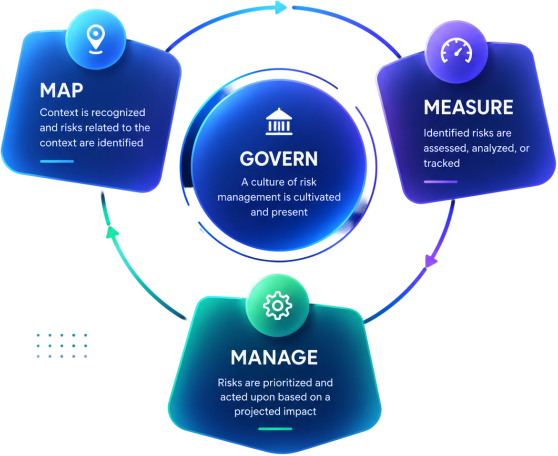
EU AI Act classification, ISO 42001 alignment, provenance and AI security

AI engineers, ML engineers and data scientists as an extension of your team

Engineers who build, deploy and optimize production-ready machine learning models

Data scientists who turn complex data into predictive insights and business decisions

Ready to Turn AI Opportunities Into Business Outcomes?

From AI strategy and PoC validation to deployment and MLOps, we help enterprises build secure AI systems that deliver measurable value.

AI Solutions Backed by Proven Business Outcomes

From strategizing to conceptualizing, evaluating feasibility for scope & ROI, we developed & deployed these solutions and continuously offering post-development assistance for scaling.

Sully AI - clinical copilot and AI workforce

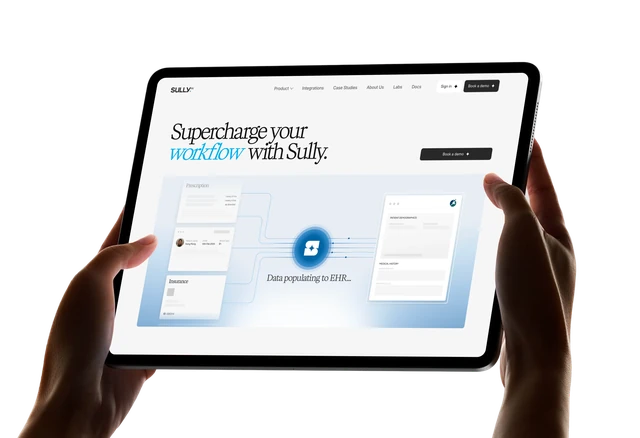
A US healthcare SaaS company wanted to give clinicians a team of AI colleagues, not one more tool to open. We built six agents, covering reception, triage, scribing, clinical consultation, medical coding and care coordination, with an orchestration layer that decides which one handles a given task. It integrates natively with Epic and athenahealth and was built HIPAA-ready throughout.

Outcomes:

2xProviders handling the workload without additional hours
12.5M+minutes of clinical documentation automated
21xreturn on advertising spend

Read Case Study

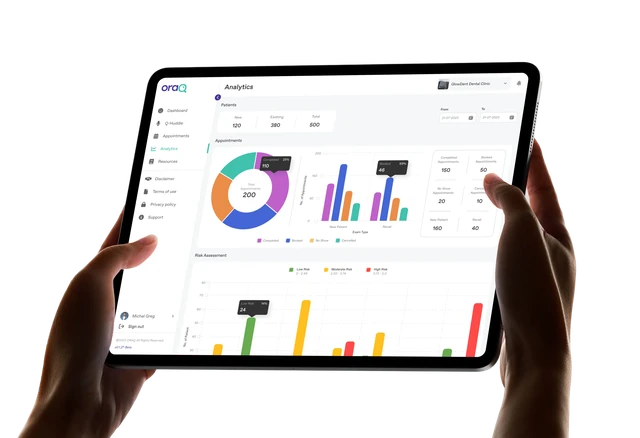
OraQ AI - dental treatment planning AI

Dentists spend the exam explaining risk, and patients accept treatment they can see the reasoning behind. We've worked with OraQ as a dedicated team since 2022, building the risk-scoring models, the digital odontogram and perio charting, and integrations into the practice management systems clinics already run, including Dentrix, Open Dental, ClearDent, Curve and Eaglesoft.

Outcomes:

70%Up to Case acceptance, against an industry norm of 30 to 40%
$250-$330Additional treatment identified per exam
5Major practice management systems
Read Case Study

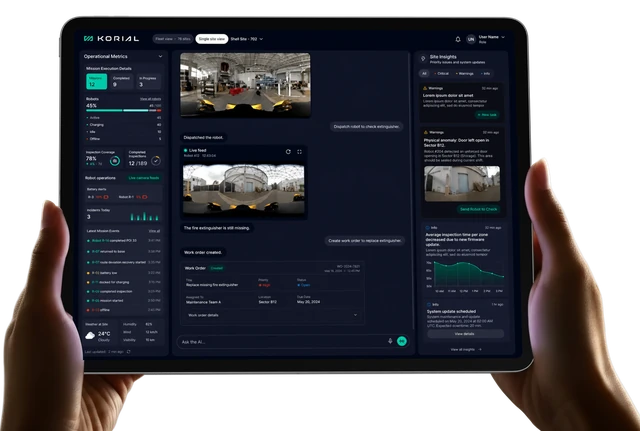
Korial - industrial AI and robotics

Industrial sites run inspection robots from several vendors, each with its own control stack, which leaves operators holding data they can't compare. We built a hardware-agnostic intelligence layer that sits above autonomous robots, drones and fixed sensors, with Unreal Engine 5 digital twin simulation so inspection routes can be tested before anything gets deployed. Clients include Shell, BP and Evonik.

Outcomes:

28%Inspection costs reduced by
40,000+Human inspection hours saved
1M+Autonomous inspections completed
Read Case Study

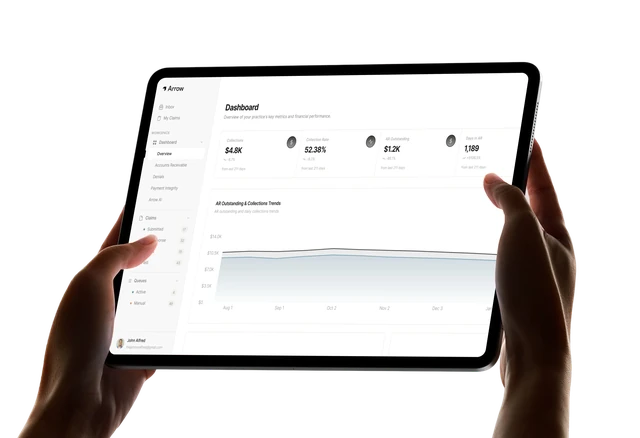
Arrow - healthcare revenue cycle AI

Claim denials are a documentation problem more than a clinical one, and the evidence needed to overturn them sits scattered across systems that don't talk to each other. We built a human-in-the-loop platform for denial investigation, appeal drafting and payer follow-up. It works as a connectivity layer over the EHR and clearinghouse systems the client already ran, replacing none of them.

Outcomes:

85%Claim denials reduced by
18 DaysAccounts receivable days cut from 45
1.5B+Claims processed through the platform
Read Case Study

Passio.AI - nutrition recognition

Nutrition apps lose users to manual food logging faster than to anything else in the product. We built visual food recognition that identifies meals from a photo across a 2.5 million item database at 97% accuracy, with portion estimation and barcode scanning for the cases where the camera alone isn't enough.

Outcomes:

97%Recognition accuracy across 2.5M+ food items
1 PhotoPortion size estimated from a single photo
3rd PartyDelivered as an SDK for integration into third-party apps

Cost-effective services from MindInventory made it easier to scale the business efficiently. Their reliability and ability to quickly find the right resources are highly appreciated.

Dmitriy Richard Starson, CEO, Passio.ai
Read Case Study

Shoorah - AI mental wellness platform

A UK wellness company wanted always-available support between therapy sessions, in a category where getting the tone wrong carries real consequences. We engineered the AI wellness ecosystem behind the platform, which has since carried over 120,000 AI therapy conversations.

Outcomes:

120,000+AI therapy conversations delivered
42+User retention rate for 30 days
1,000+Five-star reviews across app stores
£7MContributed to a seed round
Read Case Study

Custom Model, Fine-Tuned Model, or Pre-Built API?

Most AI projects do not need a custom model. The choice comes down to how fast your knowledge changes, how much differentiation the model itself provides, and who needs to own the result.

Matrix
Build time
Data required
Who owns the model
Right when
Pre-built API
2 to 6 weeks
None, or documents for retrieval
The provider
Speed beats differentiation
Fine-tuned model
6 to 16 weeks
Thousands of labelled examples
Weights yours, base model theirs
Base model accuracy falls short
Custom model
6 to 12+ months
Large domain-specific dataset
Entirely yours
The model is the moat

Around eight in ten engagements we scope resolve to the first two columns.

Structured Process We Follow to Build AI Systems

From AI strategy and data engineering to model development, deployment, and MLOps, we follow a structured approach to build scalable, secure, and production-ready AI solutions tailored to your business goals.

01

Discovery and feasibility

Opportunity mapping, data readiness review, technical feasibility, success metrics. Produces a written recommendation and a fixed estimate before development begins.

02

Data engineering

Consolidate, clean and structure source data. Pipelines that keep training and production data aligned across the lifecycle.

03

Architecture and build

Choose between retrieval, fine-tuning, classical ML and custom architectures, then build to balance accuracy, latency, inference cost and maintainability.

04

Evaluation and validation

Golden-set testing for accuracy, bias, robustness and adversarial failure. The harness is handed over as a deliverable rather than kept internal.

05

Deployment and integration

Into existing applications, workflows and enterprise systems through APIs, cloud platforms or embedded inference.

06

MLOps

Monitoring, drift detection, retraining pipelines and cost optimization.

How Much Does AI Development Cost and How Long Does It Take?

AI development timelines and budgets depend less on the AI model itself and more on what the solution needs to accomplish. A focused proof of concept can cost under $25,000 and take 6 to 10 weeks, while production AI systems typically range from $25,000 to $150,000+ based on data readiness, integrations, security, scalability, and regulatory requirements.

Get an Estimate for Your Use Case
Engagement
Discovery and feasibility
Proof of concept
Focused AI solution
Production AI system
Large or regulated programme
Typical cost
Scoped separately
Under $25,000
$25,000 to $60,000
$60,000 to $150,000
$150,000+
Timeline
1 to 2 weeks
6 to 10 weeks
8 to 14 weeks
4 to 8 months
8 to 14 months
What it covers
Data readiness review, architecture options, fixed estimate
Working model validated on your data, with measured results
Chatbots, document intelligence, workflow automation
Agents, RAG platforms, predictive systems, enterprise integration
Custom models, large datasets, real-time inference, regulated deployment

How We Secure and Govern AI Systems

What ISO 42001 requires

Risk classification per system, impact assessment before deployment, data provenance, defined human oversight and post-launch monitoring. Where ISO 27001 governs how data is stored, 42001 governs how AI systems are managed across their lifecycle.

Frameworks we build to

EU AI Act, NIST AI RMF, GDPR, HIPAA and HITECH, CCPA and CPRA, GLBA, and the OWASP Top 10 for LLM Applications.

Illustration representing AI security and governance controls

Preventing hallucination

Retrieval grounds answers in source documents, output schemas constrain what the model may return, a validation layer checks claims against the source, and an evaluation harness tests against a fixed benchmark. High-risk actions require human confirmation before execution.

Security in agentic systems

Prompt injection filtering, tool-call authorisation with confirmation on writes, dry-run on irreversible actions, PII redaction, jailbreak detection, and a red-team harness in CI.

AI Technologies and Tools We Use

We use proven AI models, cloud platforms, data technologies, and development tools to build AI solutions that are scalable, secure, and ready for production.

Frontier models
Claude GPT Gemini Grok
Open-weight models
Llama Mistral DeepSeek Qwen Gemma Phi
Agent orchestration
LangGraph CrewAI AutoGen OpenAI Agents SDK Google ADK
Tools and interoperability
MCP Function calling RBAC Structured output
Retrieval
LangChain LlamaIndex GraphRAG Hybrid search Reranking
Vector stores
Pinecone Weaviate Qdrant Milvus Pgvector Chroma
Document processing
Unstructured LlamaParse Docling OCR
Fine-tuning
LoRA QLoRA Axolotl Unsloth Hugging Face TRL
Inference and serving
vLLM SGLang TensorRT-LLM Triton BentoML Ray Serve Ollama
Model gateways
LiteLLM Portkey OpenRouter
Evaluation
Ragas DeepEval Promptfoo Braintrust LangSmith
Observability
Langfuse Arize Phoenix Helicone OpenTelemetry Datadog
Guardrails
NeMo Guardrails Guardrails AI Llama Guard
Data engineering
Python PySpark Polars Airflow Dagster dbt Databricks Snowflake
Machine learning
PyTorch TensorFlow Scikit-learn XGBoost LightGBM
Computer vision
YOLO Detectron2 Segment Anything OpenCV Roboflow
Voice and multimodal
Whisper Deepgram ElevenLabs Cartesia LiveKit Pipecat
Cloud and MLOps
AWS SageMaker & Bedrock Vertex AI Azure AI Foundry MLflow Kubernetes

AI Solutions Designed for Industry-Specific Challenges

Be it an AI-enabled demand forecasting system for retail, a fraud detection system for a financial institution, or a medical imaging solution for healthcare, we provide AI development services to build solutions for specific use cases.
We build and embed AI in healthcare from clinical decision support systems and medical imaging AI to remote patient monitoring and patient engagement assistants. They help healthcare organizations improve diagnosis accuracy, streamline care delivery, and unlock insights from clinical data while supporting regulatory compliance.
  • HIPAA-compliant AI development
  • Medical Imaging & Diagnostics AI
  • AI-Powered Remote Patient Monitoring
  • Healthcare Predictive Analytics
  • Conversational AI for Patient Engagement
We integrate AI in fintech, building AI-powered fraud detection systems, credit risk scoring models, intelligent underwriting platforms, and financial assistants. These systems enable fintech companies to reduce risk, improve decision-making, and deliver faster, more personalized financial services.
  • AI Fraud Detection Systems
  • Credit Risk Scoring Models
  • Algorithmic Trading Systems
  • Intelligent Loan Underwriting
  • AI-Powered Financial Assistants
We implement AI in real estate platforms, like recommendation engines & demand forecasting systems for dynamic pricing platforms and inventory intelligence solutions. These solutions help retailers boost revenue, optimize operations, and deliver customized experiences to customers.
  • AI Property Valuation Models
  • Predictive Market Analytics
  • AI-Powered Lead Scoring Systems
  • Virtual Property Assistants
  • Computer Vision for Property Analysis
We build solutions to implement AI in education. These solutions range from adaptive learning platforms and AI tutors to automated grading systems and student performance analytics, enabling institutions to deliver personalized learning experiences.
  • Adaptive Learning Systems
  • AI Tutoring Platforms
  • Automated Assessment & Grading
  • Student Performance Analytics
  • Conversational AI Learning Assistants
From recommendation engines and demand forecasting systems to dynamic pricing platforms and inventory intelligence solutions, we integrate AI in retail, enabling retailers to boost revenue, optimize operations, and deliver tailored shopping experiences.
  • AI Recommendation Engines
  • Demand Forecasting Systems
  • Dynamic Pricing Algorithms
  • Retail Chatbots & Virtual Assistants
  • Computer Vision for Inventory Management
We implement AI in sports by building athlete performance analytics platforms, injury prediction systems, AI scouting tools, and fan engagement solutions. Using these solutions, sports organizations improve performance, optimize talent development, and strengthen audience engagement.
  • Athlete Performance Analytics
  • Injury Prediction Models
  • Computer Vision for Game Analysis
  • AI Scouting & Talent Analytics
  • Fan Engagement AI Platforms
We architect solutions to implement AI in manufacturing, ranging from predictive maintenance systems and AI-powered quality inspection to production optimization and digital twin intelligence. With these solutions, manufacturers reduce downtime, improve product quality, and increase operational efficiency.
  • Predictive Maintenance Systems
  • AI-Based Quality Inspection (Computer Vision)
  • Production Line Optimization AI
  • Digital Twin Intelligence Systems
  • Autonomous Robotics & Process Automation
We develop and deploy AI in energy management by building energy forecasting systems, smart grid optimization platforms, load balancing solutions, and predictive maintenance tools that help organizations improve energy efficiency, reduce costs, and optimize infrastructure performance.
  • AI Energy Consumption Forecasting
  • Smart Grid Optimization Systems
  • AI-Based Load Balancing Platforms
  • Predictive Asset Maintenance
  • Intelligent Energy Monitoring & Analytics

Why Teams Choose Us for AI Builds

Four things separate this from a typical AI engagement. Discovery ends in a fixed approach rather than a range that moves. The evaluation harness transfers to you as a deliverable. The AI team draws on a 300+ person engineering organisation with fifteen years of integration work behind it. And you own the code, the model weights, the pipelines and the documentation from day one.

Discovery produces a number, not a range that moves

Every engagement opens with discovery ending in a fixed estimate. Scope changes are change requests, not surprises.

The evaluation harness is a deliverable

You receive the benchmark set, the scoring functions and the CI suite, so your team can verify quality after we leave without rebuilding the measurement apparatus.

Integration engineers, not only model engineers

The AI team draws on a 300+ person organisation that has spent fifteen years connecting systems. Most AI projects do not fail at the model.

You own it all from day one

Source code, model weights, pipelines, evaluation harnesses and documentation transfer on delivery. Nothing retained, nothing licensed back, and your data never trains models for anyone else.

Have an AI Use Case in Mind?

Let’s assess your requirements, data, integrations, and business goals to define a practical path from AI concept to production.

Frequently Asked Questions

Explore answers to common questions about AI development services and how our engineering process works.

We build, deploy and maintain AI systems that run in production against real business data. That covers identifying which problems are worth solving, preparing the data, building and validating models, integrating them into existing applications, and monitoring them after launch. The stages most often skipped elsewhere are data preparation and post-launch monitoring, which is why most pilots never become systems.

Retrieval-augmented generation connects a model to your own documents at query time, so answers are grounded in current source material and can cite it. Fine-tuning changes the model’s weights so it learns a domain’s vocabulary, tone and output format. Use RAG when knowledge changes or answers must cite a source. Use fine-tuning when you need consistent behaviour or output structure. Fine-tuning to add facts is the most common expensive mistake in enterprise AI.

A pre-built API gives you a model that already exists, with no training required and the provider owning it. A custom model is trained on your data and owned entirely by you, at ten to twenty times the cost and time. Between them sits fine-tuning, which adapts an existing model to your domain. Around eight in ten engagements we scope resolve to an API or a fine-tune.

Enough of it, clean enough, and accessible. Discovery audits volume, quality, labelling and access rights against the model you want, and answers this specifically rather than generally. A project that fails the data test does not become viable by spending more on it.

Three tests. Does the data support the intended model? Is there a measurable business metric it would move, with a named owner? Is there a realistic path from a working model into a daily workflow? Failing any one of them means the recommendation is not to build, and that goes in writing.

A fixed benchmark set from your real data, expected outputs agreed with your domain experts, scoring functions per quality dimension, and a CI regression suite running on every prompt, model or retrieval change. Retrieval quality is scored separately from generation quality. It transfers to you at handover.

Against the workload rather than against a contract, weighing accuracy on your task, latency budget, inference cost at your volume, and data residency requirements. We architect for portability so a model can be replaced without rebuilding the system around it, because the leaderboard changes every few weeks.

A chatbot answers questions inside a conversation. An agent executes multi-step tasks by calling tools, maintaining state across steps, and taking actions in other systems. The engineering difference is authorisation and failure handling: a wrong chatbot answer is a bad answer, a wrong agent action is a changed record.

It depends entirely on the reversibility of the action. Read operations and draft generation run unsupervised. Writes, approvals, payments and anything affecting a patient, a claim or a customer record run behind a confirmation gate by default. That boundary is set during architecture, not left to the model.

Budget 15 to 20 percent of the build cost annually for monitoring, drift detection, retraining, evaluation and inference cost optimisation. This is the line most budgets omit, and it is the difference between a system that still works in month twelve and one that quietly stopped being accurate in month four.

Fragmented source data with no existing pipelines, integration with legacy systems that lack APIs, regulated deployment requiring documented evidence, real-time latency requirements, and on-premise or air-gapped hosting. Model sophistication is rarely the driver.

Both. Hosted frontier models where they are the right tool, open-weight models deployed inside your infrastructure where data cannot leave your environment or where unit cost at volume makes API pricing untenable. The choice is made on data residency and cost per inference, not on preference.

Through measurement rather than assurance. Fairness criteria relevant to the use case are defined during discovery, tested in the evaluation harness alongside accuracy, and reported as results rather than summarised. Where a system affects a patient, a claim or a credit outcome, decision provenance is built into the architecture so any output can be reconstructed.

Input filtering for injection patterns and untrusted content, treating anything retrieved or fetched as data rather than instruction, tool-call authorisation with confirmation on writes and dry-run on irreversible actions, output filtering before anything reaches a user, and a red-team harness running in CI. Agents that call tools are a different threat surface from models that only generate text.

It depends on the risk tier your use case falls into and whether the system touches the EU market, not on where it was built. Systems used in employment, credit, education, essential services and certain healthcare contexts carry the heaviest obligations. We classify the system against the Act during architecture design and document the evidence the tier requires.

Yes, and it is a common starting point. The first step is an audit of what exists: model, data pipelines, evaluation coverage and documentation. Frequently the model is fine and the pipeline and evaluation are missing, which is a smaller job than a rebuild but a different one from what the previous vendor was scoped for.
AI INSIGHTS FROM OUR ENGINEERING TEAM
Written by the people doing the work, for the questions that come up before a project starts.