AI-Driven Healthcare IT Services & Solutions

MindInventory engineers HIPAA-compliant, AI-driven software solutions for clinicians, hospitals, patients, and life science companies. Trusted by known healthcare providers like Sully.ai, OraQ, ArrowHQ, and many more by automating clinical routine tasks and reducing burden, 70% higher case acceptance rate, and noticed sharp reduction in claim collection days from 45 to 18, respectively.

AI-Driven Healthcare IT Services & Solutions
Trusted by Global Healthcare Services Providers, Medical Device Manufacturers, and Clinicians
Sully.ai
Passio
OraQ
SensorBio
Claim Clarity
Shoorah
15+ Years
of Software Engineering Expertise

Helping healthcare providers modernize systems, fill technology gaps, improve care delivery, and uplift patient-clinician experience.

150+
Healthcare Platforms Delivered End-to-End

Across healthcare modernization, SaaS platforms, AI-powered chatbots, patient engagement solutions, practice management, and other digital health applications.

126
Healthtech Domain Experts

Deep expertise across the healthcare ecosystem from providers, payers, and hospitals to digital health, clinical workflows, healthcare compliance, and patient-facing technologies.

Healthcare Industry Challenges We Help You Solve

Healthcare Industry Challenges We Help You Solve
Challenges
What it costs you
Where we address it
Challenge

Patient data scattered across disconnected systems

What it costs you

Duplicate records, manual re-entry, unsafe clinical decisions

Where we address it HL7/FHIR integration
Challenge

Clinician burnout from administrative overload

What it costs you

Documentation time, staff attrition, reduced patient throughput

Where we address it AI clinical documentation
Challenge

Legacy infrastructure that will not scale

What it costs you

Hardware ceilings, rising maintenance cost, DR exposure

Where we address it Healthcare cloud migration
Challenge

Compliance and data security risk

What it costs you

Delayed reimbursement, claim denials, revenue leakage

Where we address it HIPAA-compliant development
Challenge

Slow, error-prone claims and billing

What it costs you

Regulatory penalties, breach exposure, lost enterprise deals

Where we address it RCM software development
Challenge

Limited access to timely care

What it costs you

Patient drop-off, deferred treatment, rural coverage gaps

Where we address it Telehealth app development
Challenge

Downtime in mission-critical systems

What it costs you

Care disruption, patient-safety incidents

Where we address it Maintenance and support
Challenge

Inefficient patient flow and scheduling

What it costs you

Longer wait times, staff overtime, underused capacity

Where we address it Hospital management software

Measurable Outcomes for Healthcare Organizations Like Yours?

Every project below is a production system with a named client, and the numbers come from after launch, not from a pilot. Most are still running, and several have been with us for years. 

BioStrap

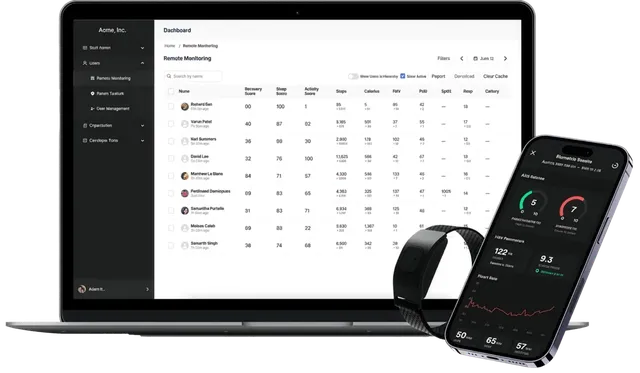
MindInventory developed BioStrap’s mobile app, cloud biosignal pipeline, and HIPAA-compliant dashboard to support clinical research and wearable health monitoring. The platform preserves raw PPG, accelerometer, and gyroscope data from capture through cloud processing, enabling researchers and clinicians to work with physiological data beyond preprocessed summaries.

Outcomes:

Used across 100 clinical studies
Adopted by Stanford, UCLA, NASA, Pfizer, Tulane, CHLA, and the NIH
Independently validated against ECG (gold standard) references
Read Case Study

ArrowHQ

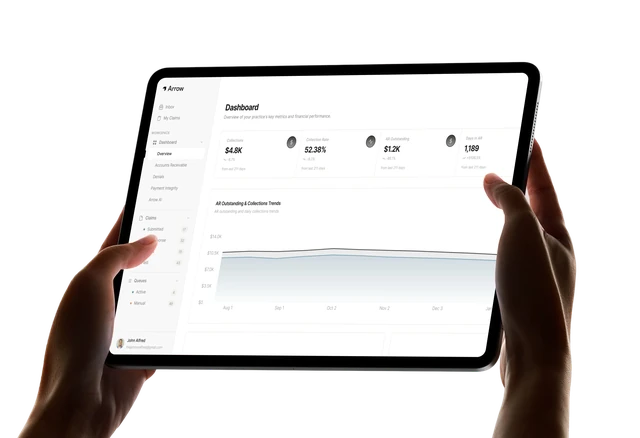
MindInventory developed ArrowHQ, a HIPAA-aware, AI-powered revenue cycle management platform that helped healthcare providers manage claim denials through a six-step workflow: ingest, diagnose, prepare, review, act, and track. The platform integrated disconnected EHRs, clearinghouses, and payer portals, using Pinecone vector search and SQS queuing to support denial analysis and resolution, with human billers reviewing and approving every claim action.

Outcomes:

85% reduction in claim denials
A/R days cut from 45 to 18
1.5B+ claims processed
Read Case Study

OraQ AI

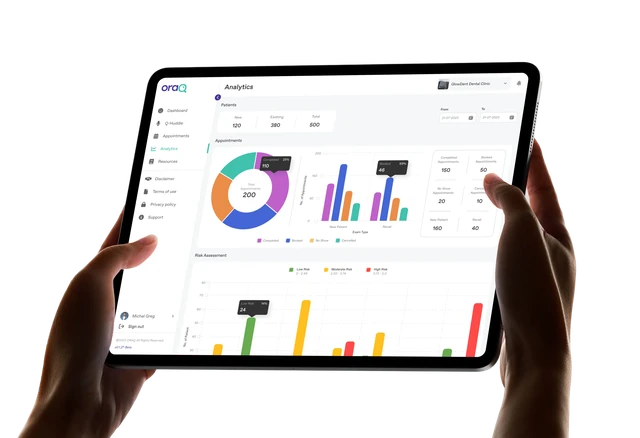
MindInventory engineered OraQ AI, an AI-powered dental assessment platform for dentists and dental practices that integrated patient history, dental imaging, and clinical findings to support consistent, risk-based dental examinations. The platform incorporated AI-powered risk-scoring models, a digital odontogram, periodontal charting, and practice management integrations, built on a compliance-ready architecture designed to support FDA and Health Canada clearance.

Outcomes:

Case acceptance lifted from 30–40% to 70%
Integrates with Dentrix, OpenDental, ClearDent, Curve, and Eaglesoft
$2.6M CAD seed round led by AngelMD; research partnership with the University of the Pacific's Dugoni School of Dentistry
Read Case Study

Sully.ai

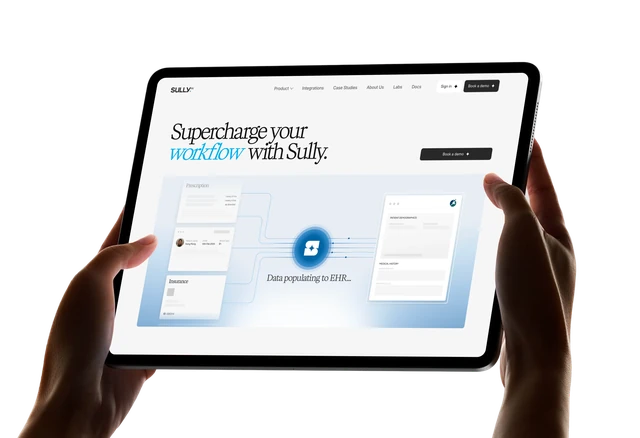
Rising patient demand and physician shortages meant burnout couldn't be solved by one tool automating one task. MindInventory built six purpose-specific, Docker-isolated AI agents (receptionist, triage nurse, scribe, clinical consultant, coder, care coordinator) plus an orchestration layer, running natively inside Epic and athenahealth with human review on every clinical output.

Outcomes:

12.5M+ minutes of clinical documentation automated
21x return on agent spend
Used across 100+ healthcare organizations and 30,000+ providers
Read Case Study

Healthcare Software Solutions for Every Vertical

Considering the challenges of every healthcare vertical, we have listed essential solutions for every clinician, or payer network. Each solution addresses core vertical challenges and is engineered around the workflow of the actual users.

Slow or disconnected EHR or EMR records lead to lost clinician hours and irregular patient records. We build EHR/EMR systems around your clinical workflows with interoperability (HL7/FHIR) built in, so patient data moves cleanly between departments and external providers instead of getting trapped in silos.

Make healthcare easier to access with telemedicine and remote care solutions. Give patients and providers access to virtual consultations, remote monitoring, digital appointments, and secure communication. Connect with the healthcare systems your teams already use for smoother, more connected care.

Without visibility between visits, preventable complications in chronic-care patients often go unnoticed until they become emergencies. We build remote monitoring software that pull real-time vitals and activity data from wearables and connected devices, so care teams can intervene early instead of reacting after the fact.

Diagnostic errors and clinician burnout both traces back to the same root cause too much unstructured data and too little time. We build AI-powered decision support tools that surface risk and automate documentation in real time, cutting administrative load without replacing clinical judgment; one deployment scribed 12.5M+ minutes of conversation on a 100% HIPAA-compliant infrastructure.

An AI medical scribe converts clinician-patient conversation into structured clinical documentation in real time. MindInventory built the documentation engine behind an AI doctor's copilot that has scribed 12.5M+ minutes of conversation on HIPAA-compliant infrastructure.

Manual appointment booking and record requests overload front-desk staff and frustrate patients who expect self-service. We build patient portals that unify scheduling, record access, and secure messaging in one place, so routine requests get resolved without a phone call.

Patients often need quick answers, symptom guidance, or appointment to help outside clinic hours, and staff can't be available around the clock. We build AI-driven chatbots for symptom checking, appointment scheduling, and patient support, so common questions get resolved instantly instead of adding to your front-desk or call-center load.

Chronic-condition patients need ongoing coordination between visits, not just data collection, or preventable complications get missed until they become emergencies. We build care management platforms that turn monitoring data into coordinated action, connecting care teams, patients, and treatment plans in one place instead of leaving follow-up to memory and phone calls.

Clinical & Care Delivery

Hospital Management Systems

Disconnected systems across departments mean no single source of truth for beds, staff, or supplies. We build hospital management platforms that unify patient records, scheduling, and resource tracking, so operational decisions run on live data instead of yesterday's spreadsheet.

Manual claims handling slows reimbursement and quietly drains revenue through errors and rework. We build AI-driven billing and claims platforms that automate coding, verification, and denial management, so claims move faster and cheaper proven with a 20% reduction in processing time and 33% lower claim costs for one client.

Bottlenecks in scheduling and bed turnover translate directly into longer wait times and staff overtime. We build AI-powered flow and scheduling systems that route patients and resources using real-time data, so capacity planning runs prediction instead of guesswork.

Manually matching the right caregiver to the right shift doesn't scale across multi-site or home-care operations. We build scheduling platforms with skill-matching, credential tracking, and shift automation, so staffing runs on system logic instead of spreadsheets and phone calls.

Leadership teams often make operational and clinical decisions on outdated or incomplete data, because reporting takes weeks to compile manually. We build analytics and BI platforms that turn clinical and claims data into real-time dashboards, so decisions run on current data instead of a report that was accurate a month ago.

Administrative & Operations

Medicare Advantage & Payer Platform Development

Medicare Advantage platforms handle risk adjustment, HEDIS and Stars quality reporting, core administration and health management for health plans and risk-bearing providers.

Slow claims processing hurts both the bottom line and member satisfaction at the same time. We build cloud-based, HIPAA- and GDPR-aligned claims and policy platforms with automated risk assessment, so resolution happens in days instead of weeks; one platform we built delivered 70% faster claim resolution.

Software that diagnoses, monitors, or informs treatment decisions falls under FDA Software as a Medical Device (SaMD) regulation, and non-compliant builds risk delayed approval or market withdrawal. We build medical device and SaMD software engineered to regulatory classification requirements from the start, so compliance is designed in, not retrofitted after a submission gets flag.

Behavioral health carries an added layer of compliance (42 CFR Part 2) beyond standard HIPAA, and generic healthcare software often isn't built to handle it. We build mental and behavioral health platforms, from teletherapy to AI-supported support tools, engineered around that stricter privacy standard from the start, so sensitive records stay protected without limiting access to care.

Imaging data trapped in disconnected systems slows both diagnosis and downstream care, especially when radiology and referring providers can't access the same images in real time. We build PACS and RIS solutions that store, route, and analyze medical imaging data, connecting radiology workflows to the rest of a patient's care instead of leaving images siloed in one department.

Specialty/Vertical-Specific

Let's Discuss Your Project

Bring your questions, requirements, or project ideas to our healthcare IT and AI experts. Get practical recommendations, query resolution, and a clear roadmap for development.

Healthcare IT Specialist

AI-Driven Healthcare IT Services We Offer

Get a Scoped Service Estimate

Custom Healthcare Software Development

Off-the-shelf software rarely matches how a hospital, clinic, or payer actually operates, forcing staff into workarounds that introduce compliance risk. We design custom healthcare software around your clinical and operational workflows, with HIPAA-compliant architecture built in from day one, so the system fits your process instead of forcing your process to fit the system.

SaaS software development Medical device software development SaMD product development Patient engagement software development

Healthcare IT Consulting

We begin every engagement with research, analysis, and opportunity identification. With our healthtech experts’ technical insights, we create a roadmap that is efficient, scalable, and secure rather than intensive resource investment. Our IT consulting for healthcare includes architecture review, technology road mapping, compliance scoping, and build-vs-buy guidance grounded in what we’ve seen work and fail across 150+ healthcare platforms.

Technology road mapping Architecture and code review Compliance gap assessment Build-vs-buy analysis Vendor and platform selection

Healthcare AI Development

We identify opportunities where AI capabilities bring value and feasibility, then prioritize a transformation and capability roadmap before starting AI-backed development across your healthcare workflows. Our healthcare AI development approach turns this roadmap into practical, workflow-ready AI solutions.

Patient communication and access Patient and clinician chatbot workflows Call center automation EHR workflows and clinical data use Diagnostic decision support Medication management Digital pathology workflows Medical device and SaMD intelligence Mental health care support Long-term care operations Voice interaction and clinical dictation Command center automation

Healthcare Mobile App Development

Due to increased convenience and difficulty reaching out healthcare facilities, a healthcare mobile app development remains in constant demand. Connect with healthcare domain experts and build a HIPAA-compliant patient-and clinician-facing mobile app with secure data handling and EHR connectivity engineered from ground zero.

Patient engagement app development Clinician-facing mobile app development Telemedicine software development Wearable and IoT device integration App store compliance and submission support

Cloud Migration & Infrastructure Services

Legacy on-premises infrastructure limits scale, raises maintenance cost, and increases disaster-recovery risk over time. We migrate healthcare infrastructure to secure, BAA-covered environments on AWS, Azure, and Google Cloud, so systems scale on demand instead of hitting a hardware ceiling; one migration we led delivered $1M+ in annual savings and a 5X performance gain.

Healthcare software modernization Healthcare software integration HIPAA-compliant cloud selection Cloud infrastructure management Cloud migration

Healthcare Software Testing & QA

Our testing methodology covers every clinical workflow, point of HIPAA-and regulatory-compliance, data exchange point between EHRs, labs, and third-party system, system under patient-volume load, and clinician workflows. We ensure testing against real-world scenarios and double check before making it live, so performance never lags.

Functional & workflow testing HIPAA & regulatory compliance testing HL7/FHIR interoperability testing Security & penetration testing Performance & load testing Usability testing with real clinicians

Healthcare Software Integration

Disconnected systems force staff into manual data entry, increasing both error rates and administrative load. We integrate healthcare systems using HL7 and FHIR standards, connecting EHRs, labs, billing, and third-party platforms, so data moves automatically instead of being re-entered by hand.

HL7/FHIR interface development EHR/EMR integration Lab and imaging system integration (LIS/PACS) Third-party and payer API integration Legacy system integration

Healthcare Software Maintenance & Support

A missed patch or silent failure is a patient-safety issue, not just a support ticket. We ensure monitoring and maintenance after launch, so issues are caught and resolved before they affect care, not after.

L1–L3 technical support Incident resolution and troubleshooting Application maintenance and support Performance, security, and compliance management Managed IT services IT infrastructure maintenance and modernization Help desk services for healthcare Managed application services Managed security services

Cybersecurity & Compliance

Healthcare remains the costliest industry for data breaches, and a single lapse in HIPAA compliance can mean regulatory fines, patient harm, and lost trust all at once. We build security into healthcare software from the architecture level encryption, access controls, and audit logging aligned to HIPAA, HITECH, and GDPR to protect health information and keep your organization audit-ready.

IT security audit Compliance assessment Verification and validation testing for SaMD Penetration testing Managed security services

Off-the-shelf software rarely matches how a hospital, clinic, or payer actually operates, forcing staff into workarounds that introduce compliance risk. We design custom healthcare software around your clinical and operational workflows, with HIPAA-compliant architecture built in from day one, so the system fits your process instead of forcing your process to fit the system.

Explore Custom Healthcare Software Development
SaaS software development Medical device software development SaMD product development Patient engagement software development

We begin every engagement with research, analysis, and opportunity identification. With our healthtech experts’ technical insights, we create a roadmap that is efficient, scalable, and secure rather than intensive resource investment. Our IT consulting for healthcare includes architecture review, technology road mapping, compliance scoping, and build-vs-buy guidance grounded in what we’ve seen work and fail across 150+ healthcare platforms.

Explore Healthcare IT Consulting
Technology road mapping Architecture and code review Compliance gap assessment Build-vs-buy analysis Vendor and platform selection

We identify opportunities where AI capabilities bring value and feasibility, then prioritize a transformation and capability roadmap before starting AI-backed development across your healthcare workflows. Our healthcare AI development approach turns this roadmap into practical, workflow-ready AI solutions.

Explore Healthcare AI Development
Patient communication and access Patient and clinician chatbot workflows Call center automation EHR workflows and clinical data use Diagnostic decision support Medication management Digital pathology workflows Medical device and SaMD intelligence Mental health care support Long-term care operations Voice interaction and clinical dictation Command center automation

Due to increased convenience and difficulty reaching out healthcare facilities, a healthcare mobile app development remains in constant demand. Connect with healthcare domain experts and build a HIPAA-compliant patient-and clinician-facing mobile app with secure data handling and EHR connectivity engineered from ground zero.

Explore Healthcare Mobile App Development
Patient engagement app development Clinician-facing mobile app development Telemedicine software development Wearable and IoT device integration App store compliance and submission support

Legacy on-premises infrastructure limits scale, raises maintenance cost, and increases disaster-recovery risk over time. We migrate healthcare infrastructure to secure, BAA-covered environments on AWS, Azure, and Google Cloud, so systems scale on demand instead of hitting a hardware ceiling; one migration we led delivered $1M+ in annual savings and a 5X performance gain.

Explore Cloud Migration & Infrastructure Services
Healthcare software modernization Healthcare software integration HIPAA-compliant cloud selection Cloud infrastructure management Cloud migration

Our testing methodology covers every clinical workflow, point of HIPAA-and regulatory-compliance, data exchange point between EHRs, labs, and third-party system, system under patient-volume load, and clinician workflows. We ensure testing against real-world scenarios and double check before making it live, so performance never lags.

Functional & workflow testing HIPAA & regulatory compliance testing HL7/FHIR interoperability testing Security & penetration testing Performance & load testing Usability testing with real clinicians

Disconnected systems force staff into manual data entry, increasing both error rates and administrative load. We integrate healthcare systems using HL7 and FHIR standards, connecting EHRs, labs, billing, and third-party platforms, so data moves automatically instead of being re-entered by hand.

HL7/FHIR interface development EHR/EMR integration Lab and imaging system integration (LIS/PACS) Third-party and payer API integration Legacy system integration

A missed patch or silent failure is a patient-safety issue, not just a support ticket. We ensure monitoring and maintenance after launch, so issues are caught and resolved before they affect care, not after.

L1–L3 technical support Incident resolution and troubleshooting Application maintenance and support Performance, security, and compliance management Managed IT services IT infrastructure maintenance and modernization Help desk services for healthcare Managed application services Managed security services

Healthcare remains the costliest industry for data breaches, and a single lapse in HIPAA compliance can mean regulatory fines, patient harm, and lost trust all at once. We build security into healthcare software from the architecture level encryption, access controls, and audit logging aligned to HIPAA, HITECH, and GDPR to protect health information and keep your organization audit-ready.

IT security audit Compliance assessment Verification and validation testing for SaMD Penetration testing Managed security services

Healthcare Verticals Where We Get Down to Business

Every healthcare vertical operates differently, requiring attention to every aspect. We cater to every vertical ensuring software development solution built with robust architecture, scalability, and compliance.

Hospitals & Health Systems

Health Insurance & Payers

Diagnostics & Laboratories

Medical Device & MedTech Companies

Medical Billing & RCM Companies

Healthcare SaaS & Digital Health Companies

Clinics & Physician Practices

Telehealth & Virtual Care Companies

Pharmacy Chains & e-Pharmacy Operators

Senior Living & Long-Term Care Providers

Home Healthcare Providers

Fitness & Wellness Companies

Find the Right Fit for Your Vertical

Named Experts & Thought Leadership

Parth Pandya
Nihir Patel

Parth Pandya

Senior Project Manager

Nihir Patel

Senior Technical Consultant – Healthcare

Parth Pandya is a Senior Project Manager at MindInventory with 15+ years of experience building and delivering healthcare software solutions. His expertise spans healthcare application development, AI/ML, SaaS, cloud-native technologies, and software architecture. He has contributed to developing scalable digital solutions that help healthcare organizations streamline workflows, improve patient experiences, and modernize technology infrastructure. From translating complex healthcare requirements into software architecture to overseeing development and delivery, Parth brings a practical, technology-first perspective to healthcare digital transformation and innovation.

Nihir Patel is a Senior Technical Consultant at MindInventory, focused on healthcare technology and digital health solutions. He works with HealthTech startups and healthcare organizations to understand their business, clinical, and operational challenges and translate them into practical technology solutions. His expertise spans healthcare AI, EHR/EMR systems, HL7/FHIR interoperability, clinical workflow automation, revenue cycle management, patient engagement platforms, and custom healthcare software development. Through a consultative approach, Nihir helps healthcare leaders evaluate ideas, define the right technology roadmap, and build secure, scalable, and compliance-focused digital health solutions.

Parth Pandya

Parth Pandya

Senior Project Manager

Parth Pandya is a Senior Project Manager at MindInventory with 15+ years of experience building and delivering healthcare software solutions. His expertise spans healthcare application development, AI/ML, SaaS, cloud-native technologies, and software architecture. He has contributed to developing scalable digital solutions that help healthcare organizations streamline workflows, improve patient experiences, and modernize technology infrastructure. From translating complex healthcare requirements into software architecture to overseeing development and delivery, Parth brings a practical, technology-first perspective to healthcare digital transformation and innovation.

Nihir Patel

Nihir Patel

Senior Technical Consultant – Healthcare

Nihir Patel is a Senior Technical Consultant at MindInventory, focused on healthcare technology and digital health solutions. He works with HealthTech startups and healthcare organizations to understand their business, clinical, and operational challenges and translate them into practical technology solutions. His expertise spans healthcare AI, EHR/EMR systems, HL7/FHIR interoperability, clinical workflow automation, revenue cycle management, patient engagement platforms, and custom healthcare software development. Through a consultative approach, Nihir helps healthcare leaders evaluate ideas, define the right technology roadmap, and build secure, scalable, and compliance-focused digital health solutions.

Our Healthcare Software Development Process

Your healthcare software development project is just 5 step away from “Just another healthcare services provider” to becoming “Extraordinary services provider”

Step 1

Regulatory Discovery & Clinical Risk Framing

Before a single wireframe, we lock down what the software is from a regulatory lens of SaMD or not, risk class, and which standards govern (HIPAA, FDA, HL7/FHIR). At the same time, we map how clinicians and staff really work and score patient-safety risk for every feature. This dual track sets the rigor for everything that follows. Get this wrong and you rebuild process, not just code. .
Step 2

Compliance-First Architecture + Iterative Build

Architecture is designed around the regulatory and risk profile from day one encryption, access controls, audit logging, and HL7/FHIR interoperability baked in, not bolted on. We build in short, testable cycles with regular clinical and compliance reviews so workflow issues and regulatory gaps surface early and get fixed early.
Step 3

Real-World Clinical & Interoperability Validation

Every feature is tested against real clinical scenarios with actual clinicians and staff not just QA scripts. A system that passes standard testing but fails under real clinical pace is still a failed build, and we don’t stand by it. We also test data exchange against live external systems (EHRs, labs, third-party platforms) because most integration failures come from real-world systems behaving differently than their docs claim.
Step 4

Security, Compliance Verification & Hypercare Go-Live

Penetration testing, access-control verification, and audit-log validation confirm the system protects PHI as designed with documentation ready to withstand a compliance audit, not just an internal review. We stage a controlled go-live with extra support for the first 1–2 weeks, when issue volume is highest, so problems get caught before they affect patient care.
Step 5

Audit-Ready Documentation + Post-Launch Surveillance

We deliver audit-ready documentation like risk files, validation records, architecture docs so it exists as verifiable evidence, not just internal reference material. For SaMD and other regulated builds, we monitor real-world performance and flag issues that emerge post-launch as a continuous, formal obligation, not folded into generic maintenance. .

Technology We Leverage to Build Healthcare Digital Platforms

GenAI platforms

OpenAI
Microsoft Foundry
Amazon Bedrock
Google Vertex AI
OCI Generative AI
Hugging Face

Healthcare LLMs

MedGemma
MedLM
BioMedLM

EHR/EMR platforms

Epic
Oracle Health (Cerner)
MEDITECH
athenahealth
NextGen
Allscripts

Interoperability

HL7 v2
FHIR R4/R5
Mirth Connect
Redox
SMART on FHIR

Agents & orchestration

OpenAI Agents SDK
Bedrock Agents
Google ADK
LangChain
LangGraph
Dify
n8n

ML frameworks

PyTorch
TensorFlow
Keras
Scikit-learn
OpenCV
spaCy
Apache Spark MLlib

LLM output validation

Microsoft Guidance
IBM AI Fairness 360
Evaluate
Guardrails AI

Back-end languages

Python
Node.js
PHP
Golang

Front-end

React
Angular
Vue.js
Next.js

JS frameworks

Angular
React
Vue.js
Next.js
Meteor.js
Ember.js

Mobile

iOS
Android
React Native
Flutter
Ionic
Xamarin
Cordova
PWA

Cloud platforms

AWS
Microsoft Azure
Google Cloud Platform
DigitalOcean
Rackspace

Containerization

Docker
Kubernetes
Apache Mesos

CI/CD

GitLab CI/CD
Jenkins
Terraform
Ansible

Infra automation

Ansible
Puppet
Chef
Terraform
Packer

Monitoring

Prometheus
Grafana
Datadog
Elastic Stack

Low code

Power Apps
Power Automate
ServiceNow App Engine
Bubble.io

Databases

PostgreSQL
SQL Server
MySQL
Oracle
MongoDB
Cassandra

Data & analytics

Snowflake
Redshift
Azure Synapse
Databricks
S3
Azure Data Lake

AWS data/storage

S3
Redshift
DynamoDB
DocumentDB
RDS
ElastiCache

Azure/GCP data/storage

Azure Data Lake
Blob Storage
Cosmos DB
Synapse Analytics
Google Cloud SQL
Datastore

Flexible Engagement Models

Best for
You control
We control

Staff Augmentation

Scale your healthcare IT team with dedicated experts without the overhead of full-time hiring.

  • Check
    Ongoing platform work
  • Check
    Long-horizon roadmaps
  • Check
    Priorities
  • Check
    Sprint direction
  • Check
    Team composition
  • Check
    Recruiting
  • Check
    Retention
  • Check
    Technical standards

Time & Material

Stay flexible as requirements evolve. Pay only for the time and resources your project actually needs.

  • Check
    Evolving scope
  • Check
    Discovery-led builds
  • Check
    Integration work
  • Check
    Scope changes without renegotiation
  • Check
    Delivery velocity

Fixed Cost

Know your budget and deliverables upfront with a fixed scope, timeline, and project cost.

  • Check
    Defined scope
  • Check
    MVPs
  • Check
    Regulatory-bounded builds
  • Check
    Budget certainty upfront
  • Check
    Staffing
  • Check
    Scope delivery within agreed cost

Staff Augmentation

Scale your healthcare IT team with dedicated experts without the overhead of full-time hiring.

Best for
  • Check
    Ongoing platform work
  • Check
    Long-horizon roadmaps
You control
  • Check
    Priorities
  • Check
    Sprint direction
  • Check
    Team composition
We control
  • Check
    Recruiting
  • Check
    Retention
  • Check
    Technical standards

Time & Material

Stay flexible as requirements evolve. Pay only for the time and resources your project actually needs.

Best for
  • Check
    Evolving scope
  • Check
    Discovery-led builds
  • Check
    Integration work
You control
  • Check
    Scope changes without renegotiation
We control
  • Check
    Delivery velocity

Fixed Cost

Know your budget and deliverables upfront with a fixed scope, timeline, and project cost.

Best for
  • Check
    Defined scope
  • Check
    MVPs
  • Check
    Regulatory-bounded builds
You control
  • Check
    Budget certainty upfront
We control
  • Check
    Staffing
  • Check
    Scope delivery within agreed cost

How We Keep Your Healthcare Data Secure & Compliant

We strictly adhere to compliance and regional security standards. We prioritize them while undertaking development, modernization, or even integration.

HIPAA & HITECH

safeguards for Protected Health Information (PHI), covering data privacy, security, and breach notification requirements under US law
HIPAA & HITECH logo
HIPAA & HITECH logo

GDPR

data protection and consent standards for organizations handling EU patient or user data
GDPR logo

HL7 & FHIR

secure, standardized protocols for exchanging health information between systems
HL7 & FHIR logo

EU MDR

regulatory requirements for software classified as a medical device
EU MDR logo

Why Do Healthcare Enterprises Choose MindInventory as Their Software Development Partner?

Healthcare Compliance Mastery

Compliance isn’t a checkbox we complete before launching; it’s the standard every healthcare engagement is built against from day one. Our teams design HIPAA, HITECH, GDPR, and HL7/FHIR standards as default practices, with signed Business Associate Agreements and documented risk assessments built into every applicable project. We’ve built HIPAA-compliant software across real client engagements.
Healthcare Compliance Mastery
Security-First Approach icon

Security-First Approach

A security gap isn’t just a technical risk; it’s a patient-safety and financial one, with the average healthcare data breach now costing $10.93 million, the highest of any industry. We build encryption, role-based access control, and audit logging into system architecture from the start, not retrofitted after a vulnerability is found.
126 Healthcare Domain Experts icon

126 Healthcare Domain Experts

Healthcare software fails most often when it’s built by teams who understand code but not clinical or regulatory context. With 126 dedicated healthcare domain experts spanning engineering, compliance, and clinical workflow design working exclusively on healthcare engagements, not shared across unrelated industries.
Domain Expertise icon

Domain Expertise

Our healthcare practice has delivered end-to-end solutions across hospitals, health insurers, digital health startups, and engineering systems around real clinical and regulatory workflows rather than adapting a generic template.

That depth shows up in outcomes:

Check
A 21x return on agent spend
Check
12.5M+ minutes of clinical documentation automated for an AI-powered doctor’s copilot
Check
$1M+ in annual savings with a 5X performance gain for a U.S. hospital network’s cloud migration

How We Keep Your Healthcare IT Project On Track

Right team, right healthcare expertise pulling from your 126 healthcare domain experts specifically matched to the engagement (clinical background, compliance background, technical background as needed)

Honest, healthcare-scoped estimates cost/timeline ranges that account for compliance review cycles and clinical validation time upfront, not bolted on as a surprise later

Scope control against regulatory drift healthcare requirements can shift mid-project (a new compliance requirement, a payer mandate); change requests are evaluated for compliance impact as well as cost/time impact, not just cost/time

Clinical stakeholder collaboration working around clinician schedules (not standard 9-5 availability) and documenting decisions, so nothing gets lost between a compliance officer, a clinical lead, and an engineering team

Risk management specific to healthcare delivery flagging risks unique to this space: integration complexity with legacy EHRs, compliance gaps, clinician adoption resistance not just generic technical/schedule risk

Transparent reporting throughout regular status against agreed milestones, so you’re never surprised by delivery status or compliance readiness at the end

What Typically Goes Wrong in Healthcare Software Projects & How We Prevent Them?

For every technical and operational healthcare problem, we have a solution, but what about the problems that arise after development begins? A compliance gap or an integration bottleneck. Our development process doesn’t only limit delivering what client demands but also ensures resolving every challenge during development.

Software that looks right in a demo often breaks down against real clinical pace and pressure. We test every workflow with actual clinical staff before go-live, not just QA scripts, so friction gets caught while it's still cheap to fix.

Legacy EHRs and third-party systems rarely behave in the way documentation was drafted. We scope interoperability work (HL7/FHIR) during discovery, not after development starts, so integration risk is priced in from day one.

Bolting HIPAA compliance onto a finished system creates rework, delays, and audit gaps. We build compliance into architecture from the start, so it's a design constraint, not a late-stage scramble.

Even well-built software fails if clinical or administrative staff route around it. We involve end users early and design their actual workflow, not the ideal one on paper, so adoption isn't an afterthought.

FAQs

Here’s a list of FAQs that will help you to know more about MindInventory.

Healthcare software development typically costs $15,000 to $250,000+, depending on the project’s complexity, integrations, compliance requirements, and development timeline.

  • Prototype / PoC: $15,000–$40,000 | 4–8 weeks
  • Focused app or MVP: $50,000–$90,000 | 3–4 months
  • Mid-complexity platform with EHR integration: $90,000–$180,000 | 5–8 months
  • Enterprise platform with multi-role features and full HIPAA architecture: $180,000–$250,000+ | 9–12+ months
  • SaMD / regulated device software: $200,000+ | 12+ months, including clearance

The final cost depends on your features, integrations, security requirements, compliance needs, and scalability goals.

Building healthcare software typically takes 3 to 18+ months, depending on the platform’s complexity and regulatory scope. A simple app or MVP can be launched in 3-6 months, while an enterprise platform with EHR integration and HIPAA-compliant architecture usually takes 9-12 months or longer.

Yes, if your software collects, stores, or transmits Protected Health Information (PHI) for patients in the United States, it must comply with HIPAA regardless of whether you’re a hospital, startup, or health-tech company. Even outside strict legal requirements, HIPAA-aligned architecture is considered standard practice in healthcare software, since it directly affects patient trust and enterprise partnerships.

Yes, prototype and proof-of-concept development is available before committing to full-scale healthcare software development. A prototype validates the technical approach, core workflows, and compliance requirements early, so you can adjust direction before the larger investment, rather than discovering issues after development is underway.

Off-the-shelf healthcare software is faster to deploy and lower cost upfront but is built for general use and often requires workarounds that don’t match your specific clinical workflow. Custom healthcare software costs more initially but is built around your exact processes and can integrate directly with your existing EHR and systems, making it the better long-term choice once workflow-fit and compliance matter more than speed of deployment.

Signs your organization needs an EHR/EMR upgrade or integration include:

  • Clinicians report slow charting.
  • Staff manually re-enter the same patient data across multiple systems.
  • Patient records that don’t transfer automatically between departments or providers.

If data has to be copied by hand between two or more systems on a regular basis, that’s a direct signal as an interoperability layer (HL7/FHIR integration) is needed.

Yes, AI in healthcare is most reliable and appropriately used as clinical decision supports surfacing risk patterns, automating documentation, and flagging information for a clinician to review rather than making autonomous diagnostic or treatment decisions. Properly designed AI tools keep the clinician as the final decision-maker, using AI to reduce administrative burden and highlight relevant information faster, not to replace clinical judgment.
Yes, integrating new software with an existing EHR system (such as Epic, Cerner, MEDITECH, or athenahealth) using HL7 and FHIR interoperability standards is a common healthcare software engagement. This approach is typically faster, lower-risk, and less disruptive than replacing an existing EHR platform entirely.


During development, we ensure patient data (PHI) is accessed under a signed Business Associate Agreement (BAA) with encryption applied both at rest and in transit and access restricted to authorized team members. After launching, ongoing monitoring, security patching, and audit logging should continue as standard practice, not treated as a one-time compliance step completed at go-live.

HL7 v2, first introduced in the 1980s, remains the most widely deployed standard for core clinical messaging inside hospital systems, largely because replacing it across legacy infrastructure is costly and disruptive. FHIR, a newer API-based standard, is better suited for modern integrations like patient-facing apps, mobile access, and external data sharing. Most healthcare organizations run both simultaneously today: HL7 v2 for internal clinical messaging, FHIR for newer, external-facing interoperability.

Software is classified as SaMD when it’s intended to diagnose, treat, prevent, or mitigate a disease independent of a hardware medical device. Intent and risk level determine classification. For instance, a symptom-logging app typically falls outside SaMD, while software that analyzes medical images to flag a diagnosis usually falls inside it. Classification determines the level of regulatory clearance required before the software can be marketed or used clinically, so it needs to be assessed early in development, not after a product is built.

The rule requires CMS-regulated payers to give patients electronic access to their own health and claims data through standardized APIs, primarily using the FHIR standard. It also restricts “information blocking” practices that unreasonably prevent health data from being shared between systems. For healthcare organizations, this shifted FHIR from an optional modernization choice to a practical compliance requirement for many payer- and provider-side systems.

Key Insights From Our Software Engineers

Explore software development knowledge directly from our software engineers that you find insightful to achieve your software development goals.

Medical Software Development Guide
post

Medical Software Development Guide: Everything You Need to Know

Hospitals are under pressure from every direction. Clinicians are overworked, patient records sit in disconnected systems, and many administrative tasks still run on manual processes. These gaps do not just…

post

Machine Learning in Healthcare: A Complete Guide

Healthcare generates more data than almost any other industry. These data include clinical notes, lab results, imaging scans, genomic sequences, wearables, and more, yet most of it goes underused. And…

post

Global AI in Healthcare Report 2026

This report showcases data from Precedence Research, Grand View Research, Markets and Markets, McKinsey, Doximity, and others prominent research agencies. A comprehensive view provides builders, investors, and healthcare leaders a single, reliable picture of…