Reduced
Wind Farm Planning Time
by 35% with a
Digital Twin
We Built a Wind Farm Digital Twin for Smarter Turbine Planning,
Energy Forecasting & ROI Estimation
Industry: Energy & Utility
Tools & Technologies
Unreal Engine
Blender
Wind Data API Integration
AI/ML
Data
The Business Context
Wind farm planning is not simply about placing turbines on open
land. It is a long-term capital decision that directly impacts
energy yield, operational efficiency, and return on investment.
Our client was planning wind farms across multiple locations and
needed a structured way to evaluate feasibility before committing
capital.
✕
Objeactive
Before moving forward with deployment, the client needed
clarity on four critical fronts:
These objectives were essential for reducing investment risk
and securing stakeholder confidence.
Determine optimal turbine density per land parcel
Identify how many turbines could realistically be deployed
without compromising performance or compliance.
Select the right turbine mix for maximum efficiency
Evaluate whether small, medium, or large turbines or hybrid
combinations would generate the best long-term output.
Forecast realistic annual energy production
Move beyond theoretical averages and estimate output based
on terrain and wind behavior.
Estimate ROI before capital commitment
Quantify profitability while ensuring safety, environmental,
and regulatory considerations are respected.
Key Challenges
Despite having clear goals, the planning process revealed
structural limitations:
When strategic decisions are made based on approximations
instead of predictive clarity, the result is higher risk, slower
approvals, and longer investment cycles.
1
Energy production estimates were based on assumptions
2
No practical way to compare multiple turbine configurations
without making land investments
3
Real-world constraints were not embedded in planning models
4
Limited use of real historical wind data during planning
The Solution
A Wind Farm Digital Twin Built for Feasibility Planning
We developed a Wind Farm Digital Twin that enables renewable
energy planners to simulate turbine layouts, validate
feasibility, and estimate ROI before committing capital.
Instead of treating the wind farm as a static 3D environment,
the platform works like a decision-support simulation engine.
It allows users to test different turbine configurations
across various terrain types, apply real-world placement
constraints, and compare expected energy output using both
predicted and actual wind data.
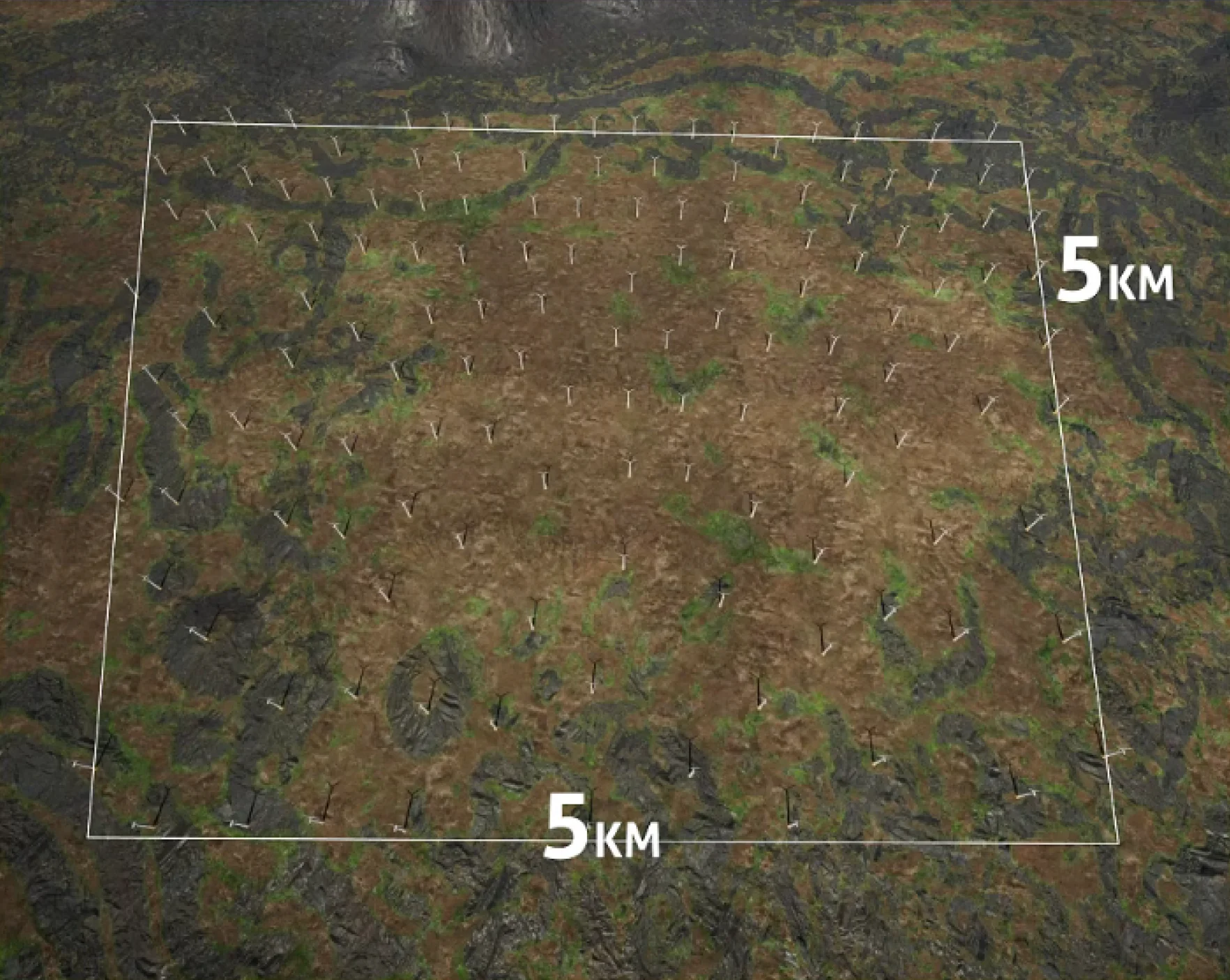
Terrain-Based Simulation for Realistic Planning Scenarios
To reflect how wind farms are actually built, the digital twin
includes three terrain environments that represent the most
common wind farm deployment conditions:
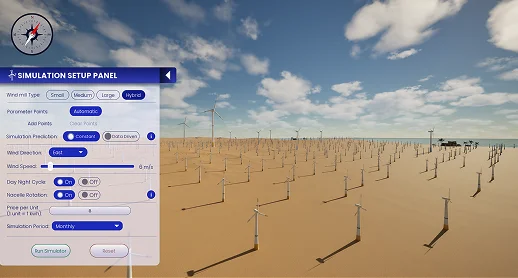
Seashore terrain
Flat land and consistent wind behavior
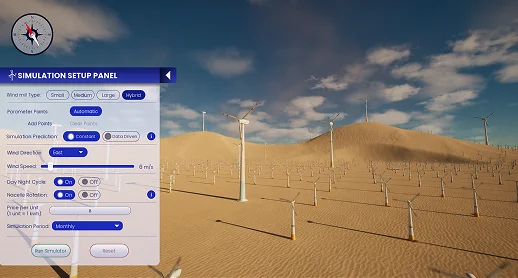
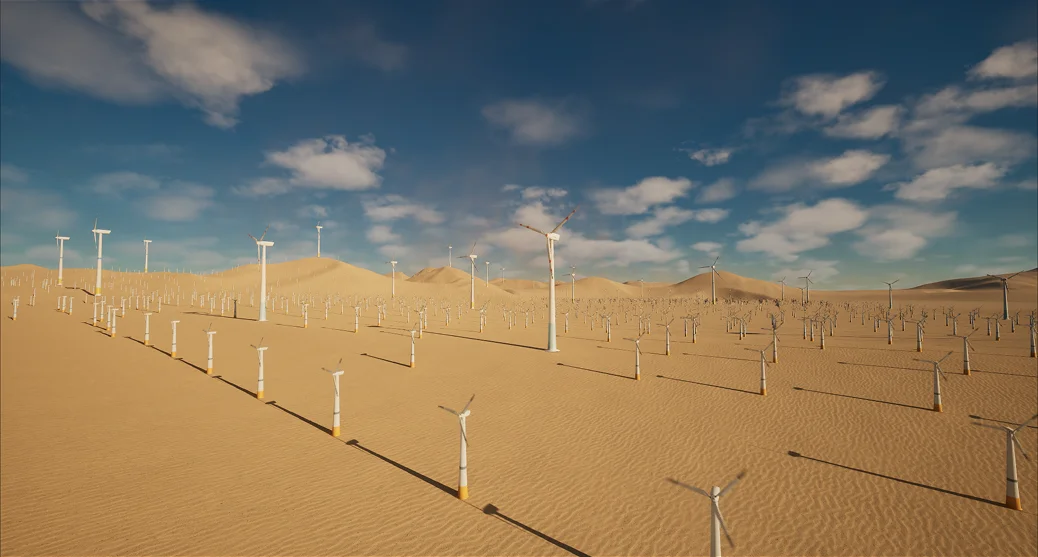
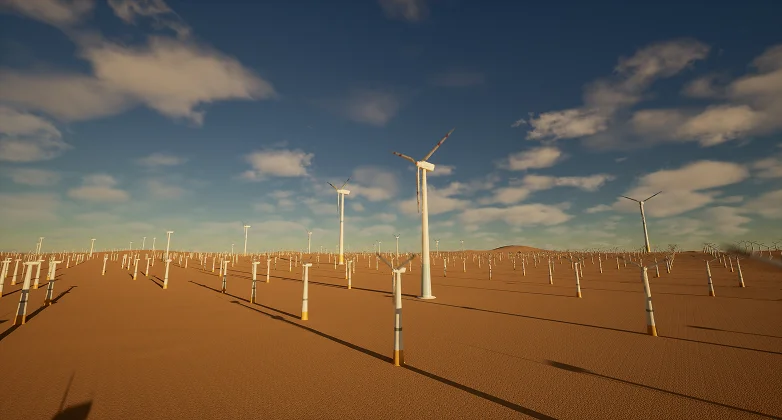
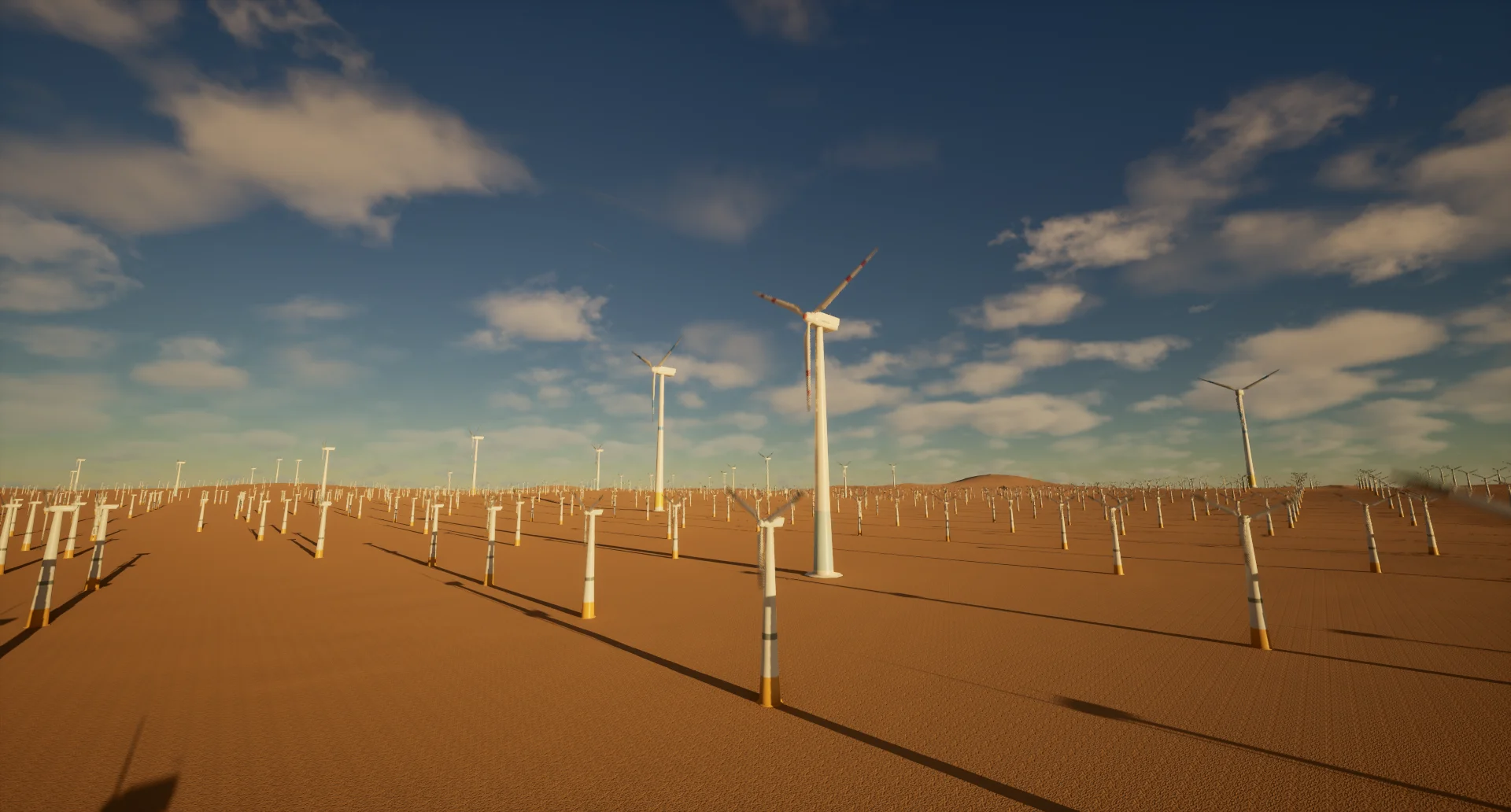
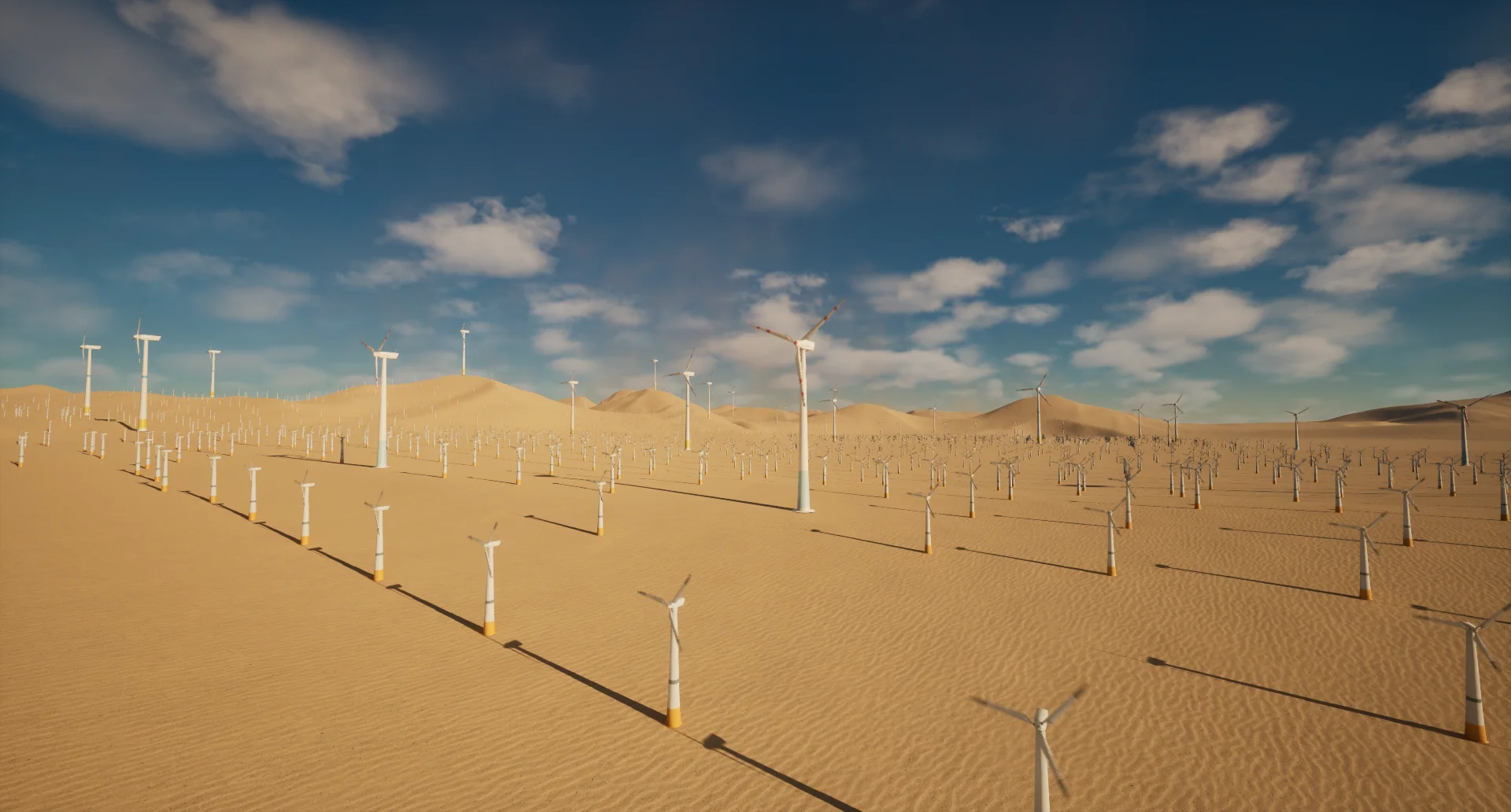
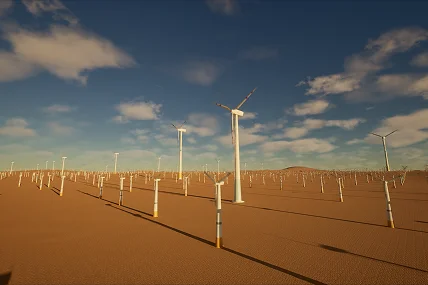
Desert terrain
Open land with unpredictable wind patterns
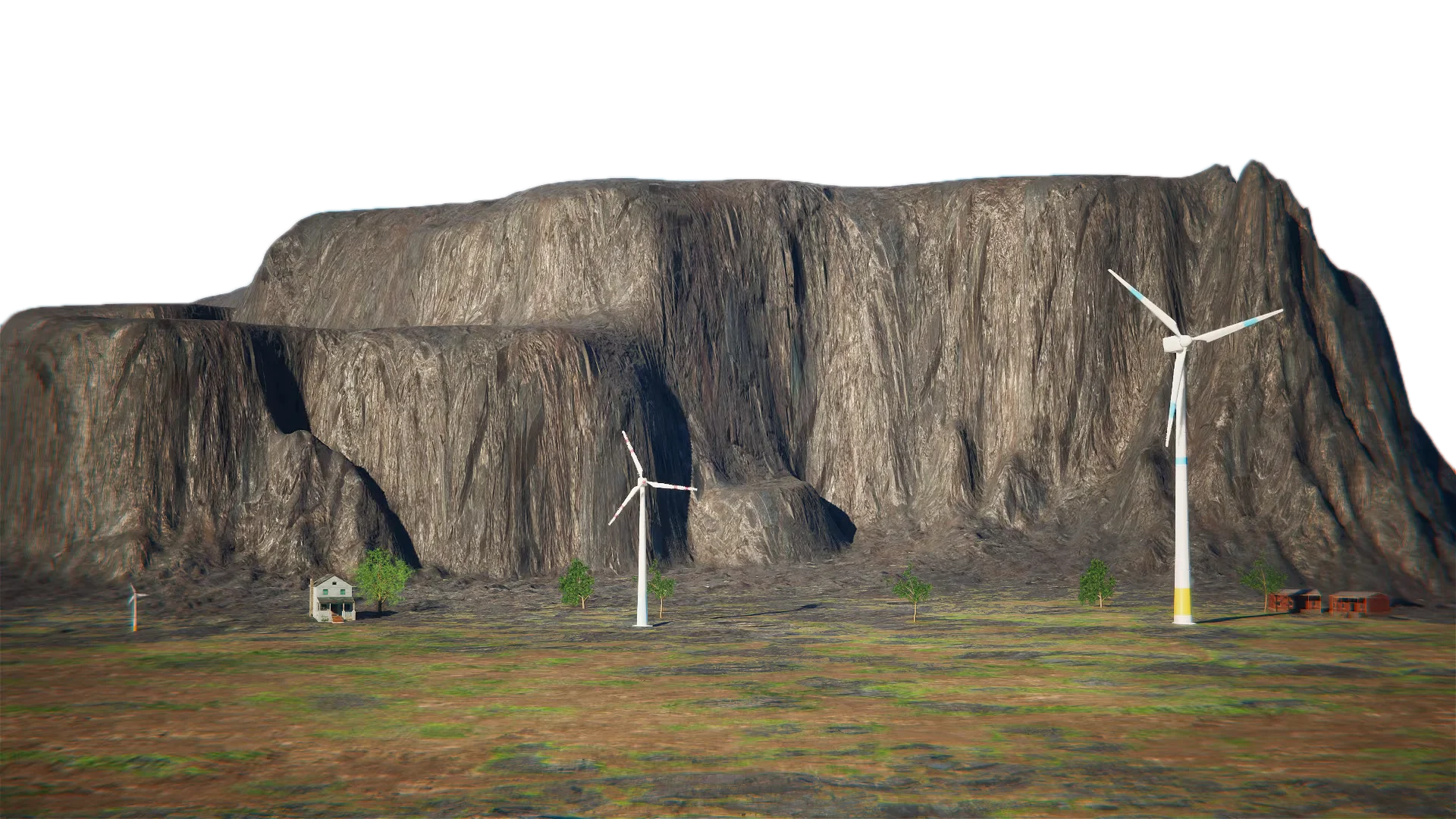
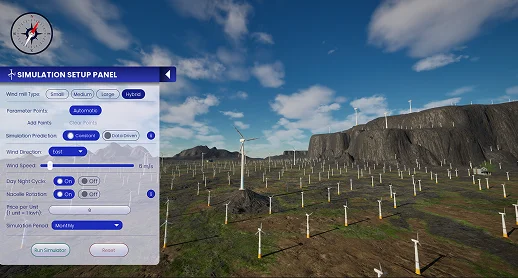
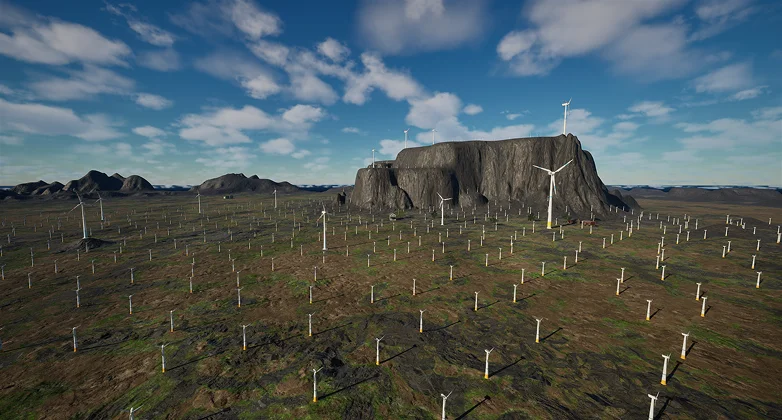
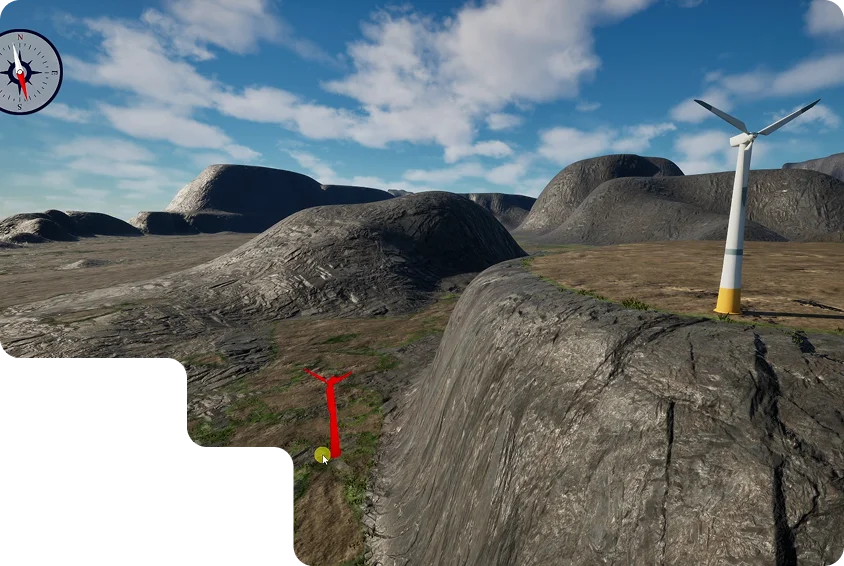
Mountain terrain
Height variation affecting wind flow and output
Interactive Simulation Setup for Scenario Planning
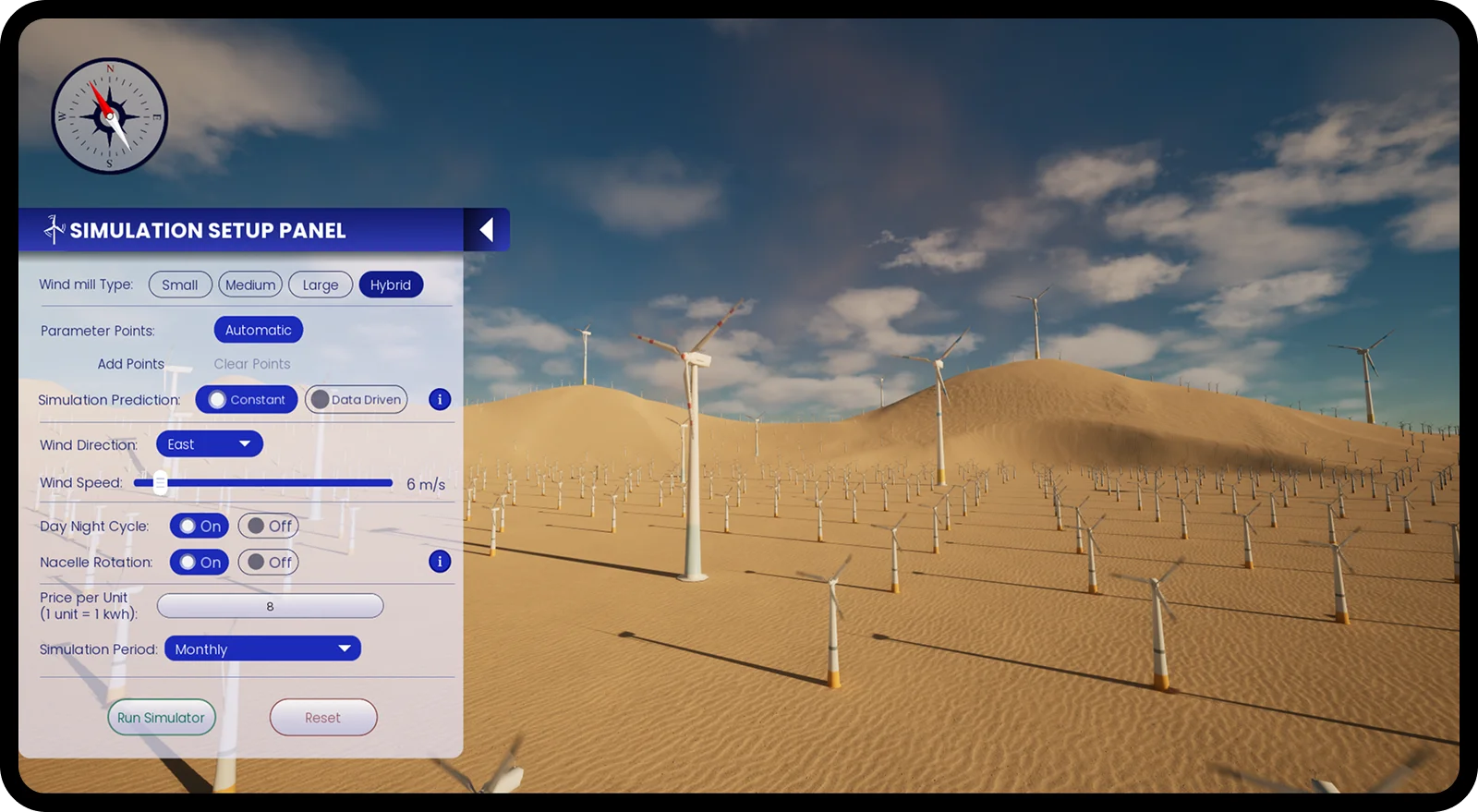
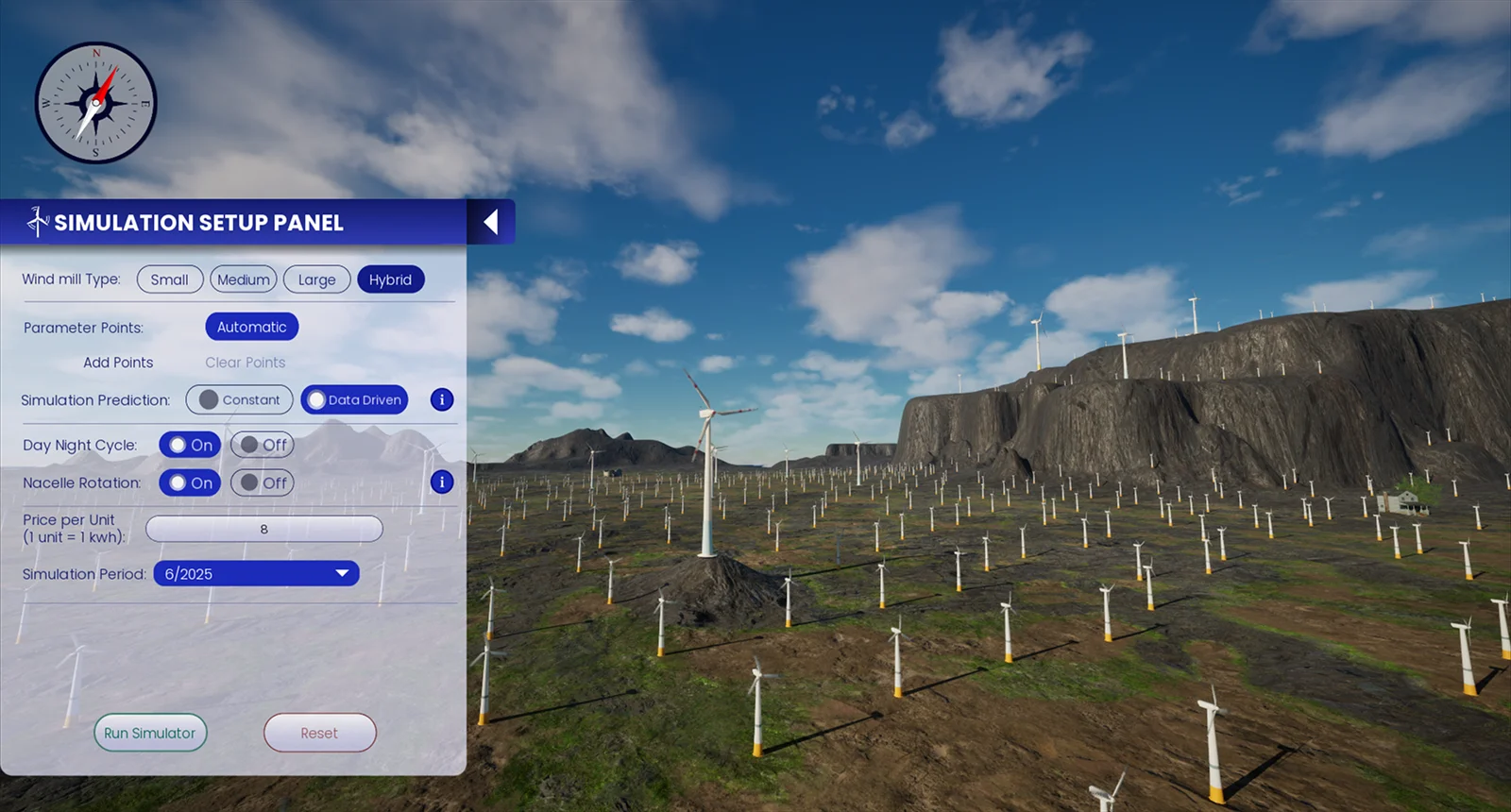
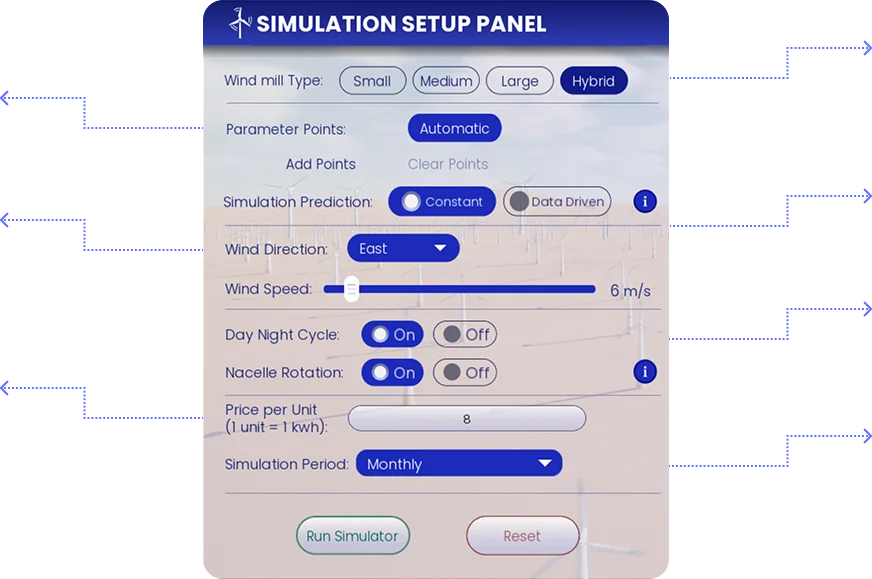
At the core of the experience is a Simulation Setup Panel that
gives users direct control over the parameters that influence
wind farm feasibility and profitability.
Using this panel, planners can:
This makes the platform ideal for testing multiple “what-if”
configurations. For example, users can compare scenarios such as
a large turbine setup with a longer simulation period versus a
medium-density deployment with varying electricity prices, all
without needing external spreadsheets or manual feasibility
calculations.
Select parameter points from Manual and Automatic
Adjust wind speed and wind direction to test output
sensitivity.
Set the electricity price per kWh to generate profitability
estimates.
Select turbine categories (Small, Medium, Large, or Hybrid)
Run simulations using either Constant prediction or
Data-Driven wind data.
Adjust the day/night cycle and nacelle rotation with ON & OFF
options.
Choose the simulation period and execute scenarios instantly.
Dual Simulation Modes: Predictive + Data-Driven
The platform works in two simulation modes depending on the
planning stage:
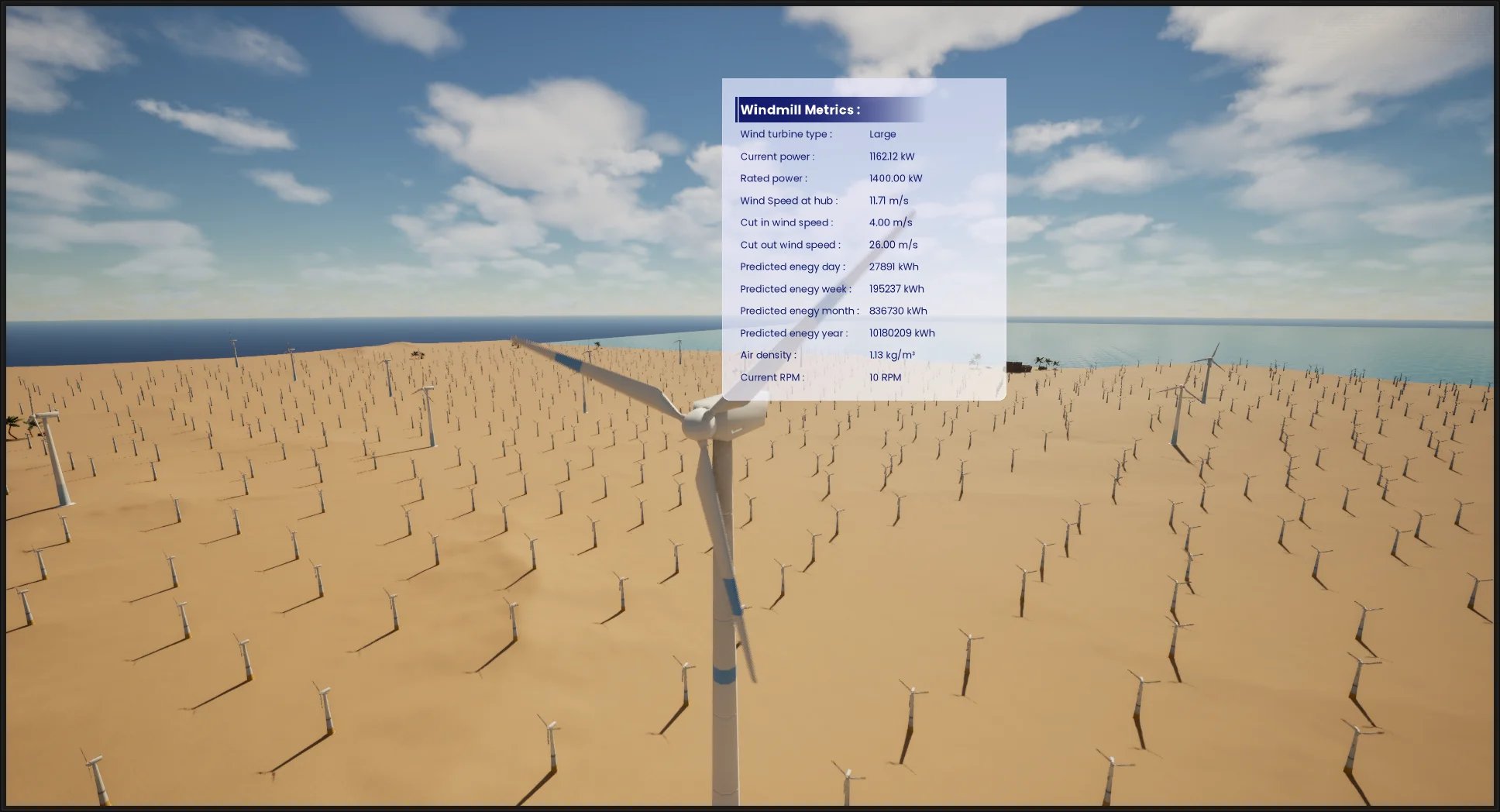
For this implementation, we used the complete 2025 wind dataset,
which allowed our client to test output across daily wind
conditions.
Prediction mode
estimates win behavior to generate output forecasts
Data-driven model
fetches real wind speed and wind direction through an API
and calculates energy outputs
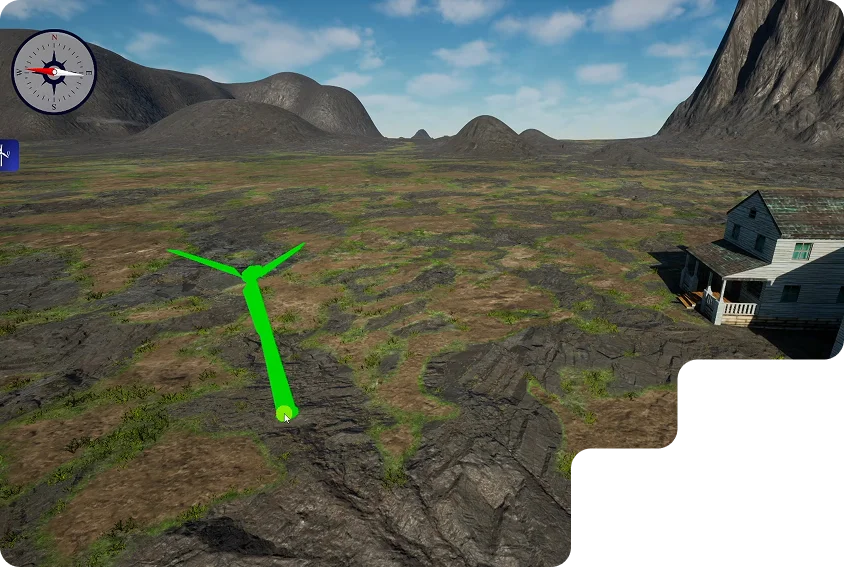
Built-In Real-World Constraints for Safer Layout Planning
To ensure the simulation reflects the real-world deployment
limitations, our created wind farm digital twin enforces
practical placement constraints, including:
No turbine placement on steep slopes (stability risk)
No turbine placement near residential houses (safety and
compliance)
Automated Output & ROI Reporting for Faster Decision-Making
Once a layout is finalized, the digital twin generates a
report that summarizes:
Expected annual energy production
Output variation based on wind speed and direction
ROI/profit estimate based on turbine setup and scenario
selection
Key parameters used in the calculation include:
Terrain coefficient
Air density
Altitude
Cut-in/cut-out speeds
Blade length
Hub height
Nacelle rotation
Wind affect
The Result
A Wind Farm Digital Twin that Delivers ROI Clarity
The Wind Farm Digital Twin transformed how the client
approached feasibility planning:
Actionable, Data-Driven Insights
It enabled wind farm planning teams to compare turbine
layouts side by side, forecast annual energy output with
real wind data, and evaluate profitability before committing
project capital.
Fewer Planning Iterations
By enabling rapid what-if analysis, the twin reduced
planning cycles, saving time and reducing overhead costs
associated with feasibility studies.
Better Investment Confidence
With clear, quantifiable predictions, stakeholders were able
to make strategic decisions backed by simulation data, not
intuition.