

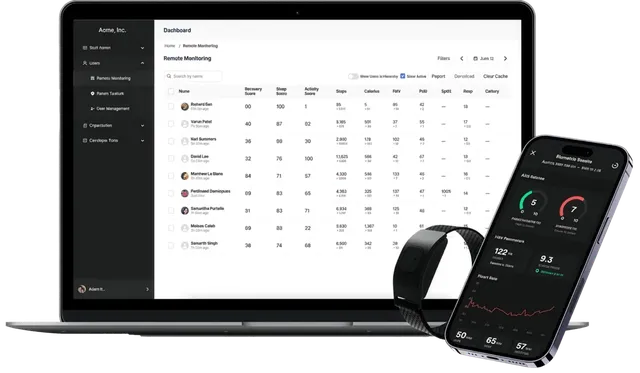
Remote Patient Monitoring Software Development

HIPAA-compliant. EHR-integrated. Better outcome-focused. Since 2011, MindInventory has built clinically validated custom remote patient monitoring solutions across healthcare and digital health. We engineered the biosignal platform behind Biostrap, now SensorBio, with 400M+ hours of data, 100 clinical studies, ECG-validated and the monitoring engine behind Shoorah, powering 120,000+ AI wellness conversations. Let's scope your solution.

Remote Patient Monitoring Software Development
Trusted by Global Healthcare Services Providers, Medical Device Manufacturers, and Clinicians
Sully.ai
Passio
OraQ
SensorBio
Claim Clarity
Shoorah
4

Connected care platforms shipped: physiologic, therapeutic, longitudinal and care coordination

400M+

Hours of biosignal data captured on a pipeline we built, across 100 clinical studies

ECG

Independently validated against the gold standard

120,000+

Remote therapeutic monitoring conversations delivered

RPM Patient and Doctor Video Call

Which Side Of RPM Are You On?

Building or Modernizing an RPM Solution

Whether you’re developing a new monitoring platform or enhancing an existing one, we help with device integration, data and signal architecture, patient apps, clinical workflows, EHR integration, analytics, and billing-related capabilities.

Launching or Scaling an RPM Program

If you’re a healthcare provider or organization looking to support remote monitoring at scale, we can design and build the technology around your clinical workflows, patient needs, and operational requirements.

Remote Patient Monitoring Solutions We Build

We build RPM platforms for different patient populations, and each one needs its own monitoring parameters, alert rules, and billing setup.

Chronic Condition Monitoring

For hypertension, diabetes, COPD, heart failure, and chronic kidney disease.

Cardiac Monitoring

With blood pressure, ECG patches, arrhythmia detection, and post-event follow-up.

Diabetes & CGM Platforms

With continuous glucose integration, insulin adherence, and glucose trend analysis.

Post-Discharge Monitoring

For the thirty-day readmission window, recovery tracking, and early deterioration alerts.

Remote Therapeutic Monitoring

For pain scores, medication adherence, rehabilitation progress, and behavioural health.

Maternal & Prenatal Monitoring

For blood pressure, weight, and fetal monitoring through pregnancy.

Elderly & Long-Term Care

With fall detection, activity monitoring, medication adherence, and caregiver alerts.

Home Health & Senior Living

Supporting multi-site operations, caregiver workflows, and family access.

What Your RPM Platform Will Monitor

Before we start building, we define which health parameters your platform needs to capture. This decision shapes your device selection, your ingestion architecture, and which CPT codes you can bill against.

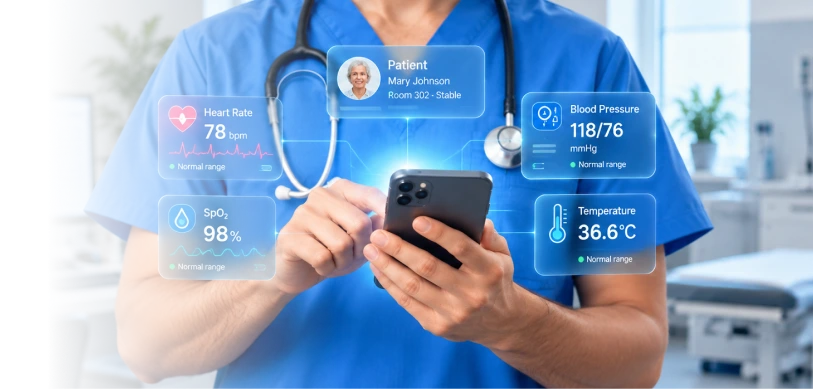
Blood pressure, blood glucose, ECG, oxygen saturation, heart rate and heart rate variability, respiration rate, weight, body temperature, sleep and activity, continuous glucose monitoring.

Pain scores, symptom logs, medication adherence, mood check-ins, rehabilitation progress, fall events, care plan completion.

Blood pressure cuffs, glucometers and CGMs, pulse oximeters, ECG patches, cardiac monitors, connected weight scales, spirometers, thermometers, smartwatches, fall detection sensors, and cellular gateways.

See How MindInventory's Clients Benefit from Custom RPM Solutions

BioStrap: Mobile App and Cloud Biosignal Pipeline for Clinical-Grade Wearable Monitoring

MindInventory developed BioStrap's mobile app, cloud biosignal pipeline, and HIPAA-compliant dashboard to support clinical research and wearable health monitoring. The platform preserves raw PPG, accelerometer, and gyroscope data from capture through cloud processing, enabling researchers and clinicians to work with physiological data beyond preprocessed summaries.

Outcomes:

Used across 100 clinical studies
Adopted by Stanford, UCLA, NASA, Pfizer, Tulane, CHLA, and the NIH
Independently validated against ECG (gold standard) references

Read Case Study

OraQ AI: Longitudinal Risk Tracking Platform for Smarter Care Decisions

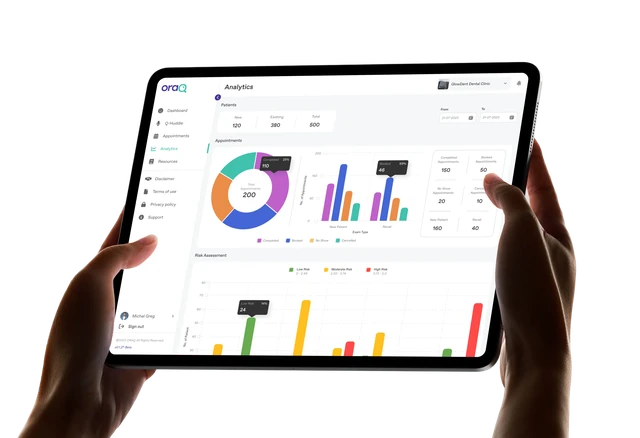
MindInventory engineered OraQ AI, an AI-powered dental assessment platform for dentists and dental practices that integrated patient history, dental imaging, and clinical findings to support consistent, risk-based dental examinations. The platform incorporated AI-powered risk-scoring models, a digital odontogram, periodontal charting, and practice management integrations, built on a compliance-ready architecture designed to support FDA and Health Canada clearance.

Outcomes:

Case acceptance lifted from 30–40% to 70%
Integrates with Dentrix, OpenDental, ClearDent, Curve, and Eaglesoft
$2.6M CAD seed round led by AngelMD; research partnership with the University of the Pacific's Dugoni School of Dentistry
Read Case Study

Sully.ai: AI Agent for Clinical Documentation & Care Coordination

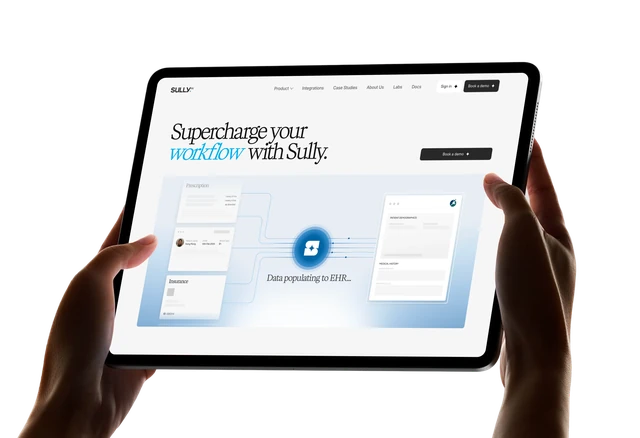
Rising patient demand and physician shortages meant burnout couldn't be solved by one tool automating one task. MindInventory built six purpose-specific, Docker-isolated AI agents (receptionist, triage nurse, scribe, clinical consultant, coder, care coordinator) plus an orchestration layer, running natively inside Epic and athenahealth with human review on every clinical output.

Outcomes:

12.5M+ minutes of clinical documentation automated
21x return on agent spend
Used across 100+ healthcare organizations and 30,000+ providers
Read Case Study

Curious What Results Look Like for A Project Like Yours?

Share your requirements and goals, and we’ll show you the outcomes that similar RPM builds have delivered.

Let's build your project
Healthcare IT Specialist

Our RPM Development Process

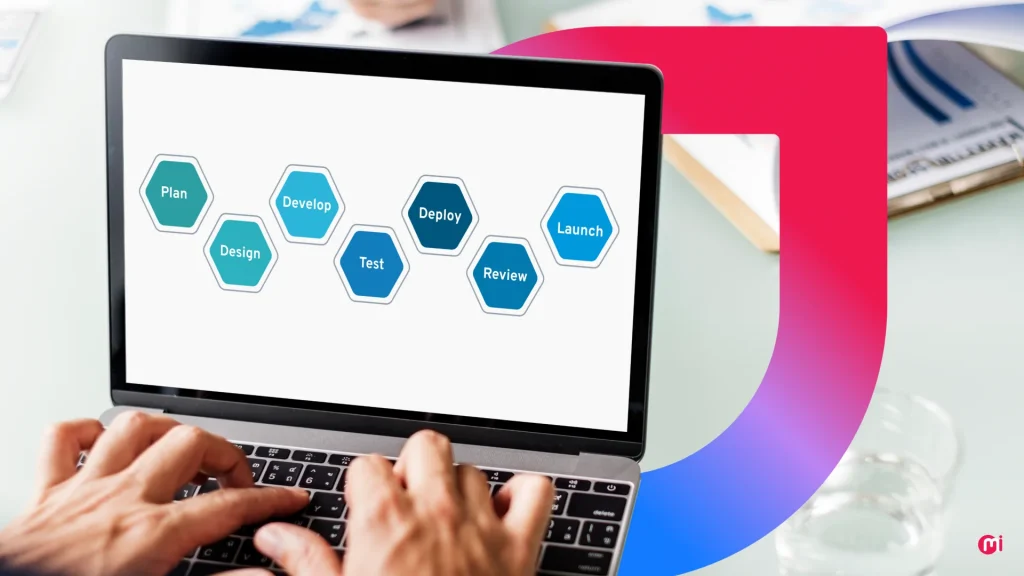
As a custom remote patient monitoring software development company, we follows a structured process, from clinical requirement mapping to EHR-integrated deployment, every software is built to fit your organization.

Step 1

Discovery & Clinical Workflow Mapping

We collaborate closely with your clinical and business teams to understand patient monitoring needs, existing workflows, stakeholder goals, and regulatory requirements before defining the product roadmap.

Step 2

Architecture, Compliance & Technology Planning

Our architects design a scalable, HIPAA/GDPR-compliant system architecture, selecting the right tech stack, cloud infrastructure, and device integration protocols to ensure security and long-term reliability.

Step 3

MVP Design & Development

We build a user-centric MVP with intuitive dashboards for patients and providers, prioritizing core monitoring features first to validate the concept and gather real-world feedback quickly.

Step 4

Device Integration and Connectivity

We integrate wearables, medical devices, EHR/EMR systems, and third-party APIs, building connectivity for real-world conditions: offline sync with original timestamps, duplicate-transmission handling, and pairing that survives phone changes.

Step 5

Clinical Validation, Alert Design and Launch

We set per-patient alert thresholds, use trend detection over single readings, and route alerts by urgency. Then we test under real conditions, weak connectivity included, before compliance testing.

Step 6

Post-Launch Support & Optimization

We provide continuous monitoring, performance optimization, and feature enhancements post-launch, using analytics and user feedback to refine the platform and maximize clinical outcomes over time.

Why Choose MindInventory for RPM Software Services?

15+
Years in software

development, building secure healthcare platforms since our healthcare practice began.

ISO Certified

ISO 9001:2015 and ISO 27001:2013 certified for quality management and information security.

150+
Healthcare platforms

delivered across providers, startups, and enterprises globally.

Full compliance expertise in HIPAA, HL7, FHIR, GDPR, and FDA-ready development.
1,800+ global clients, including Fortune 500 companies, across the USA, UK, Europe, and the Middle East.
300+ in-house engineers with hands-on experience in connected device and IoT integration.
99% uptime for critical clinical systems and 70% reduction in clinical documentation time on delivered projects.
100% ownership on delivery, source code, models, billing logic, and documentation.
Dedicated healthcare IT consulting team for architecture, compliance, and digital transformation strategy.
Reimbursement designed in phase one, billable codes built into the data model, not left to billing.
100+ clinical studies validated our signal data against ECG at Stanford, UCLA, NASA, Pfizer, and the NIH.

Key Integrations for Remote Patient Monitoring Solutions

At MindInventory, we understand the importance of a complete, connected view of patient health. To get the best result, we recommend the following integrations for an RPM solution

[ 1 ]

EHR & EMR Integration for RPM

Readings, alerts, and care management data move directly into the patient chart through our EHR/EMR services, no manual entry, no outdated records.

[ 2 ]

Telehealth Integration for RPM

To turn an alert into a virtual visit without switching systems, keeping the care team in one workflow.

[ 3 ]

RPM Data Analytics

Track cohort reporting, alert-response times, and population health trends across your patient panel.

[ 4 ]

RPM Billing Integration

To align with the 2026 code structure, generate accurate claim output, and reconcile billing automatically.

[ 5 ]

RPM with Chronic Care Management (CCM)

To run RPM and CCM programs together rather than separate, disconnected workflows.

[ 6 ]

Automated Patient Communication

To handle reminders, missed-reading follow-up, and adherence outreach without manual outreach from staff.

[ 7 ]

Smart Patient Monitoring

To bring real-time vitals, alerts, and device data into one unified clinician view.

2026 CPT Codes and What They Mean for Your Platform

CMS added two new RPM codes and lowered one threshold in the 2026 Physician Fee Schedule. These changes affect how your platform stores data, not just how your billing team works.

Code

99453

99445 (new)

99454

99470 (new)

99457 / 99458

What it covers

Setup and patient education

Device supply, 2 to 15 days of data in 30

Device supply, 16 to 30 days of data in 30

First 10 to 19 minutes of management time

First 20 minutes, then each additional 20

2026 change

Threshold dropped from 16 days to 2 days

New code

Rate updated. Cannot be billed with 99445

New code

Unchanged. 99457 mutually exclusive with 99470

What it means for you

You can bill setup much sooner after enrolment

Short-term monitoring is now billable

Your platform must count exact transmission days

Shorter clinical check-ins now generate revenue

First 20 minutes, then each additional 20

What It Costs, and How Long It Takes

Engagement

2026 code readiness review of an existing platform

Billing and compliance engine

RPM platform, single condition, one device family

Multi-condition platform with EHR write-back and research tooling

Signal processing pipeline with clinical validation

Wearable/device integration

Analytics and cohort reporting module

Typical cost

$15,000 – $40,000

$60,000 – $110,000

$90,000 – $180,000

$180,000 – $250,000+

Scoped per engagement

$20,000 – $50,000

$40,000 – $80,000

Typical timeline

3 – 6 weeks

3 – 5 months

5 – 8 months

8 – 14 months

6 – 12 months

4 – 8 weeks

8 – 12 weeks

Build vs. Buy: What's Actually Right for You?

Not every RPM requirement needs custom development. With our remote patient monitoring software development services, we help healthcare organizations assess their needs and decide whether to buy an existing solution or build a custom RPM platform that fits their workflows and goals.

Build It Icon

Build It

Build when you need a platform tailored to your workflows, proprietary devices, advanced data capabilities, complex integrations, or a product you plan to own and scale. Our remote patient monitoring software development experts can help you design and build it as per your organization's requirements.

Buy It Icon

Buy It

Buy when your RPM needs are straightforward, standard care programs, common device integrations, no need to own the platform, and a faster time to market. In such cases, we can help you identify and integrate the right off-the-shelf solution.

A middle path exists. Some teams buy the monitoring platform and build the differentiated layer on top: analytics, patient experience, integrations. We have built both the layer and the whole thing, and the scoping call is usually about which of the three this actually is.

Not sure if you should build, buy, or land somewhere in between?

Tell us your conditions, timeline, and roadmap. We’ll tell you honestly which path fits, even if that means we’re not the right build partner.

Talk to an RPM engineer
Healthcare IT Specialist

What We Build On

Device Connectivity

Bluetooth LE
cellular gateways
device SDKs
MQTT
store-and-forward sync

Consumer and Platform Health Data

Apple HealthKit
Google Health Connect
Fitbit and Withings APIs

Clinical Device Categories

Blood pressure monitors
glucometers
pulse oximeters
weight scales
ECG patches
spirometers
continuous glucose monitors

Signal Processing

Python
NumPy
SciPy
custom DSP pipelines

AI/ML

PyTorch
TensorFlow
scikit-learn for trend and anomaly detection

Streaming and Queuing

Kafka
SQS
Kinesis

Mobile

iOS
Android
React Native
Flutter

EHR Integration

Epic
Oracle Health (Cerner)
athenahealth
Allscripts via HL7 v2
FHIR R4 and SMART on FHIR

Clinical Terminology Mapping

LOINC
SNOMED CT
ICD-10
CPT
RxNorm

Cloud

AWS including GovCloud
Azure Health Data Services
Google Cloud Healthcare API
under BAA-covered configurations

Data and Analytics

Snowflake
Redshift
Azure Synapse
Databricks
time-series stores

Monitoring

Prometheus
Grafana
Datadog

Compliance

Every Engagement Includes
Signed BAA before any PHI, encryption at rest and in transit, MFA on ePHI access, full audit logging, and defined retention/deletion rules for raw signal.
Applied Based on Platform Requirements
FDA clearance for billable data sources, IEC 62304 and ISO 14971 for device-classified platforms, SaMD classification, 42 CFR Part 2 for SUD monitoring, GDPR for EU data, and WCAG 2.1 AA for patient-facing apps.

What Happens After the RPM Software Ships

Software teams scope the platform and forget that RPM runs on physical objects that have to reach a patient’s kitchen table and keep working there. None of this is software, and all of it has to be modeled in software: device state, ownership, lifecycle, cost attribution. Platforms treating a device as a foreign key find the gap when finance asks why the device count and the billable patient count do not reconcile.

Who buys the devices, who assembles the kit, and what the instructions look like for someone who has never set one up.

A device has to be bound to a patient before the first reading arrives, or the reading has nowhere to land. At scale this produces orphaned data and unbillable days.

Devices shipped, activated and transmitting are never the same three numbers, and the gap is unrecovered at cost.

Patients leave programmes, devices come back or do not, and cellular units keep accruing connectivity cost either way.

FREQUENTLY ASKED QUESTIONS

Because each code is distinguished by data your platform has to capture precisely. Platforms built for the old rules commonly store a boolean for ‘16-day threshold met’, which cannot distinguish 99445 from 99454. Time-based codes now split at twenty minutes and require interactive communication to be evidenced, which a single monthly minutes total cannot prove. And because the code pairs are mutually exclusive within a period, the correct code is only knowable at the end of it, so platforms emitting billing events as thresholds are crossed will generate claims they have to reverse.

No. They are mutually exclusive within a 30-day period, and you bill based on actual transmission days: 2–15 days for 99445, 16 or more for 99454. The same applies to 99470 and 99457 for management time. This is why billing determination should run at the end of the period, not when a threshold is crossed.

Medicare only reimburses data from FDA-cleared devices that transmit automatically, consumer wearables usually don’t qualify. It’s an architecture issue, not just procurement: data can look great and still not be billable. At MindInventory, we build the ingestion layer around FDA-cleared devices from day one, since switching strategy later means rebuilding, not tweaking.

It depends on whether the platform needs to be defensible. Derived metrics are cheaper at every layer and the decision is irreversible: once raw signal is discarded, you cannot re-analyse with a better algorithm, reprocess history when your model improves, or support independent validation. Raw signal retention is what allowed the platform we built for Biostrap to be validated against ECG and used in 100 clinical studies. If research use, regulatory clearance or clinical dispute resolution are anywhere on your roadmap, keep the signal.

A code readiness review of an existing platform runs $15,000 to $40,000. A billing and compliance engine runs $60,000 to $110,000. A single-condition platform with one device family runs $90,000 to $180,000 over five to eight months. A multi-condition platform with EHR write-back and research tooling runs $180,000 to $250,000 or above. MindInventory delivers custom RPM solutions aligned with your healthcare and business goals.

Yes, at MindInventory, we build RPM platforms with native EHR integration using HL7 FHIR APIs and vendor-specific connectors, including systems like Epic and athenahealth. This lets monitored data and documentation flow directly into the patient’s chart, so your care team gets accurate, real-time information without manual entry or workflow disruption.

Not always, it depends on what it does with the data. A platform that displays readings and routes alerts to clinicians generally sits outside SaMD. A platform that interprets data to produce a diagnosis, a risk score acted on without clinician review, or a treatment recommendation may fall inside it. The device itself is separately regulated and must be FDA-cleared for the data to be billable.

RPM software development requires defining the target patient population and conditions, required vitals and devices, whether they are FDA-cleared, clinician workflows and EHR integration needs, billing/CPT alignment, care team workflows, alert thresholds, and success metrics upfront. At MindInventory, we walk clients through each of these during discovery, so the platform we build fits your clinical and operational goals from day one.

Custom RPM software should include real-time vitals tracking, device and wearable integration, configurable alert thresholds, patient and provider dashboards, care team messaging, EHR interoperability, analytics and reporting, and secure video consultation. At MindInventory, we tailor this exact feature set to your specialty and care model, so the platform fits your clinical workflow rather than a generic template.

Five recurring ones. Collecting raw data with no clinical action attached to it. Alert logic based on population thresholds, which produces noise and gets ignored. A patient app designed for the team building it, not the 74-year-old using it. No offline handling, so readings are lost when connectivity drops. And a billing model bolted on at the end, which is where the schema problems surface.

RPM software gives clinicians continuous visibility into a patient’s vitals, blood pressure, glucose, weight, SpO2, instead of relying on periodic visits. This helps catch trends like fluid buildup in CHF or glucose drift early, enabling intervention before a crisis. At MindInventory, we’ve seen the real value comes from pairing that data with clear alert and escalation rules, otherwise it’s just more data no one has time to act on.

By monitoring the thirty-day window after discharge, when deterioration is both most likely and most preventable. Vitals, symptoms, medication adherence and missed readings together give an earlier signal than a scheduled follow-up call. The 2026 short-cycle codes made this cohort billable for the first time, since post-discharge monitoring rarely runs the sixteen days the old threshold required.

Our design RPM software for elderly and homebound patients can share vitals from home via connected devices, reducing travel and clinic visits. The platforms include simple interfaces, caregiver alerts, and automated check-ins, letting care teams catch health changes early and intervene proactively without requiring the patient to leave home.

RPM tracks physiologic data from connected devices: blood pressure, glucose, oxygen saturation, weight. RTM tracks therapeutic and non-physiologic data such as pain scores, medication adherence and rehabilitation progress. They have parallel code families, and CMS crosswalked the new RTM device-supply code 98984 to 99454 to keep valuations aligned. A platform serving both needs to model the distinction from the start, because the evidence each family requires differs.

Yes, at MindInventory, we integrate both Apple HealthKit and Google Health Connect into RPM platforms. HealthKit and Health Connect are excellent for patient engagement, adherence context and wellness data. They generally do not supply billable RPM data, because Medicare requires FDA-cleared devices to transmit digitally. Most production platforms use both: cleared devices for the billable physiologic stream, and consumer platforms for the surrounding context.

Yes, we provide dedicated engineers who plug into your existing RPM platform and team, working within your codebase, architecture, and processes. Whether you need extra hands for a sprint, specialized expertise in device integration or EHR connectivity, or a longer-term extension of your team, we scale engineering support to fit what you already have running.

Healthcare Insights From Our Engineering Team

Written by the people doing the work, for the questions that come up before a project starts.
global ai in healthcare report

Global AI in Healthcare Report 2026

This report showcases data from Precedence Research, Grand View Research, Markets and Markets, McKinsey, Doximity, and others prominent research agencies. A comprehensive view provides builders, investors, and healthcare leaders a single, reliable picture of…

post
software development lifecycle phases

Software Development Life Cycle (SDLC): Phases, Types and Benefits

Maximizing efficiency in the software development process is what most business leaders seek, which is why over 94% of organizations practice Agile. Adopting a systematic development approach like a software…

post
top 17 software development trends

Top 17 Software Development Trends in 2026 Businesses Should Know 

Innovation in technology evolves at lightning speed.  Just a decade ago, 4G was making its debut, augmented and virtual reality (AR/VR) were confined to gaming and entertainment, and AI was primarily used…

post