MLOps Consulting Services

MindInventory gets your models out of notebooks and keeps them accurate once they are live. Our 70+ AI engineers, data scientists, and MLOps specialists build the pipelines, monitoring, and retraining that let you ship a model change in hours, spot drift before customers do, and roll back in minutes.

Trusted By Global Clients, Including Fortune 500 Companies

Week 2

A written MLOps plan: where models stall today, what to automate first, and a fixed estimate

Before launch

A tested rollback path and agreed alert thresholds for every model

At launch

Each model monitored on four signals, with a named owner for every alert

At handover

Pipelines, registry, dashboards, and runbooks, owned by you

70+

AI and ML specialists

300+

Engineering specialists

2700+

Projects delivered

1800+

Clients served

15+

Years in business

ISO 42001: 2023

ISO 42001: 2023

ISO 27001: 2022

ISO 27001: 2022

ISO 9001: 2015

ISO 9001: 2015

SOC2 Type II

SOC2 Type II

HIPAA

HIPAA

GDPR

GDPR

How We Scope an MLOps Request

Most MLOps requests start with a model that already exists but is difficult to trust in production. MindInventory first places the request into one of six situations before quoting, because each calls for a different first step. Some cases need a full MLOps setup; others need only a targeted fix.
Your situation
What we usually do first
The model works in a notebook and never shipped
Package it, add a registry, and build one deployment pipeline
It shipped, but nobody knows if it still works
Add monitoring on inputs, predictions, and outcomes
Accuracy slipped and nobody noticed for months
Add drift detection and a retraining pipeline
Every model release takes weeks of manual steps
Automate testing, approval, and deployment
LLM answers or costs change after every update
Build evaluation sets, version prompts, and track cost per request
Several teams run models in different ways
Agree one registry, one pipeline pattern, and one monitoring view

MLOps Systems We've Built and What They've Delivered

These systems were built for production environments where model reliability and data quality cannot be left to chance. Each had to keep working as data changed, failures occurred, and teams relied on the output for real clinical and research workflows.

Sully AI: Continuous Evaluation for Clinical AI Agents

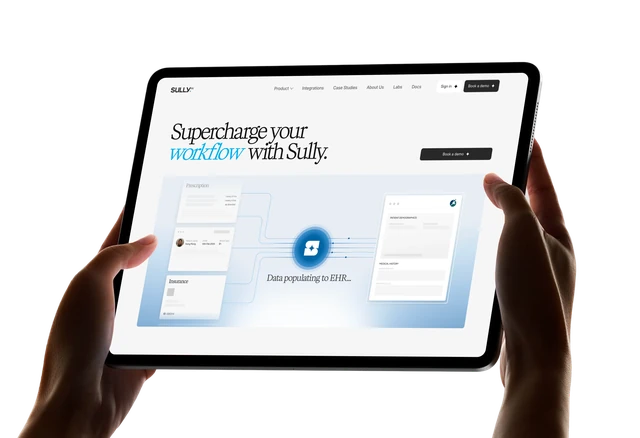
Sully AI's six clinical agents write notes, suggest codes, and triage patients across thousands of daily interactions. MindInventory built the operations behind them: one isolated container per agent, so the coder can be retuned without touching the scribe, continuous evaluation in PyTorch and TensorFlow, and Grafana observability across the pipeline.

Outcomes:

12.5M+minutes of clinical documentation automated
61.17%accuracy on healthcare-specific evaluation, against GPT-5's 53.55%, in Sully AI's published benchmark
1 containerper agent, so each agent is updated and rolled back on its own
Read the case study

Biostrap: Data Quality Gates for Clinical Wearables

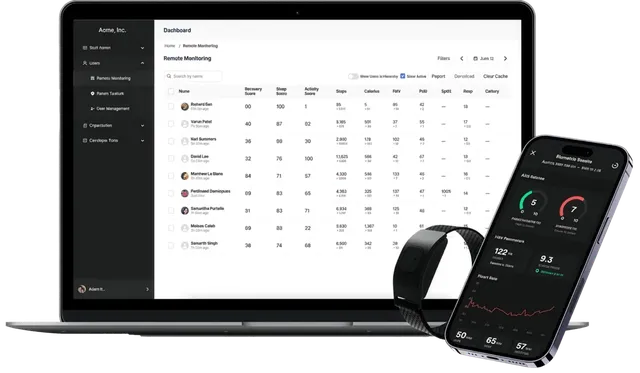
Biostrap's researchers needed raw heart and motion signals they could publish from, not smoothed summaries. MindInventory helped build the cloud pipeline that filters signals, excludes motion-corrupted segments rather than guessing them, and keeps raw data beside every derived value, so history can be reprocessed when methods improve. The figures are reported on Sensor Bio's own site.

Outcomes:

400Mhours of data captured
100clinical studies run on the platform 
Raw datakept beside every derived value, so results can be reproduced
Read the case study

Shipping a Model Change Takes Weeks?

Tell MindInventory how a model moves from training to production today. In two weeks, free of charge, you get a written MLOps plan naming the slowest steps, what to automate first, and a fixed estimate. If a managed platform covers your needs, the plan says so.

Hand touching a glowing digital clock surrounded by data charts and dashboards

The MindInventory Four-Signal Watch

A model is at its most accurate on launch day, and every day after that the world moves away from its training data. MindInventory watches every production model on four signals, and each one has a threshold, a named owner, and an action agreed before launch. Where a system is high-risk under the EU AI Act, Article 72 requires its provider to run post-market monitoring like this. Drift alerts nobody owns are noise, so no signal goes live without a name next to it.

Signal
What we watch
What happens when it crosses the line
Input drift
Whether live inputs still look like training data
The owner investigates; retraining starts if the shift persists
Prediction drift
Whether the mix of predictions has shifted
Outputs are sampled for human review before anything else changes
Outcome accuracy
How predictions compare with real outcomes as they arrive
Retraining is triggered, or the last good version is restored
Cost and latency
Spend per prediction and response time
Traffic moves to a cheaper or faster model, or the change is rolled back

Model Live, but Nobody Trusts It Anymore?

Send MindInventory one production model and a month of its predictions. In five working days, free, we check it on all four signals and tell you what has drifted, what is unmonitored, and what to fix first.

Two engineers reviewing a glowing AI model on a monitor in a control room

Our MLOps Consulting Process

MindInventory runs MLOps work in six stages, with our ML Developers working against a written exit condition at each stage. You can stop after any stage with something useful in hand. A first model on a full production pipeline typically takes 8 to 14 weeks.

  1. Step 1

    Pipeline Audit

    We trace how one model moves from training to production today, and where it waits, breaks, or depends on one person.

    You receive: an audit with the slowest and riskiest steps ranked

    Typical time: 1 to 2 weeks

    Moves on when: you agree the first model to move

  2. Step 2

    Registry and Packaging

    We put the chosen model, its data snapshot, and its scores into a registry, and package it to run the same way everywhere.

    You receive: a versioned, reproducible model

    Typical time: 1 to 2 weeks

    Moves on when: the model rebuilds from the registry alone

  3. Step 3

    Deployment Pipeline

    We automate testing, evaluation, approval, and release, including a tested rollback to the previous version.

    You receive: one working pipeline with rollback

    Typical time: 2 to 4 weeks

    Moves on when: a release and a rollback both succeed in staging

  4. Step 4

    Monitoring and Alerts

    We switch on the Four-Signal Watch, set thresholds with your team, and name an owner for every alert.

    You receive: dashboards and alerts with owners

    Typical time: 2 to 3 weeks

    Moves on when: each signal has fired once in a test

  5. Step 5

    Retraining Loop

    We build retraining on fresh data, with each new version tested against the live one before promotion.

    You receive: an automated retraining pipeline

    Typical time: 2 to 3 weeks

    Moves on when: a retrained model is promoted or rejected by the rules

  6. Step 6

    Handover and Scale-Out

    We document the runbooks, train your team, and apply the same pattern to your next models.

    You receive: runbooks, training, and a plan for the next models

    Typical time: 1 to 2 weeks

    Moves on when: your team ships a release without us

Know What Your MLOps Setup Will Cost

Tell us how many models you run, where they run, and who maintains them. Within two weeks MindInventory returns a fixed estimate and the order to build things in, free of charge.

Hand reaching toward a glowing dollar-sign icon on a digital finance dashboard

The MLOps Stack We Build On

MindInventory works with the cloud and tools you already run and adds only what is missing, so your team is not left maintaining a stack it never chose.

Experiment tracking and registry
MLflow Weights & Biases SageMaker Model Registry Vertex AI Model Registry
Pipelines and orchestration
Kubeflow Airflow Dagster SageMaker Pipelines Vertex AI Pipelines
Serving
FastAPI BentoML Triton Ray Serve KServe
Monitoring and drift
Evidently Grafana Prometheus Datadog Arize
LLM evaluation and tracing
LangSmith Langfuse promptfoo Ragas
Containers and infrastructure
Docker Kubernetes Terraform GitHub Actions GitLab CI
Cloud and MLOps
AWS SageMaker & Bedrock Vertex AI Azure AI Foundry

Managed MLOps Platform, Custom Pipeline, or Both?

MindInventory recommends the lightest setup that keeps your models reliable, and for a team with two or three models that is often a managed platform. The right answer depends on how many models you run and how much control you need.
Measure
Managed platform
Custom pipeline
Hybrid
Best for
A few models on one cloud
Many models, strict control, or several clouds
A managed core with custom monitoring or evaluation
Setup time
Weeks
Months
Weeks to months
Lock-in
Higher, tied to one provider
Lower, built on open tools
Moderate
Watch out for
Costs that grow with usage
More for your team to maintain
Two systems to keep in step

When MLOps Consulting Isn't the Right Fit?

Do you still need the model itself? If nothing is trained yet, or the model is not accurate enough to ship, consider: Machine Learning Development

Is your training data unreliable at the source? If inputs are missing, inconsistent, or arrive late, consider: Data Engineering Services

It Is Also Not the Right Fit If

  • You run one model that rarely changes and a manual release works
  • Your cloud provider's managed tools already cover everything you need
  • Nobody acts on the model's predictions yet
  • Nobody owns a business metric the model is expected to improve

Not Sure You Need a Custom Pipeline?

Send MindInventory your model count, cloud, and release process. In two weeks, free, you get a written recommendation on managed, custom, or hybrid MLOps, and a fixed estimate for the one that fits.

Hand touching an automation hub connected to icons for voice, cloud, chip, health, and data

Why Choose MindInventory for MLOps Consulting

MindInventory’s 70+ AI engineers, data scientists, and MLOps specialists run models in production for clinical, industrial, and research platforms, inside a 300+ person engineering organization.
Rollback before launch icon

Rollback before launch

No model goes live without a tested way back to the last good version.
An owner for every alert icon

An owner for every alert

Each monitored signal has a named person and an agreed action.
LLMs included icon

LLMs included

Prompts, models, and cost per request are evaluated like any other release.
You keep everything icon

You keep everything

Pipelines, registry, dashboards, and runbooks transfer at handover.

Ship Models Faster, or Fix One That Slipped

Starting fresh? MindInventory audits your release path in two weeks and returns an MLOps plan with a fixed estimate. Already have a model in production that nobody trusts? We check it on all four signals in five working days. Both are free.

Woman holding a laptop beside a glowing rocket launching from the screen

MLOps Consulting FAQs

Explore answers to common questions about MLOps consulting

DevOps ships code; MLOps ships code, data, and models together. A model can fail without any code changing, because the data it sees drifts away from what it learned. MLOps adds data checks, model evaluation, a registry, drift monitoring, and retraining to the usual DevOps pipeline. MindInventory builds both into one release process your engineers already recognize.

When monitoring says so, not on a fixed calendar alone. Some models stay accurate for a year; others drift within weeks as prices, products, or customer behavior change. MindInventory sets a baseline schedule and adds triggers from drift and accuracy alerts. Every retrained version must beat the live model on the same data before it is promoted.

By watching inputs and predictions, which change before outcomes arrive. Statistical tests compare live feature distributions with training data, and the prediction mix is tracked for unusual shifts. Real outcomes, when they arrive, confirm whether the drift hurt accuracy. MindInventory sets thresholds per feature so alerts point to a specific cause.

Yes, and LLMs need it more. Answers change when a provider updates a model, when a prompt is edited, or when retrieved content changes. MindInventory versions prompts and models, runs evaluation sets of real questions on every change, checks safety, and tracks cost per request. A change ships only when it scores at least as well as the current version.

Yes. MindInventory starts from what you already run, whether that is SageMaker, Vertex AI, Azure, Databricks, or an open-source stack on Kubernetes, and adds only the missing pieces. Replacing a working tool rarely pays back. The audit names what to keep, what to add, and what to retire.

Usually 8 to 14 weeks for one model with deployment, monitoring, and retraining. A model that only needs packaging and a registry can be done in two to four weeks. MindInventory moves one model first, proves the pattern, then applies it to the rest so later models move much faster.

You do. Pipelines, the model registry, dashboards, alert rules, and runbooks live in your accounts and repositories from day one. MindInventory trains your team on each release and rollback, and the last stage ends only when your team ships a release without us.
RELATED SERVICES

Explore our other related services to enhance the performance of your digital product

AI Insights From Our Engineering Team
Written by the people doing the work, for the questions that come up before a project starts.