AI Voice Agent Development Services

MindInventory builds AI voice agents that answer calls, understand natural speech, complete tasks like booking and intake inside your systems, and pass the caller to a person with full context when they should. Our 70+ AI engineers, data scientists, and MLOps specialists design for what callers notice: response speed, interruptions, accents, and clean handoffs.

Trusted By Global Clients, Including Fortune 500 Companies

Week 2

A written voice agent plan: which calls it handles, which it hands over, and a fixed estimate

Before the build

Call flows tested against recordings of your real calls, with your consent and data controls

At launch

A voice agent connected to your phone system and your scheduling or CRM tools

At handover

All code, call flows, prompts, and call analytics, owned by you

70+

AI and ML specialists

300+

Engineering specialists

2700+

Projects delivered

1800+

Clients served

15+

Years in business

ISO 42001: 2023

ISO 42001: 2023

ISO 27001: 2022

ISO 27001: 2022

ISO 9001: 2015

ISO 9001: 2015

SOC2 Type II

SOC2 Type II

HIPAA

HIPAA

GDPR

GDPR

AI Voice Agent Development Services We Deliver

An AI voice agent is software that holds a spoken conversation, understands what the caller wants, completes the task in your systems, and hands over to a person when it should. MindInventory delivers AI voice agent development as four services, from one call type such as appointment booking to a voice layer across your whole phone line.
Conversational Voice AI icon

Conversational Voice AI

Most production voice agents run as a pipeline: speech recognition turns words into text, a language model decides what to say and which system to call, and speech synthesis speaks the reply. MindInventory builds these pipelines with speech recognition such as Deepgram or OpenAI Whisper, voices from ElevenLabs or Cartesia, and real-time frameworks such as LiveKit or Pipecat. Each stage can be swapped on its own.
Speech-to-Speech Voice Agents icon

Speech-to-Speech Voice Agents

Speech-to-speech models take audio in and produce audio out in one step, which keeps tone and timing natural and can cut response time, but gives less control over exactly what is said. MindInventory uses them where conversation matters most and the task is low-risk, and a checked pipeline wherever payments or health information are involved.
Voice Automation for Inbound and Outbound Calls icon

Voice Automation for Inbound and Outbound Calls

Voice automation connects the agent to your phone line and business systems. MindInventory connects through SIP trunks and cloud telephony, and to the scheduling, EHR, CRM, and order systems that hold the work. Inbound, the agent verifies the caller and completes tasks such as booking. Outbound, it handles reminders and follow-ups, only to people who have consented.
Human Handoff, Recording, and Compliance icon

Human Handoff, Recording, and Compliance

Every voice agent needs a clean exit. MindInventory builds warm transfers that pass the caller to a person with a written summary, so nobody repeats themselves. The agent discloses that it is AI, handles recording consent where the law requires it, and redacts personal and payment details from transcripts. For health calls, every vendor in the pipeline signs a BAA first.

How We Scope a Voice Agent Request

Every call type needs a different depth of automation. MindInventory sorts your calls before quoting, by one rule: automate the calls your team finds repetitive, never the ones it finds hard. The result: the agent takes the volume, and your team keeps the calls that need judgment.
Call Type
Example
What it needs
Answer
"What time do you close on Saturday?"
Approved answers only, no system access
Book or reschedule
"Can I move my appointment to Friday?"
Caller verification and write access to the calendar
Verify and update
"I need to change my address"
Identity checks before any detail is read or changed
Intake and triage
"I've had a fever since Monday"
Structured questions, urgency rules, transfer on red flags
Outbound reminder
Confirming tomorrow's appointment
Prior consent, calling-hour rules, an easy path to a person
Complaint or negotiation
"I want to dispute this bill"
A person, with the call summary ready

Conversational AI We Have Built

These two projects show the parts of a voice agent that decide whether callers are helped or frustrated: the conversation itself, and what happens behind it, from task completion to handing over to a person.

Shoorah: A 24/7 AI Wellness Companion With Voice

People seeking mental health support need it at any hour, in their own words and language, and the data is among the most sensitive there is. MindInventory built Shuru, Shoorah's AI wellness companion, available around the clock by text and voice in multiple languages, with end-to-end encryption and human escalation to licensed therapists, doctors, and life coaches designed in. The conversations figure covers text and voice together, as reported by Shoorah.

Outcomes:

120,000+AI therapy conversations delivered
1,000+Five-star reviews across app stores
24/7Support by text and voice, in multiple languages
Read Case Study

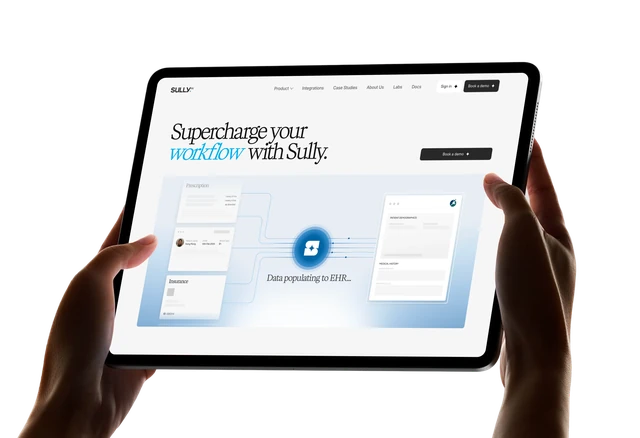
Sully AI: Reception and Triage Agents for Clinics

Clinics lose staff time to scheduling, confirmations, intake, and first-line symptom questions, and every interaction touching patient data must be auditable. MindInventory built Sully AI's receptionist and triage agents: the receptionist handles scheduling and intake, and the triage agent collects symptoms, assesses urgency, and pre-fills the chart. Both work inside Epic and athenahealth and leave every clinical decision to a licensed provider. Sully AI reports these results for its platform as a whole.

Outcomes:

2xthe workload per provider, without additional hours
12.5M+minutes of clinical documentation automated
21xreturn on advertising spend
Read Case Study

Losing Calls Your Team Can't Answer in Time?

Tell MindInventory which calls take up your team’s day. In two weeks, free of charge, you get a written voice agent plan, which calls to automate first, which to keep with people, and a fixed estimate.

Smiling support agent wearing a headset at her desk in a busy contact centre

What an AI Voice Agent Changes for Your Team

MindInventory's voice agents take the routine calls, at any hour, so your team spends its time on the calls that need a person.

What You Get

  • Calls answered at any hour, including nights, weekends, and peaks that used to go to voicemail.
  • Tasks completed during the call, such as booking, rescheduling, or intake, written straight into your systems.
  • Warm transfers. When a caller needs a person, your team gets a written summary before they pick up.
  • Call analytics. Every call is transcribed, tagged by outcome, and searchable.
  • Ownership of everything we build. Code, call flows, prompts, and analytics transfer at handover. Your data never trains models for anyone else.
Where you are now
Where you are after launch
Calls go to voicemail at night and during peaks.
Every call is answered, and routine requests are completed on the spot.
Callers press through menus that don't match what they want.
Callers say what they need in their own words.
Staff spend hours booking and confirming appointments.
Bookings and confirmations happen during the call, straight into the calendar.
Transferred callers have to explain everything again.
The person who picks up already has a summary of the call.
We have no idea why people call.
Every call is transcribed and tagged, so the top reasons are visible.

The MindInventory Voice Latency Budget

A voice agent that pauses too long sounds broken, however clever its answers. Every MindInventory voice agent is built to a latency budget: a time limit for each stage of a reply, with a target of under one second from the moment the caller stops speaking to the moment the agent starts. Where a task genuinely takes longer, such as checking a calendar across several locations, the agent says so naturally, for example “Let me check that for you”, instead of leaving silence.
Stage
Typical budget
How we keep it there
Detecting the caller has finished
200 to 300 ms
Tuned end-of-speech detection, so the agent neither cuts in nor waits too long
Speech recognition
100 to 300 ms
Streaming recognition that transcribes while the caller is still talking
Deciding what to say
300 to 500 ms to the first words
Short prompts, fast models for routine turns, and data looked up before it is needed
Speaking the reply
100 to 200 ms to first audio
Streaming speech, so the first words play while the rest is generated
Network and telephony
50 to 150 ms
Servers in the caller's region and direct telephony connections

Why Callers Hang Up on Voice Agents

Callers forgive an AI voice; they do not forgive waiting, repeating themselves, or getting stuck. MindInventory traces each hang-up to one of six causes, listed in the order a call meets them, and fixes each against the Latency Budget or the handoff design.

What the caller hears
Why it happens
How we fix it
A long pause before every reply
One stage overruns the latency budget
Stage timing, streaming, faster models for routine turns
The agent talks over them, or stops at every cough
Turn detection is not tuned
End-of-speech and barge-in tuning on your real calls
Their name or number is misheard
Recognition is not tuned to your vocabulary
Custom vocabulary and read-back confirmation
"Sorry, I didn't get that" on a loop
No exit after a failed turn
A transfer after two misses, never a third
They repeat everything after a transfer
The person receives no summary
A written summary before the person picks up
The agent can't finish the task
No write access to the calendar or CRM
Tool calls into the system that holds the work

Callers Hanging Up on Your Voice AI?

Recognize one of these? MindInventory reviews your voice agent in five working days, free, using real call recordings, and sends a findings document naming what is driving hang-ups and what fixing it takes.

Person with arms crossed looking thoughtfully at a tablet displaying a graph with a downward trend

Our AI Voice Agent Development Process

MindInventory builds AI voice agents in six stages, from analyzing your real calls to a controlled go-live, with every stage of speech measured against the Voice Latency Budget. A focused voice agent for one call type typically goes live in 8 to 14 weeks.

  1. Step 1

    Call Analysis and Intent Mapping

    We group real calls by type, volume, and outcome, pick the first intents worth automating, and set which calls always go to a person.

    You receive: an intent map with volumes and a containment target

    Typical time: 1 to 2 weeks

    Moves on when: first intents and handoff rules are agreed

  2. Step 2

    Conversation Design and Voice Selection

    We design confirmations, recovery from mishearing, interruptions, AI disclosure, and recording consent, and test voices on phone-quality audio.

    You receive: a conversation specification and the chosen voice

    Typical time: 1 to 2 weeks

    Moves on when: scripts pass your operations and compliance review

  3. Step 3

    Speech Pipeline and Latency Engineering

    We assemble streaming recognition, the language model, speech synthesis, and turn detection, or a speech-to-speech model where it fits, and time every stage.

    You receive: a working pipeline with stage-by-stage timings

    Typical time: 2 to 3 weeks

    Moves on when: replies start in under one second on test calls

  4. Step 4

    Telephony and Systems Integration

    We connect the phone line through SIP, Twilio, or a contact center platform, and the agent's tool calls to your scheduling, EHR, or CRM.

    You receive: the agent answering test numbers end to end

    Typical time: 2 to 3 weeks

    Moves on when: bookings, updates, and transfers complete in testing

  5. Step 5

    Call Simulation and Compliance Testing

    We test simulated callers across accents, noise, and interruptions, and check disclosure, consent, and outbound calling rules such as the TCPA.

    You receive: a test report on task completion, handoffs, and latency

    Typical time: 1 to 2 weeks

    Moves on when: completion and handoff targets are met

  6. Step 6

    Controlled Go-Live and Call Monitoring

    We go live on after-hours calls or a share of traffic first, then widen, with weekly transcript reviews feeding the next release.

    You receive: dashboards, a runbook, and full handover

    Typical time: 1 to 2 weeks, then ongoing

    Moves on when: the agent handles full traffic within targets
How Much Does AI Voice Agent Development Cost?

MindInventory prices AI voice agent development in stages, from under $25,000 for a proof of concept to $150,000 for a production agent that handles several call types, so you hear it take real calls before you commit to the full build. Four things set your number: call types, systems it reads and writes, languages, and compliance rules. Running cost is mostly per-minute speech, model and telephony usage, plus 15 to 20% of build cost each year for monitoring and improvement.

Stage
What it covers
Cost
Timeline
Proof of concept
One call type, such as booking, tested on real call scenarios
Under $25,000
6 to 10 weeks
Focused voice agent
One call type in production on your phone line, with handoff and analytics
$25,000 to $60,000
8 to 14 weeks
Production voice agent
Several call types, inbound and outbound, connected to multiple systems, with monitoring
$60,000 to $150,000
4 to 8 months

How Long Does It Take to Build an AI Voice Agent?

A proof of concept for one call type takes 6 to 10 weeks, and a focused voice agent live on your phone line takes 8 to 14 weeks. A production agent across several call types takes 4 to 8 months. Telephony setup and system access usually set the pace, not the AI. The six stages are set out in Our AI Voice Agent Development Process above.

 Blue gradient background

Know What Your Voice Agent Will Cost

Tell us which calls you want handled and which systems they touch. Within two weeks MindInventory returns a fixed estimate, a call-by-call plan, and a written recommendation, free of charge.

Get my fixed estimate

The Voice AI Stack We Build On

MindInventory builds each voice agent from parts chosen against the Voice Latency Budget: speech recognition, a language model, a voice, and the telephony that connects them to your callers. Every stage is measured on real calls, and each one can be swapped on its own, so a better voice or a faster model never means rebuilding the agent.

Frontier models
Claude GPT Gemini Grok
Open-weight models
Llama Mistral DeepSeek Qwen Gemma Phi
Speech recognition
Deepgram OpenAI Whisper AssemblyAI Google Speech-to-Text
Voices and speech synthesis
ElevenLabs Cartesia OpenAI TTS Azure AI Speech
Speech-to-speech models
OpenAI Realtime API Gemini Live API
Real-time voice frameworks
LiveKit Pipecat
Turn-taking
voice activity detection turn detection barge-in handling
Telephony and contact center
Twilio Vonage SIP trunking Amazon Connect Genesys Five9
Observability
Langfuse Arize Phoenix Helicone OpenTelemetry Datadog
Guardrails
NeMo Guardrails Guardrails AI Llama Guard
Tools and interoperability
MCP Function calling RBAC Structured output

AI Voice Agents We Build for Real-World Call Workflows

MindInventory builds AI voice agents for phone-based workflows where customers repeatedly call to complete routine tasks, get updates, or ask common questions. The agents can understand natural speech, work with your business systems, complete supported tasks, and transfer callers to a person with the conversation context when human help is needed.

Build voice agents for appointment scheduling, confirmations, patient intake, and first-line triage questions, using the agent logic we developed for Sully AI.
Build always-available voice experiences for supportive conversations, with escalation to a human when the situation requires it, as we built for Shoorah.
Handle first-line support, account questions, and order-status requests, with the ability to transfer callers to a human agent along with relevant conversation context.
Automate booking, rescheduling, and job-status calls while connecting the voice agent to dispatch and scheduling systems.
Handle verification, status updates, and claim intake while protecting sensitive information through controls such as transcript redaction.

AI Voice Agent, IVR Menu, or Human Queue?

MindInventory recommends the option that serves the caller, not the biggest build. Many phone lines end up using all three: a voice agent for routine requests, a short menu for a few fixed choices, and people for anything complex or sensitive.

Measure
AI voice agent
IVR menu
Human queue
Caller experience
Says what they need in their own words
Presses or says numbered options
Talks to a person, after a wait
Best when
Many varied but routine requests
A few fixed choices that rarely change
Complex, emotional, or high-value calls
Breaks when
Requests need judgment or empathy a script can't give
Callers' needs don't fit the menu
Call volume spikes beyond staffing
Cost per call
Low, and flat as volume grows
Lowest
Highest, and rises with volume

When a Voice Agent Isn’t the Right Fit for You

Do your customers prefer typing over speaking? If users are more comfortable interacting through your website or app with text, consider: AI chatbot development

Do you want AI to complete the work? If the workflow should run end to end without a person handling each step or a conversation driving the process, consider: AI agent development

Do you want AI to answer from your own information? If users mainly need answers grounded in your documents, knowledge base, or internal data, consider: RAG development

It Is Also Not Right Fit If

  • Your call volume is low enough that your team already answers every call quickly
  • Nobody owns the phone line or the systems the agent must update
  • Most calls need judgment, empathy, or negotiation that should stay with people
  • Nobody owns a business metric the voice agent is meant to move
  • You want the cheapest build on a three-week timeline, with no testing on real calls

Not Sure Which Calls to Automate?

Send MindInventory a week of call reasons or recordings. In two weeks, free, you get a written recommendation: which calls a voice agent should take, which suit a short menu, and which stay with people, with a fixed estimate.

Person in a blue jacket pointing at a tablet displaying a simple bar chart with two bars

Why Choose MindInventory as Your AI Voice Agent Development Company

MindInventory has built software since 2011, and its 70+ AI engineers, data scientists, and MLOps specialists work inside a 300+ person engineering organization that builds the systems voice agents connect to.
Speed is designed in icon

Speed is designed in

Every agent is built to a latency budget, not tuned after callers complain.
The systems behind the call work icon

The systems behind the call work

Bookings, intake, and records land in your EHR, CRM, or scheduler, not in a spreadsheet.
Handoffs are part of the design icon

Handoffs are part of the design

Callers reach a person with context whenever the agent should step aside.
You keep everything icon

You keep everything

Code, call flows, prompts, and analytics transfer at handover.

Plan Your Voice Agent, or Fix a Stalled One

Starting fresh? MindInventory assesses your calls in two weeks and returns a voice agent plan with a fixed estimate. Already running voice AI that frustrates callers? We review it in five working days and tell you what is going wrong. Both are free.

Woman wearing a headset facing a holographic wireframe face over lines of code

AI Voice Agent FAQs

Explore answers to common questions about AI voice agent development

Yes, and they should be able to. MindInventory builds voice agents with barge- in: the agent keeps listening while it speaks, stops as soon as the caller starts talking, and responds to what they said. It also tells real interruptions apart from background noise and short sounds like “uh-huh”, so it does not stop mid-sentence every time someone coughs.

Most major languages, with quality that varies by language and accent. MindInventory picks speech recognition and voices per language, then tests each one against real recordings from your callers before launch. Where callers switch languages mid-call, the agent can follow if the chosen models support it, and that is tested rather than assumed.

Usually, yes. MindInventory connects voice agents through SIP trunks or cloud telephony providers, and to contact center platforms such as Amazon Connect, Genesys, and Five9. Your existing numbers stay the same, and you choose which calls reach the agent first: all calls, after-hours calls, or specific menu options.

It hands the caller to a person, with context. MindInventory sets clear rules for when to transfer, such as the caller asking for a person, frustration in their voice, or a request outside the agent’s scope. Before the person picks up, they receive a short written summary, so the caller never has to repeat themselves. If nobody is available, the agent takes a message and books a callback.

Generally yes, with rules that depend on where you and your callers are. Most places expect callers to be told they are speaking with AI, and many require consent before a call is recorded. In the US, outbound calls using an AI- generated voice fall under the TCPA’s rules for artificial voices, which require prior consent. MindInventory designs disclosure and consent into every call flow. This is general information, not legal advice.

Yes, when the whole pipeline is set up for it. Every vendor that touches the audio or transcript, including speech recognition, the language model, voice, and telephony, must sign a BAA. MindInventory restricts what the agent can say about health information until the caller is verified, redacts sensitive details from stored transcripts, and logs every access.

By call outcomes, not by how natural it sounds. MindInventory tracks the share of calls fully resolved by the agent, transfer rate and reasons, average call length, caller hang-ups, and task success, such as bookings completed. Every call is transcribed and tagged, so the reasons behind each number can be checked call by call.

Yes, for calls people expect, such as appointment reminders, confirmations, and follow-ups. MindInventory builds outbound calling only to people who have consented, with clear identification at the start of the call, an easy way to reach a person, and respect for local calling-hour rules. Unsolicited outbound sales calls with an AI voice are not something we build.

Yes. You can choose from professional voice libraries or create a custom voice from recordings of a voice actor or spokesperson, with their written consent and a license covering commercial use. MindInventory tests the chosen voice for clarity on phone lines, where audio quality is lower than on a website, before it goes live.
RELATED SERVICES

Explore our other related services to enhance the performance of your digital product

AI Insights From Our Engineering Team
Written by the people doing the work, for the questions that come up before a project starts.