RAG Development Services

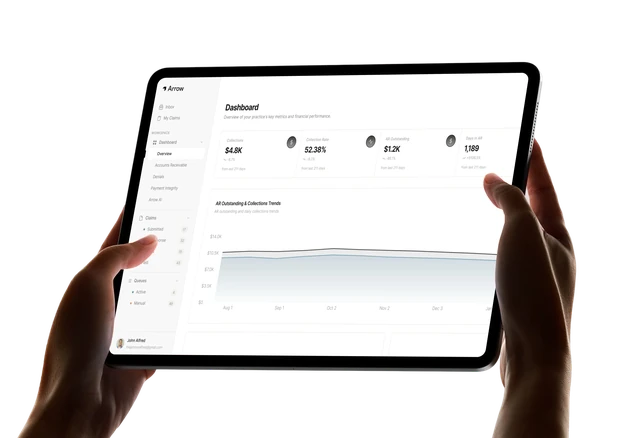
Our RAG development services combine 70+ AI engineers, an ISO 42001-certified AI management framework, and production expertise to turn your business data into reliable, retrievable, and traceable AI answers. We built Arrow’s claim denial platform, which uses Pinecone vector search to match each new denial against past resolutions, with 1.5B+ claims processed through the platform.

Trusted By Global Clients, Including Fortune 500 Companies

Day 5

A written review of your current RAG pilot: what it finds, what it misses, and why

Before the build

A test set of your users' real questions, with the passages that should answer them

At launch

Answers that only draw on documents each user is allowed to see

At handover

All code, pipelines, and indexes, owned by you

70+

AI and ML specialists

300+

Engineering specialists

2700+

Projects delivered

1800+

Clients served

15+

Years in business

ISO 42001: 2023

ISO 42001: 2023

ISO 27001: 2022

ISO 27001: 2022

ISO 9001: 2015

ISO 9001: 2015

SOC2 Type II

SOC2 Type II

HIPAA

HIPAA

GDPR

GDPR

RAG Development Services We Deliver

RAG (retrieval-augmented generation) lets an AI model look up the right passage in your documents before it answers, so every answer is current and traceable to a source. Most RAG problems are retrieval problems wearing a model’s name, so MindInventory’s 70+ AI engineers, data scientists, and MLOps specialists put most of the engineering into finding the right evidence. We deliver RAG as five services, from RAG consulting on a first use case to production systems inside your product or across your company’s documents.

Ingestion and Semantic Chunking icon

Ingestion and Semantic Chunking

Most RAG failures start before search: a table split in half, or a heading cut from its clause. We parse each source with Unstructured, LlamaParse, or Docling and chunk by the document’s own structure, so sections, clauses, and table rows stay intact. MindInventory’s default chunk is one section of roughly 300 to 800 tokens, carrying its heading path, source, date, owner, and access rights. On a US tax advisory platform, our team paired Amazon Textract with Claude to turn uploaded tax forms into structured records an advisor reviews.

Vector Search and Hybrid Retrieval icon

Vector Search and Hybrid Retrieval

Vector search finds passages by meaning but can miss exact identifiers such as part numbers, policy codes, and names. We run it alongside BM25 keyword search and merge the results, with date, document type, and permission filters applied inside the query. Embeddings live in Pinecone, Weaviate, Qdrant, Milvus, or pgvector, chosen by your scale and current stack. Hybrid retrieval is MindInventory’s default starting point.

Reranking and Grounded Answers icon

Reranking and Grounded Answers

On MindInventory builds, the first search pass retrieves 30 to 50 candidates, and a cross-encoder reranker passes only the strongest 5 to 8 to the model. That cuts token cost and leaves less room to blend unrelated sources. The model answers only from those passages, cites each one, and says it does not know when they fall short.

RAG Inside Your SaaS Product icon

RAG Inside Your SaaS Product

An “Ask AI” feature inside your product has different constraints from internal search. MindInventory scopes every query to one tenant using an ID from the signed-in server session, never from the browser, so Customer A never sees Customer B’s data. Caching, smaller models for simple questions, and tight passage limits keep cost per query flat as usage grows, and answers stream in as they form. A first version over one content source can ship in 6 to 10 weeks.

Enterprise Search AI and GraphRAG icon

Enterprise Search AI and GraphRAG

Enterprise search AI puts one question box across Google Drive, Notion, Confluence, SharePoint, or a ticketing system, with each source’s permissions carried into the index. Our AI Integration Services connect these systems securely, while GraphRAG adds a knowledge graph of entities and relationships for questions that span many records, such as which suppliers appear in contracts with a given clause. Graphs cost more to build and maintain, so we add one only when your test questions show standard retrieval failing.

How We Scope a RAG Request

Not every question is a retrieval question. Before any build, MindInventory sorts your users’ real questions into six jobs, because many RAG requests are really a database query, an extraction task, or an action, and each needs a different system.
The Job
What The User Asks
What It Needs
Look up
"What is our refund window for annual plans?"
Standard RAG: hybrid search, reranking, one cited passage
Synthesize
"Summarize our data retention rules across regions"
RAG over several passages, with a citation per claim
Connect
"Which suppliers appear in contracts with this clause?"
GraphRAG, or structured metadata, across many records
Calculate
"What was total refund value by region last quarter?"
A query against the database, not passages for a model to add up
Extract
"Pull the policy number and limit from every claim form"
Document extraction into fields, scored per field
Act
"Reschedule this appointment and email the patient"
An agent with tools and approvals, not a retrieval system

RAG Systems We Have Built

We applied RAG to real production workflows, connecting client data and systems to relevant retrieval, grounded answers, and human-controlled actions.

Arrow - Healthcare Revenue Cycle AI

Claim denials are a documentation problem more than a clinical one, and the evidence needed to overturn them sits scattered across systems that don't talk to each other. We built a human-in-the-loop platform for denial investigation, appeal drafting and payer follow-up. It works as a connectivity layer over the EHR and clearinghouse systems the client already ran, replacing none of them.

Outcomes:

85%Claim denials reduced by
18 DaysAccounts receivable days cut from 45
1.5B+Claims processed through the platform
Read Case Study

Planning an AI Feature That Answers From Your Documents?

Send us a sample of your documents and the questions your users ask. In two weeks, at no cost, MindInventory returns a written recommendation, the retrieval approach we would use, and a fixed estimate. Sometimes the answer is plain search, and we will say so.

Hands typing on a laptop with glowing question marks floating above the keyboard

What RAG Development Changes for Your Team

MindInventory's RAG systems answer from passages pulled at the moment of the question, so answers stay current as documents change and every claim points back to its source.

What you get

  • A test set built before the system. Several hundred real questions, each paired with the passages your experts say should answer it, checked on every release.
  • A document pipeline with written rules for each source type, so new content joins without a rebuild.
  • Answers that respect access. Each user only gets answers drawn from documents they can already open.
  • Answers with sources. Every answer links to the passages it used, and the system says "I don't know" instead of guessing.

  • Ownership of everything we build. Code, pipelines, indexes, prompts, and the test set transfer at handover. Your data never trains models for anyone else.
Where you are now
Where you are after launch
Our RAG pilot did well on 20 test questions and badly on real ones
Several hundred real questions gate every release, checked on search and on answers separately.
Users get answers drawn from documents they are not allowed to see.
Each user's permissions filter the search before the model sees any passage.
Answers quote a policy we replaced last quarter.
Changed documents update within an agreed window, and old versions drop out of results.
Search finds the right topic but misses the exact part number or clause.
Keyword and meaning-based search run together, so exact codes and paraphrased questions both find their passage.
Nobody can tell where an answer came from.
Every answer links to its sources, so a reader can verify it before acting on it.

The MindInventory RAG Scorecard

A RAG system without a test set is a demo. Every MindInventory RAG build ships with the MindInventory RAG Scorecard: six measures that score retrieval separately from generation on every release, run with Ragas, DeepEval, or Promptfoo against your own question set. Thresholds for each measure are agreed at kickoff, and a release ships only when it meets them. When an answer is wrong, the Scorecard shows whether search or the model caused it.
Measure
What It Tells You
The Failure It Catches
Retrieval recall
Whether the passage that answers the question came back at all
The answer is wrong because search never found the source
Context precision
How much of what came back was relevant
Noise passages crowd out the right one and raise cost
Faithfulness
Whether every claim in the answer is supported by a retrieved passage
The model adds facts the documents do not contain
Citation accuracy
Whether each cited passage actually supports the sentence citing it
Citations that look right and point to the wrong place
"I don't know" rate on unanswerable questions
Whether the system declines when the documents hold no answer
Confident answers to questions nobody documented
Freshness lag
Time from a document change to its appearance in results
Answers quoting superseded versions

Is Your RAG Pilot Pulling the Wrong Passages?

MindInventory audits the system you already have in five working days, free. We test it against real questions, check how documents were split and indexed, and confirm whether answers stay inside their sources and permissions hold. The findings document names what is missing and what fixing it would take.

Hands typing on a laptop whose screen shows a glowing error cross over a data dashboard

Why RAG Answers Go Wrong

When a RAG answer is wrong, the cause is almost always upstream of the model, which is why swapping to a bigger model rarely fixes a failing pilot. MindInventory traces every wrong answer to one of six causes, each caught by a specific Scorecard measure or test, so the fix goes where the fault is.
What the user sees
Where it went wrong
What catches it
How we fix it
A wrong answer with a real-looking source
Search never returned the right passage
Retrieval recall
Hybrid search, better chunking, query rewriting
An answer missing half the rule
A clause or table was split across chunks
Retrieval recall and faithfulness
Structure-aware chunking with heading paths
An answer quoting last year's policy
The index missed a document change
Freshness lag
Incremental sync and version metadata that demotes old versions
An answer drawn from a document the user cannot open
Permissions applied after retrieval, or not at all
Permission tests in the suite
Access filters inside the query, before the model
A citation that does not say what the answer claims
The model blended passages or attached the wrong source
Citation accuracy
Claim-level citations, checked against the cited passage
An answer that obeys instructions hidden in a document
Retrieved text treated as instructions
Prompt injection tests
Retrieved text handled as data, with output checks

Our RAG Development Process

MindInventory builds RAG systems in six stages and scores retrieval and answers with the RAG Scorecard at every one. A focused RAG application typically reaches production in 8 to 14 weeks, and no stage moves forward until it meets an agreed threshold.

  1. Step 1

    Knowledge Source Audit and Golden Question Set

    We map every source the system will answer from, with formats, owners, update frequency, and access rights. Your experts help us assemble 200 to 500 real user questions with agreed answers: the test every later stage must pass.

    You receive: a source map, an access model, and the golden question set

    Typical time: 1 to 2 weeks

    Moves on when: every priority question traces to a source document

  2. Step 2

    Document Parsing and Semantic Chunking

    We build the ingestion pipeline with Unstructured, LlamaParse, or Docling, chunking by document structure so clauses and table rows stay whole, with metadata on every chunk and incremental sync.

    You receive: an ingestion pipeline with incremental sync

    Typical time: 2 to 3 weeks

    Moves on when: spot checks show tables and clauses intact and every chunk carries its metadata

  3. Step 3

    Embedding, Hybrid Retrieval, and Reranking

    We benchmark embedding models on your golden questions, combine vector and BM25 keyword search, filter by permission inside the query, and rerank the final passages.

    You receive: a retrieval service with permission filtering

    Typical time: 1 to 2 weeks

    Moves on when: retrieval recall on the golden set meets the agreed threshold

  4. Step 4

    Grounded Generation With Citations

    We engineer context assembly within a token budget, a citation for every claim, and an explicit "not enough evidence" response when retrieval comes back weak.

    You receive: an answer service with inline citations

    Typical time: 1 to 2 weeks

    Moves on when: faithfulness and citation accuracy meet their thresholds, and out-of-scope questions are declined

  5. Step 5

    Evaluation, Security Testing, and User Pilot

    We run the Scorecard as a CI regression suite, test for prompt injection and permission leaks, then pilot with real users and capture every thumbs-down.

    You receive: a Scorecard report and pilot findings

    Typical time: about 2 weeks

    Moves on when: thresholds hold on real pilot traffic with zero permission leaks

  6. Step 6

    Production Launch and Index Monitoring

    We deploy with Langfuse tracing, latency and cost dashboards, automatic re-indexing, and a weekly review of failed questions.

    You receive: dashboards, a runbook, and full handover of code and pipelines

    Typical time: launch in 1 week, then ongoing

    Moves on when: handover is signed off

How Much Does RAG Development Cost?

RAG development at MindInventory runs from under $25,000 for a proof of concept to $150,000 for a production system across several sources, priced in stages so you prove answer quality on your own documents before committing to the larger build.
Stage
What it covers
Cost
Timeline
Proof of concept
One document source, a sample question set, measured answer quality
Under $25,000
6 to 10 weeks
Focused RAG feature
An Ask AI feature in your product, or one team's knowledge base, with sources and access rules
$25,000 to $60,000
8 to 14 weeks
Production RAG system
Several sources, permissions across them, monitoring, and the full test harness
$60,000 to $150,000
4 to 8 months

How Long Does It Take to Build a RAG System?

A proof of concept on one document source takes 6 to 10 weeks, and a focused feature such as an in-product Ask AI takes 8 to 14 weeks. A production system across several sources with permissions and monitoring takes 4 to 8 months. The schedule is usually set by document access and by expert time spent defining correct answers, not by the model. The six stages are set out in Our RAG Development Process above.

 Blue gradient background

Know What Your RAG System Will Cost

Send a sample of your documents and the questions your users ask. Within two weeks MindInventory returns a fixed estimate, the retrieval approach we would use, and a written recommendation, free of charge.

Get my fixed estimate

The RAG Stack We Build On

MindInventory picks every layer of a RAG system for your documents, your scale, and your hosting rules, then scores each choice with the RAG Scorecard before it ships. The vector database is one of the least important choices you will make. Parsing, search, and models stay separate, so any one of them can be replaced later without rebuilding the others. You get a RAG system built from proven parts, where a better model or vector store later is a swap rather than a rebuild.

Embedding models
OpenAI embeddings Cohere Embed Voyage AI open-weight BGE and E5 models
Vector stores
Pinecone Weaviate Qdrant Milvus Pgvector Chroma
Keyword search
BM25 Elasticsearch OpenSearch
Reranking
Cohere Rerank cross-encoder rerankers
Knowledge graphs
Neo4j
Retrieval
LangChain LlamaIndex GraphRAG Hybrid search Reranking
Frontier models
Claude GPT Gemini Grok
Open-weight models
Llama Mistral DeepSeek Qwen Gemma Phi
Evaluation
Ragas DeepEval Promptfoo Braintrust LangSmith
Observability
Langfuse Arize Phoenix Helicone OpenTelemetry Datadog
Cloud and MLOps
AWS SageMaker & Bedrock Vertex AI Azure AI Foundry MLflow Kubernetes

Where we apply RAG

MindInventory applies RAG wherever people need answers from documents that change and must be checked.

Claim denial research and billing questions, as on Arrow, plus policy and protocol lookup with cited sources
KYC and compliance document review, as on Altilia’s platform, and support answers drawn from product and policy documents
In-app Ask AI over help content and each customer’s own data, with tenant isolation
Contract clause search and regulation lookup, with every answer linked to the clause it relies on
Answers drawn from runbooks, tickets, and help articles, so agents and customers get the same current answer

Dense, Hybrid, or GraphRAG Retrieval?

Use the cheapest retrieval that passes your test set. MindInventory chooses the retrieval method by testing your real questions against each option. Most systems ship on hybrid retrieval. Dense alone suits a narrow, well-written collection. GraphRAG is worth its higher build cost only for questions that connect many records.
Measure
Dense Vector Retrieval
Hybrid Retrieval
GraphRAG
Finds well
Paraphrased questions over clean, consistent prose
Both paraphrases and exact identifiers, codes, and names
Questions that connect entities across many documents
Misses
Part numbers, clause IDs, rare names
Questions that need several hops across records
Simple lookups, which it answers at higher cost
Build and upkeep
Lowest. One embedding index
Moderate. Two indexes and a merge step
Highest. Entity extraction, graph build, re-extraction on change
Right when
One well-written collection, conversational questions
Most collections with mixed vocabularies
Your test set shows connection questions that hybrid fails

When RAG Isn’t the Right Fit for You

Do you need to extract specific information from documents? If the goal is to pull defined fields, values, or data points from documents and send them into a system of record, consider: Intelligent Document Processing

Do you want AI to plan and act across tools? If the system needs to decide what to do, use multiple tools, and complete tasks rather than simply retrieve information, consider: AI Agent Development

It Is Also Not Right Fit If

  • Your documents fit comfortably in a model's context window and rarely change
  • Plain keyword search already answers your users' questions
  • Nobody owns the source documents, so the system would faithfully cite outdated content
  • Nobody owns a business metric the system is meant to move
  • You want the cheapest build on a three-week timeline, with no test set

Why Teams Choose MindInventory as Their RAG Development Company

MindInventory has built software since 2011, and its 70+ AI engineers, data scientists, and MLOps specialists work only on AI and data systems, inside a 300+ person engineering organization.
Search is tested on its own. icon

Search is tested on its own.

You see whether the right passage came back before anyone judges the answer, so fixes go where the fault is.
Access rules apply before the model reads anything. icon

Access rules apply before the model reads anything.

That is the only point where a data leak can be stopped.
We will tell you when you do not need RAG. icon

We will tell you when you do not need RAG.

If your documents fit in a model’s context window or plain search does the job, you hear that in writing.
You keep the test harness. icon

You keep the test harness.

The question set and scoring transfer at handover, so your team can check every future change.

Fix Your RAG, or Plan the One You Need

Already running a RAG pilot? MindInventory reviews it in five working days and tells you what is missing. Starting fresh? We assess one use case in two weeks and return a fixed estimate. Both are free.

A developer seen from behind working on a laptop and a second monitor full of code

RAG Development FAQs

Explore answers to common questions about RAG development

RAG looks up information in your documents at the moment of the question. Fine-tuning trains a model on examples to change how it behaves. Use RAG when answers depend on documents that change or must cite a source, and fine-tuning for consistent format, tone, or terminology. Fine-tuning to teach a model facts is the most expensive way to get stale answers. Fine-tuning is covered under LLM Development.

You do, from day one. Source code, document pipelines, indexes, prompts, and the test harness transfer to you at handover, with nothing licensed back. Your documents and user questions never train models for anyone else, and the system can run in your own cloud account so your data stays where it already lives.

Yes, and it is a common starting point. The Stalled Pilot Review audits what exists in five working days: how documents were split and indexed, what search returns for real questions, whether answers stay inside their sources, and whether permissions hold. Often the model is fine and retrieval is the problem, which is a smaller job than a rebuild.

By filtering at retrieval, before the model sees anything. Each chunk carries its source document’s access rights, and every query runs with the user’s identity from your sign-in system, whether that is your own app’s auth, Auth0, Okta, or Entra ID. Passages the user cannot open never reach the model. Filtering the answer afterward fails, because the model may already have paraphrased restricted content.

With incremental indexing tied to each source. Connectors detect new, edited, and deleted documents and re-index only what changed. MindInventory agrees a freshness window per source at kickoff: minutes for a ticketing system, a day for a policy library. Old versions are removed or demoted, and freshness lag is tracked in the test harness, so a stalled sync shows up as a number before it shows up as a wrong answer.

Usually the one closest to what you already run. If your data lives in PostgreSQL, pgvector avoids a new system. Pinecone reduces operations work, while Weaviate, Qdrant, and Milvus suit self-hosted or very large deployments. The choice matters less than chunking and reranking, so we make it after the proof of concept, on measured results.

Sometimes. If your documents fit comfortably in a model’s context window and rarely change, sending them whole can beat a retrieval pipeline. Long context gets expensive and slow at volume, because every query pays for every token, and it cannot apply per-user permissions inside one prompt. RAG wins when the collection is large, changes often, or holds content different users may not share.

Because demo questions are usually written by people who know the documents. Real users phrase questions differently, ask about things no document covers, and quote identifiers that meaning-based search alone misses. The fix is a test set built from real user questions, hybrid retrieval, and a path for the system to say it does not know.

Yes, if ingestion treats them as structure rather than plain text. Scanned pages go through OCR first, tables are kept whole with their headers attached to every row, and spreadsheets are indexed by sheet and column so a question about one figure retrieves the row it sits in. Where a question needs a calculation across many rows, the system queries the data directly rather than asking the model to add numbers from passages.

On MindInventory’s RAG builds, a first release usually starts with 200 to 500 real user questions rather than ones written by the project team. The set should cover your main document types, exact-code lookups, questions the documents cannot answer, and questions different user roles ask. Fewer than about 100 makes small regressions invisible. The set grows after launch as reviewers flag answers, so every fixed failure becomes a permanent test.

The system should surface the conflict instead of picking one silently. Each source carries metadata for date, version, and authority, so a current policy outranks a superseded draft. Where two current sources genuinely disagree, the answer cites both and says they conflict, which usually exposes a document problem worth fixing anyway.
RELATED SERVICES

Explore our other related services to enhance the performance of your digital product

AI Insights From Our Engineering Team
Written by the people doing the work, for the questions that come up before a project starts.