
RPM Software Development Services

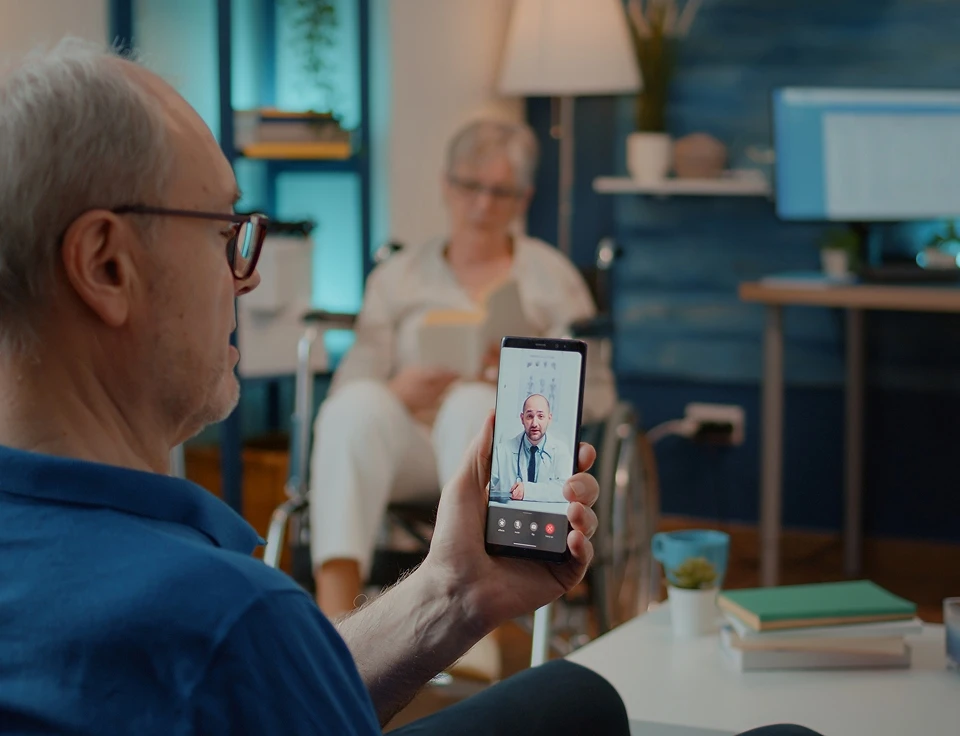
Transform episodic care into continuous monitoring with secure, cloud-enabled RPM platforms tailored to your clinical and operational workflows.
hero-banner

Trusted By 1800+ Global Clients, Including Fortune 500 Companies

Our RPM Software Development Services

We design & implement scalable RPM software solutions that support continuous care delivery, improves clinical visibility, and integrate seamlessly with existing healthcare ecosystems. From strategy to deployment and long-term evolution, our software development services for RPM enable scalable monitoring programs aligned with modern care models.

Strategic Consulting

Successful remote patient monitoring programs begin with clarity around clinical goals, monitoring workflows, device strategy, and interoperability requirements. Our healthcare technology experts work with your teams to define a roadmap that aligns RPM initiatives with operational priorities, patient engagement strategies, and reimbursement readiness.

With our healthcare IT consulting services, we ensure your monitoring program is designed for measurable outcomes, clinician adoption, and long-term scalability from the outset.

RPM Software Integration

Remote monitoring solutions deliver the greatest impact when connected to the broader healthcare technology ecosystem. With our elite software integration services, we integrate RPM platforms with EHR systems, connected medical devices, telehealth environments, and analytics infrastructure to ensure uninterrupted data flow across clinical workflows.

This enables care teams to access monitoring insights within familiar systems without introducing operational friction.

RPM Software Development

We build secure, scalable RPM software platforms that enable real-time patient data capture, intelligent monitoring workflows, and actionable clinical insights. Each solution is tailored to support your care delivery model, whether focused on chronic condition management, post-discharge monitoring, or hospital-at-home programs.

Our platforms are designed to operate reliably across distributed care environments while supporting future expansion across patient populations and monitoring use cases.

Maintenance & Support

As monitoring programs expand across patient populations, RPM platforms must remain reliable, secure, and adaptable. We provide continuous optimization, performance enhancements, and integration support to help healthcare organizations scale their remote monitoring capabilities with confidence.

Our long-term support approach ensures your RPM platform evolves alongside changing clinical needs, regulatory expectations, and digital health strategies.

service banner
Build a Scalable Remote Patient Monitoring Platform Tailored to Your Care Delivery Model

Discuss Your RPM Requirements

Unlocking Clinical and Operational Value with RPM Software

RPM software empowers healthcare organizations to transition from reactive treatment models to proactive, continuous care delivery. With real-time patient insights and connected monitoring workflows, providers can improve clinical outcomes, optimize resource utilization, and expand remote care programs without increasing infrastructure dependency.

Support Early Intervention with Continuous Patient Monitoring

Continuous access to patient-generated health data allows care teams to identify early signs of deterioration and intervene before conditions escalate. This supports proactive care delivery across chronic disease programs, post-discharge recovery pathways, and long-term condition management initiatives.

Reduce Avoidable Readmissions and Optimize Care Resources

Remote monitoring helps providers maintain visibility into patient health between visits, reducing avoidable hospital returns and easing pressure on clinical infrastructure. Care teams can prioritize high-risk patients more effectively while maintaining oversight across larger patient populations.

Extend Care Delivery Beyond Traditional Clinical Settings

RPM platforms enable healthcare organizations to extend monitoring capabilities into patients’ homes and community settings without compromising clinical oversight. This supports hospital-at-home models, transitional care programs, and broader access to continuous monitoring services.

Scale Chronic Disease Monitoring Across Patient Populations

Managing chronic conditions requires consistent tracking, timely interventions, and sustained patient engagement. Remote monitoring software supports structured long-term monitoring programs that help providers manage complex patient populations more efficiently.

Our Impactful Healthcare Software Development Projects

We partner with healthcare providers, digital health startups, and medical institutions to build scalable, secure, and interoperable software platforms that strengthen clinical workflows and support continuous care delivery.

Key Features of a Remote Patient Monitoring Software

An effective remote patient monitoring platform must go beyond device connectivity to support continuous clinical visibility, timely interventions, and seamless integration with existing care delivery systems. As a trusted healthcare software development company, we design RPM software with capabilities that enable healthcare organizations to manage distributed patient populations efficiently while maintaining high standards of care quality and data security.
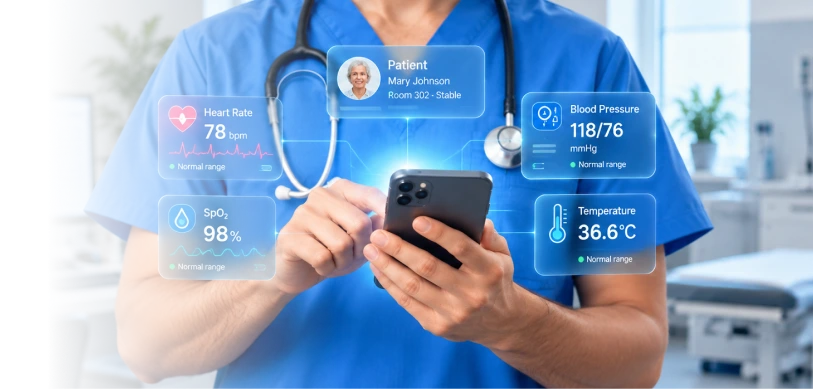
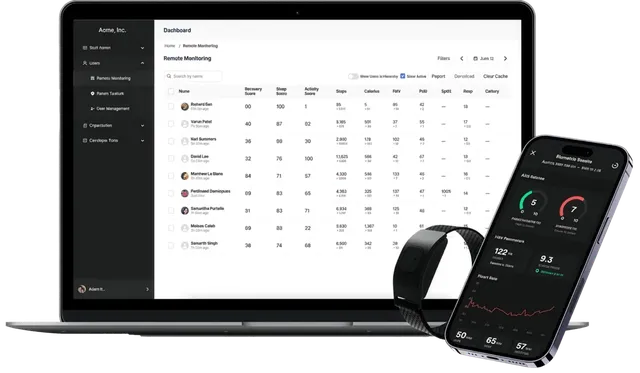
Centralized monitoring dashboards provide clinicians with continuous visibility into patient health indicators across conditions and care programs. This enables faster identification of emerging risks and supports informed clinical decision-making between scheduled visits.
Automated alerting mechanisms notify care teams when patient vitals cross predefined thresholds or show concerning trends. These alerts help prioritize interventions and ensure timely responses without increasing monitoring complexity for providers.
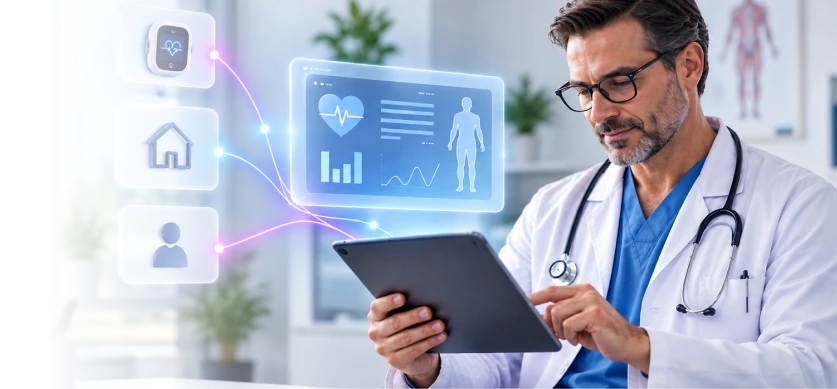
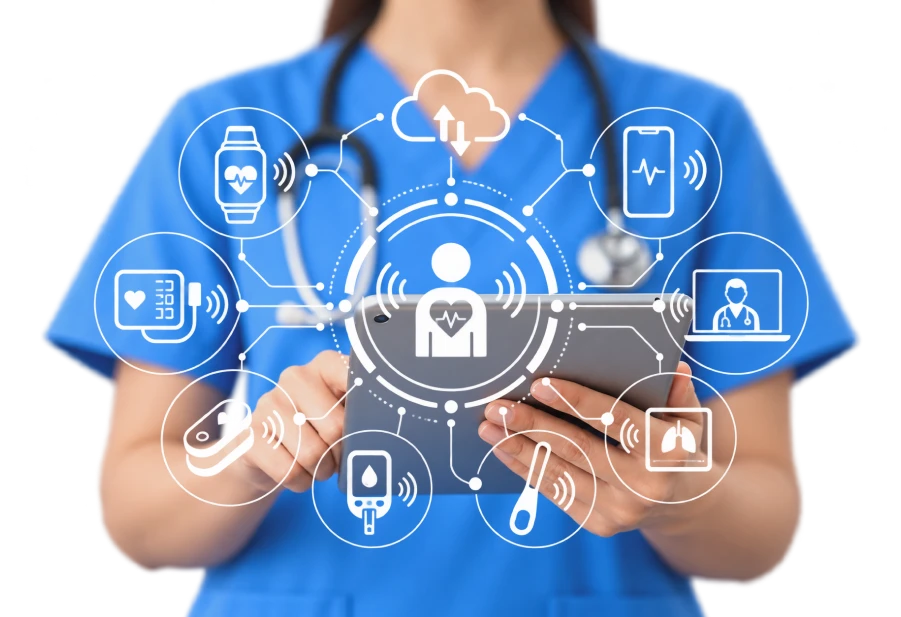
Seamless integration with connected medical devices enables secure and reliable capture of patient-generated health data from home monitoring environments. This supports consistent monitoring across chronic care, post-discharge recovery, and preventive care programs.
Structured monitoring workflows allow providers to trigger interventions, adjust care plans, and coordinate follow-ups based on real-time patient insights. This helps maintain continuity of care without requiring frequent in-person interactions.
Patient-facing mobile and web interfaces encourage consistent participation in monitoring programs through reminders, health insights, and communication tools. Improved engagement strengthens adherence to treatment plans and enhances long-term monitoring outcomes.
Modern RPM platforms are designed to support monitoring across multiple conditions simultaneously, enabling organizations to manage complex patient populations through a unified monitoring infrastructure rather than fragmented solutions.
RPM software integrates with existing clinical systems to ensure monitoring insights are available within familiar provider environments. This reduces workflow disruption and supports faster adoption across care teams.
Advanced analytics capabilities help organizations track trends across patient cohorts, identify high-risk segments earlier, and optimize monitoring strategies at scale. These insights support both operational planning and value-based care performance initiatives.

Compliance & Security We Support

Remote patient monitoring platforms must operate within strict regulatory and interoperability frameworks while ensuring continuous protection of sensitive patient data. Our RPM software development services ensure security-first architectures and standards-aligned integrations to support safe, compliant, and scalable remote care delivery across healthcare environments.

HIPAA Readiness

We develop HIPPA compliant software with RPM platforms including encrypted data handling, access control mechanisms, and protected transmission workflows. This helps organizations confidently manage patient-generated health data across distributed monitoring environments.

FHIR Interoperability Support

FHIR-aligned integration frameworks enable secure and structured exchange of monitoring data between RPM platforms and clinical systems. This ensures patient insights remain accessible within existing digital health ecosystems without disrupting established workflows.

HL7 Integration Support

HL7 compatibility enables seamless communication between monitoring platforms and hospital information systems, supporting continuity of care across departments and clinical infrastructure layers.

GDPR Support for Global Deployments

For organizations operating across regions, we design RPM platforms with privacy-aware data handling approaches aligned to global regulatory expectations. This supports responsible patient data management across cross-border care delivery environments.

SOC-Aligned Infrastructure Readiness

We implement infrastructure architectures designed to support enterprise-grade monitoring environments with strong logging, traceability, and system reliability expectations aligned to modern security governance practices.

Role-Based Access Control Architecture

Granular access management & detailed audit logging ensure transparency across monitoring workflows while protecting sensitive patient information. These capabilities strengthen accountability, improve oversight & support regulatory audit preparedness across remote care programs.

How We Design & Deliver Scalable RPM Platforms

Building an effective remote patient monitoring platform requires more than connecting devices and dashboards. It involves aligning monitoring workflows with clinical operations, integrating securely with healthcare systems, and designing infrastructure that supports long-term scalability across patient populations.
    1. Step 1
      Monitoring Strategy Mapping & Clinical Workflow
      We begin by understanding your monitoring objectives, patient cohorts, and care delivery pathways to define how remote monitoring will function within your clinical ecosystem. This ensures the platform supports meaningful interventions rather than simply collecting patient-generated health data.
    2. Step 2
      Data Ingestion Architecture & Device Connectivity
      Our team designs secure device integration frameworks that enable reliable ingestion of physiological data from connected medical devices, wearables, and home monitoring systems. This creates a consistent and scalable foundation for continuous patient monitoring across distributed environments.
    3. Step 3
      EHR Integration Layer & Interoperability
      We integrate RPM platforms with EHR systems and existing healthcare infrastructure using standards-aligned data exchange approaches. This allows clinicians to access monitoring insights within familiar workflows without introducing operational disruption.
    4. Step 4
      Clinical Decision Support Layer & Intelligent Monitoring
      We implement monitoring dashboards, threshold-based alerts, and structured escalation pathways that help care teams identify risks earlier and prioritize interventions effectively. This transforms monitoring data into actionable clinical intelligence.
    5. Step 5
      Compliance Alignment & Secure, Scalable Deployment
      Finally, we prepare the platform for enterprise deployment with security-aligned infrastructure, role-based access controls, audit readiness capabilities, and scalable cloud-native architecture. This ensures your monitoring programs can expand confidently across departments, facilities, and patient populations.

      Why Choose MindInventory for Remote Patient Monitoring Software Development?

      Building a successful RPM platform requires more than technical implementation. It demands alignment with clinical workflows, interoperability with healthcare systems, and infrastructure designed to support secure, scalable remote care programs.

      MindInventory is a custom RPM software development company that combines healthcare domain expertise with strong engineering capabilities to help organizations design and deploy RPM solutions that support long-term digital care strategies.

      Healthcare-Focused Software Engineering Expertise

      Strong Interoperability & Integration Capabilities

      Scalable Cloud-Native Platform Architecture

      Security-First Development Approach

      Flexible Engagement Models for Healthcare Organizations

      Long-Term Technology Partnership Approach

      About Us

      Crafting cutting-edge digital solutions with creative minds
      Who We Are
      A Mindful team of tech innovators bringing world-class tech ideas to reality. We embrace the power of technology to provide cutting-edge digital solutions that propel our clients toward unprecedented success.
      What Drives Us?
      Creativity is our heartbeat. We constantly challenge ourselves to further our technical prowess and help our customers to deliver exceptional customer experience.
      Years of Expertise

      15+

      Countries Served

      40+

      Tech Experts

      300+

      Clients Served

      1800+

      Projects Delivered

      2700+

      Clutch Logo
      4.7 4.7/5 Star Rating
      GoodFirms Logo
      4.7 4.7/5 Star Rating
      DesignRush Logo
      4.8 4.8/5 Star Rating
      TopDevelopers Logo
      5.0 5/5 Star Rating

      What Our Clients Have to Say About Us

      Behind every testimonial is a business problem solved, a system improved, or a product successfully launched. Here’s how our clients describe that journey.
      Dimas Lipiz
      Dimas Lipiz

      CEO, RouteMe

      MindInventory's developers are the best in the office.

      Our business scaled faster with quicker onboarding and installation processes enabled by MindInventory. Their team demonstrated excellent project management skills, and we were particularly impressed with their developers. Communication was smooth and efficient through virtual meetings.

      Prakash Senghani
      Prakash Senghani

      CEO, Navatech Group Limited

      We were impressed with their excellent project delivery.

      The project was delivered on schedule, with additional resources provided at no extra cost. MindInventory ensured strong customer success follow-ups and maintained effective communication throughout. Their dedication and client-focused approach truly set them apart.

      Bogdan Ungureanu
      Bogdan Ungureanu

      Head of UI UX, NAGA.com

      Strong Collaboration on a Full Trading App

      I have had the pleasure of working with MindInventory for more than a year now on our biggest design challenges of creating a full trading app for both web and mobile. From the very start, the collaboration was smooth and effective. The team really understood our vision, and they quickly aligned with our high standards. Together, we designed a platform that feels intuitive, reliable, and engaging for our users. I highly recommend MindInventory to anyone looking for strong design.

      Erika Migliaccio
      Erika Migliaccio

      CEO & Founder, Upstream HR

      Turning a Dream App into Reality with Creativity and Strong Project Planning

      A dream was turned into reality with an app that makes it easy for managers and colleagues to share meaningful appreciation at work. The MindInventory team truly listened, understood the vision, and provided flexibility, creativity, and unbeatable project planning. Within months, the app came to life and is now being used and loved.

      Dmitiry Richard Starson
      Dmitiry Richard Starson

      CEO, Passio.ai

      We’re delighted to have them as our partners because they’re phenomenal.

      Cost-effective services from MindInventory made it easier to scale the business efficiently. The team maintains a timely and communicative process using tools like Jira and Slack. Their reliability and ability to quickly find the right resources are highly appreciated.

      Rod Ferris
      Rod Ferris

      CTO, Pangea Pod Hotel

      A Flexible and Reliable Development Team

      A Laravel admin panel and an iOS check-in app were developed with exceptional efficiency, exceeding our expectations. MindInventory consistently met deadlines and completed everything within the allocated hours, ensuring a smooth launch. They are a high-quality and flexible team, with every developer able to meet requirements and communicate effectively.

      Ryan Miller
      Ryan Miller

      Senior Web Developer, Social Hustle

      Impressive SaaS Designs & Development That Matched Our Vision

      A software-as-a-service application was successfully designed with high-quality output and a strong understanding of our requirements. The MindInventory team communicated effectively and consistently impressed us with their work, leading to a long-term collaboration. Their developers and project management were attentive and focused, ensuring satisfactory results throughout.

      Frequently Asked Questions

      Here is the list of the most searched questions on RPM software solutions that may resolve your queries firsthand.

      The RPM software development cost depends on factors such as platform complexity, device integrations, EHR interoperability requirements, compliance needs, and analytics capabilities. Many organizations start with a focused use case and scale the platform over time. A discovery phase helps define the scope and provide a more accurate investment estimate aligned with your care delivery goals.

      The development timeline depends on platform complexity, device integrations, interoperability requirements, and compliance needs. Typically, a scalable RPM platform can take anywhere from a few months for an MVP to longer for enterprise-grade solutions with advanced integrations and analytics capabilities.

      Yes. Modern RPM platforms are designed to integrate with existing healthcare systems using interoperability standards such as FHIR and HL7. This allows clinicians to access monitoring insights within familiar workflows without disrupting daily operations.

      RPM platforms can integrate with a wide range of connected medical devices, including blood pressure monitors, glucose meters, pulse oximeters, weight scales, cardiac monitoring devices, and wearable sensors. Device integration strategies are typically aligned with the monitoring goals of each healthcare program.

      RPM platforms are designed with security-first architectures aligned with healthcare data protection expectations such as HIPAA and other regional privacy frameworks. Compliance readiness depends on implementation strategy, infrastructure configuration, and organizational policies.

      Yes. Modern RPM platforms can support monitoring across multiple chronic and acute conditions through centralized dashboards, configurable alert systems, and structured care workflows designed for managing diverse patient populations.

      RPM software enables continuous patient engagement and earlier interventions, helping providers improve outcomes while reducing avoidable hospital utilization. These capabilities support performance-based care delivery models aligned with value-based care strategies.

      Yes. RPM platforms can be designed to support documentation workflows aligned with reimbursement programs such as Remote Patient Monitoring (RPM) and Remote Therapeutic Monitoring (RTM), helping organizations operationalize sustainable remote care services.

      Custom RPM platforms are built using cloud-native architectures that support scaling across patient populations, monitoring programs, and clinical departments. This ensures long-term performance as remote care initiatives expand.

      The process typically begins with defining monitoring goals, identifying patient cohorts, selecting device integration strategies, and planning interoperability requirements. A structured discovery phase helps align the RPM platform with your organization’s care delivery model and long-term digital health roadmap.

      What's Trending In Industry

      Explore the latest insights from our tech experts on RPM software development.

      digital twins in predictive patient care
      post

      Healthcare has long been built on a simple formula: wait for something to go wrong, then fix it. A patient experiences chest pain, books an appointment, receives a diagnosis, and…

      rpa in healthcare
      post

      The global RPA in healthcare market size is expected to reach $33.93 billion by 2032, from just $4.29 billion in 2024, at a CAGR of 29.5% during the forecast period.…

      telemedicine app development guide
      post

      Healthcare is no longer confined to clinics or hospitals. It is using telemedicine apps and appointment booking apps to streamline OPD functions. Telemedicine app development started as an emergency response…