






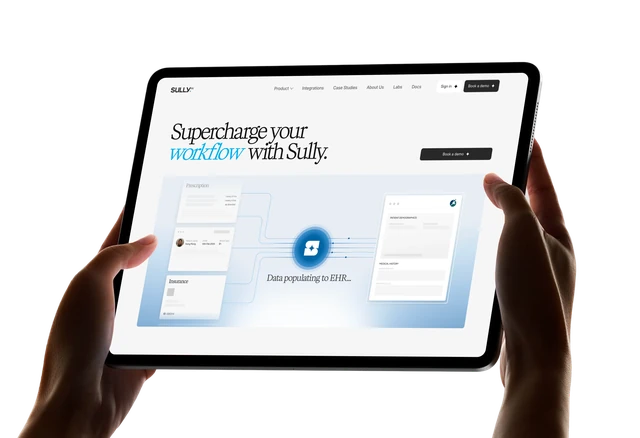
EHR Integration Services

Seamless connections. Smarter integrations with HL7 and FHIR

Strengthen patient outcomes and enhance operational efficiency with EHR integration services that provide smooth, compliant access to patient records. At MindInventory, we offer EHR consulting and hands-on integration expertise, connecting your healthcare IT ecosystem and software products to EHR systems through HL7 v2 and FHIR-native architecture.

EHR Integration Services
Trusted by Global Healthcare Services Providers, Medical Device Manufacturers, and Clinicians
Sully.ai
Passio
OraQ
SensorBio
Claim Clarity
Shoorah
Sully.ai
Passio
70+

Healthcare integrations delivered – see open item 1

7

Named systems live in production: Epic, athenahealth, Dentrix, OpenDental, ClearDent, Curve, Eaglesoft

1.5B+

Claims processed through an integration layer we built

12.5M+

Minutes of documentation written back into an EHR

ISO 42001
ISO 13485:2016
HITRUST
AICPA SOC 2
CERTIFIED ISO 27001:2022 COMPANY
CERTIFIED ISO 9001:2015 COMPANY

Why EHR Integration Matters and What It Delivers

EHR integration connects your application, devices, or platform directly to the electronic health record, eliminating manual data entry, reducing errors, and giving care teams a single, real-time view of the patient. Here are the benefits of EHR integration services:

20%-30% Clinical Staff Efficiency

Remove manual PHI entry across systems frees up hours clinicians currently lose to data entry and reduces time spent on patient information.

Reduced Risk of Medical Rrrors

Provide comprehensive, real-time patient data at the point of care helps clinicians catch and avoid errors that affect patient records.

Higher Clinician Satisfaction

Allows faster access to patient data means less time on paperwork and PHI search, and more time on actual clinical work.

Faster, More Informed Clinical Decisions

A single good connection can bring information together, faster across disconnected systems.

Better Reimbursement Accuracy

A well-structured, integrated system can reduce data errors, billing errors and claim denials.

Stronger Compliance and Audit Readiness

Provides safe data flows through validated, HIPAA-compliant integration channels.

How We Helped Our Client's with Secure and Scalable EHR Integration Architecture

Sully.ai: Integration Layer for AI Agent Operation Within Epic and Athenahealth

MindInventory built the integration layer that allowed Sully.ai's clinical AI agents to operate natively within Epic and Athenahealth, reading patient context from the chart and writing structured clinical documentation back into it. The integration used each vendor's supported interface path, with clinician review positioned inside the existing workflow so that outputs entered the patient record without staff leaving the system they already worked in.

Outcomes:

12.5M+ minutes of clinical documentation written back into the chart
Native integration with Epic and athenahealth
Used across 100+ healthcare organisations and 30,000+ providers

Read the case study

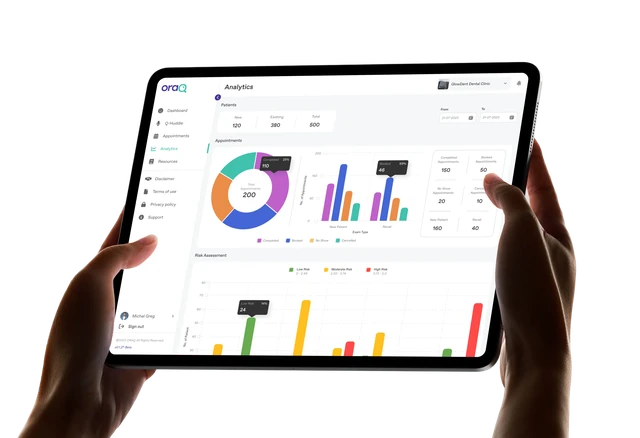
OraQ AI: Bidirectional Integration Layer for Multi-System Dental Practice Management

MindInventory developed OraQ AI's bidirectional integration across Dentrix, OpenDental, ClearDent, Curve, and Eaglesoft, five practice management systems with differing data models and differing definitions of a patient record. The integration layer normalised those differences, handled two-way synchronisation, and accommodated version variation across practices upgrading on independent schedules.

Outcomes:

Live in five practice management systems in production
Case acceptance lifted from 30–40% to 70%
Dedicated engineering team in place since 2022
Read the case study

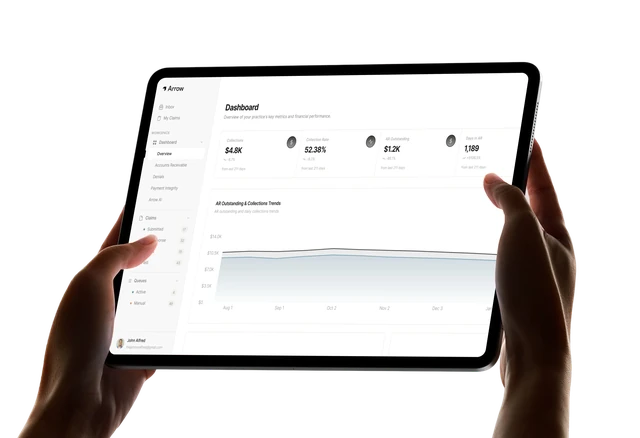
ArrowHQ: Multi-System Connectivity Layer for Claims and Denial Management

MindInventory developed ArrowHQ's connectivity layer across EHRs, clearinghouses, and payer portals, systems that shared no common identifiers or data formats and held denial evidence in fragments. The layer consolidated that evidence using Pinecone vector search and SQS queuing without replacing any underlying system, allowing the platform to deploy over the client's existing infrastructure.

Outcomes:

1.5B+ claims processed through the platform
A/R days cut from 45 to 18
85% reduction in claim denials
Read the case study

EHR Systems We Help You Connect

Category
What We've Connected
EHR Platforms
Epic and athenahealth natively in production. Oracle Health (Cerner), MEDITECH, NextGen and Allscripts through HL7 v2 and FHIR
Practice Management Systems
Dentrix, OpenDental, ClearDent, Curve and Eaglesoft, bidirectionally, from a single product
Claims and Revenue Cycle
Clearinghouses, payer portals and eligibility services, at 1.5B+ claims processed
Labs and Diagnostics
LIS connectivity, order entry and results routing with reconciliation against the original order
Imaging
PACS and RIS through DICOM, including study routing and viewer handoff
Devices and Wearables
Biosensor and connected-device pipelines, including raw signal capture preserved end to end for clinical research
Pharmacy and Prescribing
e-prescribing networks and medication data exchange
Payer and Administrative
X12 transactions for eligibility, claims and remittance

Not Sure What your EHR Integration Actually Requires?

Tell us the systems, the data, and the direction it needs to move and we’ll map out exactly what the integration takes before you commit to a timeline.

Healthcare IT Specialist

Why Healthcare Organizations Choose MindInventory for EHR Integration

15+
Years in Healthcare Software

development, building secure healthcare platforms since our healthcare practice began.

ISO Certified

ISO 9001:2015 and ISO 27001:2013 certified for quality management and information security.

150+
Healthcare Platforms

delivered across providers, startups, and enterprises globally.

Full compliance expertise in HIPAA, HL7, FHIR, GDPR, and FDA-ready development.
99% uptime for critical clinical systems and 70% reduction in clinical documentation time on delivered projects.
1,800+ global clients, including Fortune 500 companies, across the USA, UK, Europe, and the Middle East.
Every integration pattern lives in production, native EHR, bidirectional PMS sync, and a connectivity layer processing 1.5B+ claims.
We connect before we quote, every target EHR gets a live connection attempt during discovery, so estimates survive contact with production.
You own the integration layer, source code, mappings, and documentation transfer to you on delivery, no retained components.

What Integration Actually Costs Per Platform

Platform
Reported Integration Cost
Why it Lands There
Athenahealth
$10,000 – $48,000
API-first from the beginning. Cloud-native, simpler certification, faster development
Epic
$20,000 for basic API access, rising to $250,000+ for enterprise scope
App Orchard / Showroom certification, sandbox approval gates, proprietary API extensions, and separate go-live approval at each customer site
Oracle Health (Cerner)
Mid-range, closer to Epic than athenahealth
Developer programme access required, mixed FHIR maturity across modules
Meditech
Varies widely by version
Older deployments frequently need HL7 v2 rather than FHIR
Full Bidirectional, per Platform
$50,000 – $80,000
10–18 weeks covering patient data, documentation, orders, results, scheduling and medications
Multi-platform Bidirectional Suite
$150,000+
Each additional platform adds its own certification, testing and quirks

Our EHR Integration Services Process

Step 1

Discovery and System Audit

We connect to each target system in discovery. Not read the documentation, connect. Timelines built on documentation are guesses, and this is the single most common source of overrun in the category.
Step 2

Data and Scope Mapping

We define how data fields, identifiers, and record formats translate across systems, that resolves mismatches before a single line of integration code is written.
Step 3

Architecture Selection

Next, we choose the right integration path per system, based on what each platform actually supports, like HL7 v2, FHIR, vendor-specific APIs.
Step 4

Build and Sandbox Testing

Against each sandbox environment, we build the integration layer and test it against real data patterns, catching edge cases before anything touches production.
Step 5

Compliance and Security Validation

We validate encryption, access controls, audit logging, and BAA requirements. Every integration undergoes is HIPAA-compliant by design.
Step 6

Production Deployment

We deploy into your live environment and monitor to ensure data flows correctly from day one without disrupting existing workflows.
Step 7

Monitoring and Maintenance

After deployment, we track data flow and provide support if there is any issue and ensure to provide long-term success and operational efficiency.

Modelling the Cost of Connecting to Several EHRs?

Connecting multiple EHR platforms can affect development costs, timelines, and complexity. Get an estimate based on your platforms, workflows, and requirements.

Healthcare IT Specialist

Compliance We Build into Every EHR Integration

Integration is where PHI moves, which makes it where most of the exposure sits.

Governance Frameworks We Work To

NIST AI Risk Management Framework · ISO 42001 controls · EU AI Act risk classification for systems used in Europe · model cards and documented evaluation results for clinical governance review

HL7 v2
HL7 v2
X12 for claims and eligibility
FHIR R4 and R5
FHIR R4 and R5
SNOMED CT
SNOMED CT
USCDI v3, with v5 emerging
LOINC
LOINC
SMART on FHIR
SMART on FHIR
ICD-10
ICD-10
CDS Hooks
CDS Hooks
CPT
CPT
CCDA
CCDA
RxNorm
RxNorm
DICOM
DICOM

Choosing the Right EHR Integration Architecture

Direct Integration
Integration Engine (Mirth Connect)
Managed API Network (Redox and Similar)
Best when
One or two interfaces, and you need depth on a specific platform
Three or more interfaces, especially across mixed protocols
You are a vendor onboarding many health systems quickly
Speed
Slowest per platform, fastest to deep customisation
Moderate setup, fast to add each subsequent interface
Fastest initial coverage across many EHRs
Cost Shape
Build cost per platform, no licence
Open source engine, so your cost is engineering time rather than per-transaction fees
Platform fee scaling with transaction volume
Where it Bites
Every new platform is a new project
Someone has to run and monitor the engine
Per-transaction fees as you scale, and less depth on any single platform
Our Default
For one platform, or for depth inside Epic
At three or more interfaces, where it pays for itself
For fast multi-EHR coverage, with direct connections added where depth matters

FHIR vs HL7 v2: Which One Do You Need?

Not a competition. Most real integrations use both.

FHIR R4 by Default for New Work

FHIR R4 by Default for New Work

REST-based, ONC-mandated, portable across platforms, cheaper to maintain. Higher initial cost because of OAuth and SMART on FHIR security, and lower total cost within about eighteen months.

HL7 v2 Where FHIR Doesn't Reach

HL7 v2 Where FHIR Doesn't Reach

Real-time clinical events, patient admitted, lab result available, order placed, still move over HL7 v2 feeds in most hospitals. Legacy departmental systems often speak nothing else. Cheaper to build, more transformation logic to maintain.

CCDA for care-transition documents. DICOM for imaging. Both still routine.

The Practical Rule

Let the systems you must reach choose the standard, then minimise custom mapping. A team that insists on FHIR everywhere will spend the difference building workarounds for hospitals that were never going to expose it.

What Product Companies Underestimate About EHR Integration

If you are a health tech company rather than a single provider organization, integration has a shape that surprises people.

Check Icon

Every Customer Site Is Its Own Approval

Epic integration is not one certification. It is application review, sandbox testing, security validation and go-live approval at each customer site. Plan three to twelve months depending on complexity, and understand that your second hospital does not inherit your first hospital’s approval.

Check Icon

Sandbox Behaviour Is Not Production Behaviour

Test environments are clean. Production data has null fields, duplicate identifiers, non-standard code sets and twenty years of history entered by people working at pace.

Check Icon

Your Customers Upgrade On Their Own Schedule

You will support several versions of the same integration simultaneously. Design for it or retrofit it painfully.

Check Icon

What We Do About It

We make live contact with every target system during discovery, before a timeline is committed, and we scope the per-site approval effort separately from the build. Integration is where healthcare projects overrun, and it overruns because it was estimated from documentation instead of from a connection.

Check Icon

Developer Programme Access Is A Real Dependency

Partners already inside Epic App Orchard and Showroom, Oracle Health’s developer programmed and athenahealth’s Marketplace get sandbox access and certification support faster than a team starting cold. That is weeks of calendar time on every deal, not a nicety.

Not Sure Where Your Integration Falls in this Process?

Connect us, we’ll map out exactly where you’d start and what it takes to get to production.

Healthcare IT Specialist

Tech Stack We use for EHR Integration

EHR Platforms

Epic
Oracle Health (Cerner)
MEDITECH
athenahealth
NextGen
Allscripts

Practice Management

Dentrix
OpenDental
ClearDent
Curve
Eaglesoft

Standards

HL7 v2
FHIR R4/R5
USCDI
SMART on FHIR
CDS Hooks
CCDA
DICOM
X12

Integration Engines and Networks

Mirth Connect
Redox
InterSystems

Terminologies

SNOMED CT
LOINC
ICD-10
CPT
RxNorm

Back-end

Python
Node.js
PHP
Golang

Cloud

AWS
Microsoft Azure
Google Cloud Platform, under BAA-covered configurations

Monitoring

Prometheus
Grafana
Datadog
Elastic Stack

FREQUENTLY ASKED QUESTIONS

At MindInventory, for single FHIR connection starts around $15,000. Full bidirectional integration runs $50,000 to $80,000 per platform over ten to eighteen weeks, and a multi-platform bidirectional suite passes $150,000. Platform matters: athenahealth typically lands between $10,000 and $48,000 because it was built API-first, while Epic runs from around $20,000 for basic API work to $250,000 or more at enterprise scope, largely because of certification and per-site approval overhead. HIPAA engineering adds 20% to 30% on top.

At MindInventory, the cost for EHR integration is between $3,000 and $15,000 per interface per year, plus compliance audits in the $20,000 to $50,000 range annually. Managed API networks charge separately, reportedly $11,000 to $270,000 a year depending on transaction volume. Interfaces need maintaining because vendors change API versions, customers upgrade on their own schedule and certification requirements shift. This is the line most proposals leave out, and it is where integration budgets actually fail.

EHR integration timelines depend on the platform, integration and required compliance and testing. At MindInventory, a read-only FHIR integration typically takes 6–10 weeks, while bidirectional integrations may take 10–16 weeks per platform. Epic integrations can take 3–12 months when application review, sandbox testing, security validation, and customer-specific go-live approvals are included.

This page covers connecting your product to existing EHR/EMR platforms. If you need a record system built from the ground up, that’s a separate service; see our EHR/EMR software development page for scope, timelines and pricing.

It depends on your integration needs. We recommend direct integration for one or two interfaces or deep platform-specific requirements, Mirth Connect for multiple interfaces requiring centralized routing and transformation, and Redox for faster connectivity across multiple health systems. For larger healthcare enterprises, a hybrid approach can combine managed networks for breadth with direct integrations for deeper control and customization.

SMART on FHIR is the authorisation layer that lets a third-party application connect securely to an EHR’s FHIR APIs and, where supported, launch inside the clinician’s workflow. You need it if your application is used by clinicians inside the EHR, or if you want customers to grant access without bespoke credential arrangements. If you are only exchanging data server to server, you may not.

For applications distributed to Epic customers, yes, through what Epic now calls Showroom. It involves application review, sandbox access, security validation and go-live approval, and it runs on Epic’s timeline rather than yours. Development partners already inside the programme can move faster than a team starting cold, which is worth weeks of calendar time. Note that certification is separate from per-site approval: each customer hospital still approves the integration itself.

Only up to a point, and we say so rather than estimating around it. We can build against a vendor sandbox and design for the documented API surface, but the timeline cannot be committed until we have connected to the actual environment. Production systems routinely differ from their documentation, and an estimate produced without a connection is a guess.

It is a maintenance event, and it is why the maintenance line exists. We monitor version announcements and deprecation notices for the platforms we’ve connected you to, alert on breaking changes, and hold the transformation logic in one place so a version change is a contained update rather than a hunt through the codebase.

Yes. We integrate with practice management systems as well as EHRs, including systems used for scheduling, billing, patient management, and clinical workflows. These integrations can be more complex due to differences in APIs, documentation, and system configurations. We design and implement the required integrations based on your product, workflows, and target healthcare systems.

MindInventory handles behavioral health integrations with privacy and regulatory requirements built into the integration architecture. For 42 CFR Part 2-protected substance use disorder records, we incorporate appropriate consent management, data segmentation, access controls, and redaction where required. This helps ensure sensitive information is only exchanged with authorized systems and users.

Delaying EHR integration can create disconnected workflows, manual data entry, limited interoperability, and a poor user experience. Integrating early helps healthcare applications establish reliable data exchange, streamline clinical workflows, and prepare for future integrations. MindInventory helps enterprises plan and implement EHR connectivity early without disrupting existing healthcare systems.

Yes. MindInventory provides ongoing EHR integration maintenance and support to keep healthcare systems connected, secure, and reliable. We monitor integrations, resolve API or interoperability issues, manage EHR updates, improve data mapping, and support changes in HL7 or FHIR workflows as your healthcare application evolves.

Healthcare Insights From Our Engineering Team

Written by the people doing the work, for the questions that come up before a project starts.
global ai in healthcare report

Global AI in Healthcare Report 2026

This report showcases data from Precedence Research, Grand View Research, Markets and Markets, McKinsey, Doximity, and others prominent research agencies. A comprehensive view provides builders, investors, and healthcare leaders a single, reliable picture of…

post
software development lifecycle phases

Software Development Life Cycle (SDLC): Phases, Types and Benefits

Maximizing efficiency in the software development process is what most business leaders seek, which is why over 94% of organizations practice Agile. Adopting a systematic development approach like a software…

post
top 17 software development trends

Top 17 Software Development Trends in 2026 Businesses Should Know 

Innovation in technology evolves at lightning speed.  Just a decade ago, 4G was making its debut, augmented and virtual reality (AR/VR) were confined to gaming and entertainment, and AI was primarily used…

post