Healthcare Chatbot & Voice AI Development
Building a healthcare chatbot or voice AI? Are you prepared for the regulatory and clinical requirements?
We develop patient-facing chatbots and voice AI agents with healthcare-specific workflows, clinical guardrails, and human escalation pathways. From symptom intake and patient engagement to administrative support, we help healthtech teams build conversational AI that fits their product requirements and applicable regulations.



Healthcare organisations running conversational agents we built
Providers using them
Purpose-built agents in a single production platform
Certified for AI management systems
How We Build Healthcare AI for Clinical Safety and Reliability
Rule-based chatbots struggle to understand the many ways patients express their needs, while standalone LLMs can be difficult to govern in your clinical settings. As an AI Chatbot Development Company, we combine the flexibility of LLMs with deterministic workflows, approved content, and clinical guardrails to build healthcare AI agents that support natural conversations while maintaining control over patient-facing interactions.
Deterministic Rails
High-risk clinical flows, triage, escalation, medication questions, run on defined paths where the set of possible actions is fixed and testable
LLM with Retrieval
Open-ended patient questions, answered from your own approved content, never from model memory
Orchestration
Decides which path handles a request, and the routing decision itself is logged as an auditable event
Guardrails
Output validation before anything reaches a patient, with hard blocks on medical advice, dosing and diagnosis where those are out of scope
Escalation
Defined handoff to a human, with the transcript and context attached so the patient does not repeat themselves
Our Healthcare Chatbot Development Process
Paperwork First: BAA and NDA Signed Before We See PHI, Transcripts or Call Recordings.
Regulatory Positioning
Conversation and Escalation Design
Hybrid Build
Adversarial Testing
Staged Rollout
Monitoring and Content Maintenance

Conversational AI Healthcare Solutions We Engineer
Sully.ai : Orchestrated Healthcare Chatbot and Voice AI Agents
We built six specialized AI agents for reception, triage, medical scribing, clinical consultation, coding, and care coordination. Each runs in an isolated Docker environment, with an orchestration layer routing requests to the appropriate agent. The system integrates with Epic and athenahealth, with human review of clinical outputs before they reach patient records.
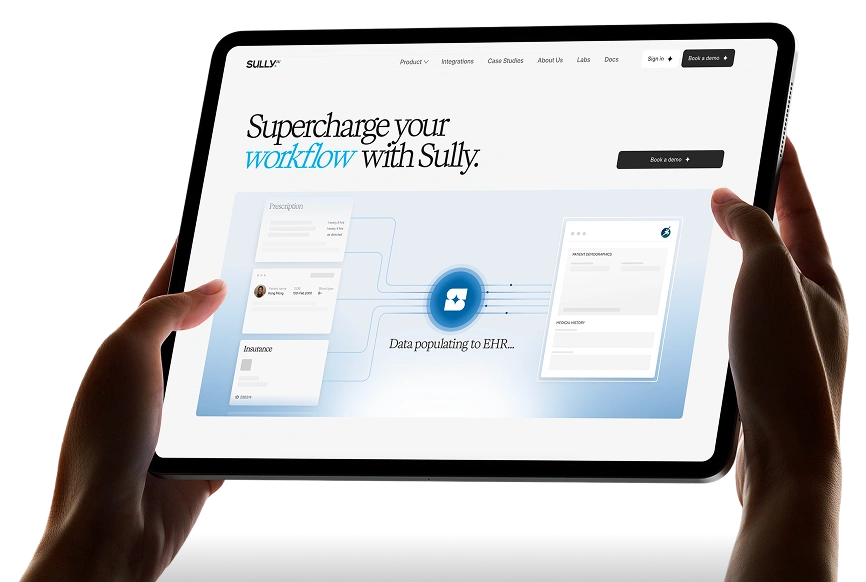
- Used across 100+ healthcare organizations and 30,000+ providers
- 12.5M+ minutes of clinical conversations processed
- 21x return on agent spend
Different healthcare workflows require different levels of clinical oversight. Separating agents allows each to operate with guardrails suited to its specific task, while routing decisions can be logged for auditability.
Healthcare Chatbot and Voice AI Solutions We Build
We build healthcare chatbots and voice AI solutions designed to simplify patient interactions, automate routine tasks, and support healthcare teams. From scheduling and symptom guidance to post-visit care, billing support, multilingual communication and staff assistance. Our solutions integrate AI with real healthcare workflows to deliver secure, scalable and personalized experiences.
Patient Access and Scheduling
Automate appointment booking, reschedule requests, patient intake, and pre-visit forms, with information integrated into the EHR.
Symptom Guidance and Triage Routing
Evaluate patient-reported symptoms and direct patients to the appropriate care pathway, with clinical guardrails and escalation workflows tuned to the intended use.
Healthcare Voice Agents
Handle inbound calls, after-hours triage, prescription refills, and eligibility checks, with seamless handover to live staff when needed.
Post-Visit and Care Plan Support
Automate follow-ups, adherence checks, and post-discharge symptom monitoring to reduce readmission risks.
Insurance, Billing, and Administrative Support
Answer questions about coverage, billing statements, and prior-authorization status, reducing routine administrative call volume.
Multilingual Patient Communication
Build conversational agents capable of interacting in multiple languages, with healthcare-specific speech recognition and response handling.
Staff-Facing AI Assistants
Support healthcare teams with internal knowledge search, policy lookup, and administrative assistance using approved organizational data and governance controls.
Is your Healthcare Chatbot Aligned With Current Regulatory Requirements?
Share your chatbot’s functionality and patient-facing messaging. We’ll help you identify potential regulatory considerations under applicable FDA guidance and state laws.

Is Your Healthcare Chatbot Ready for Regulatory Scrutiny?
FDA Clinical Decision Support Guidance, Updated January 2026
The distinction now turns on autonomy and audience.
- Supports a clinician's decision without replacing their judgement
- Makes an autonomous clinical recommendation directly to a patient, acted on without clinician review
- Generally not Software as a Medical Device
- Generally SaMD, requiring FDA clearance before marketing
What you Call The Bot is Now a Legal Question
Several states have made it unlawful to give an AI agent a licensed clinician's title.
- Illinois HR 1826 (August 2025, enforced by IDFPR): no therapy or psychotherapy to the public except by a licensed professional, plus licensed oversight for AI therapeutic communication
- California AB 1281, Delaware HB 181, Oregon HB 2748 (January 2026): AI cannot be named or presented with clinician titles
- More states expected to follow
If your triage assistant is badged as a "nurse", the name is the violation, independently of what the software does. It catches product teams because it is a marketing decision nobody sends to legal.
On liability: the provider stays responsible for clinical judgement and oversight of a patient's use. Vendor-controlled design, algorithms and outputs are the vendor's exposure.
HIPAA Security Rule Updates, 2025
Encryption of all ePHI at rest and in transit, and multi-factor authentication for every system-accessing patient data, moved from addressable to mandatory. These safeguards are central to MindInventory's approach to HIPAA-compliant software development. Voice recordings containing patient health information are ePHI, which can be overlooked when call audio is treated as telemetry.
How Should Your Healthcare Chatbot Handle Clinical Decisions?
The gap between them is not a feature flag. It changes your clearance path, validation requirements, documentation burden and insurance position. We settle which one you are building in the first two weeks, because retrofitting the answer is expensive in both directions.

Keyword And Rule-Based Escalation.
The agent recognises risk signals and routes to a human. It does not assess. Low regulatory exposure, easier to validate, and where most patient-facing agents should start.

Probabilistic Clinical Assessment.
The agent weighs symptoms and produces a likelihood or a care-setting recommendation. Substantially more useful, and it moves you toward SaMD classification.
Have an Agent That Works But Can't Clear Governance?
That is the most common conversation we have on this topic. Usually the fix is architectural, not a better prompt.

Healthcare Voice AI: What It Takes to Build Reliable Voice Agents
Voice AI requires a different engineering approach than chatbots, with distinct challenges in speech recognition, latency, patient data protection, and human handover.

Reported Benchmarks
Up to 70% call containment, around 50% fewer missed calls, CSAT in the low 80s. Anchors for a business case, worth validating against your own call mix.

Handover Has To Be Warm
A caller transferred to someone who asks for their details again has had a worse experience than the phone tree you replaced.

Medical Terminology Accuracy
Lipitor and Lisinopril sound alike over a phone line with background noise, and a misheard drug name is a patient-safety event. Domain-tuned speech recognition is not optional.

Latency Changes Behaviour
People tolerate a two-second pause in chat and hang up on it in a call.

Audio is ePHI
Recording, retention, deletion and encryption get decided at project start.
How We Partner with Healthcare AI Teams
Both models bring healthcare engineering expertise and regulatory considerations into the development process from the start.

Dedicated Healthcare Development Team
Work with named engineers you interview and approve. They join your repositories and sprints, collaborate directly with your team, and report to your leads.

Time and Material
Bring us a defined healthcare requirement and use our engineers on an hourly basis. Scale the team or adjust priorities as your needs evolve, without committing to a fixed scope or long term team structure.
How Much Does Healthcare Chatbot and Voice AI Development Cost?
Engagement
Regulatory and architecture review of an existing agent
Administrative or scheduling agent with EHR write-back
Triage or clinical-adjacent agent with full guardrail layer
Voice agent with telephony, EHR integration and warm handover
Agent classified as SaMD
Typical Cost
$15,000 – $40,000
$50,000 – $90,000
$90,000 – $180,000
$120,000 – $200,000
$200,000+
Typical Timeline
3 – 6 weeks
8 – 12 weeks
4 – 8 months
5 – 9 months
12+ months including clearance
Ready to Build Your Healthcare AI?
We’ll assess your agent’s architecture, regulatory considerations, conversation flows, and clinical guardrails to identify what needs attention before launch.

Why Healthcare Teams Choose MindInventory for Conversational AI
We consider applicable FDA guidance, state requirements, and HIPAA security obligations when planning your conversational AI architecture and workflows.
Our experience includes six orchestrated AI agents supporting more than 100 healthcare organizations and 30,000+ providers.
You retain ownership of the source code, conversation design, guardrail logic, and project documentation, with handover defined in the engagement agreement.
Patients leave programmes, devices come back or do not, and cellular units keep accruing connectivity cost either way.
What We Build On
How MindInventory Approaches Healthcare Chatbot Compliance
In every engagement: signed BAA before any PHI · encryption at rest and in transit · MFA on all ePHI access · audit logging of conversations, escalations and routing decisions · retention and deletion rules for transcripts and call audio agreed at design time · model providers configured so your data is not retained or used for their training
42 CFR Part 2
For behavioural health
GDPR
Where EU patient data applies

WCAG 2.1 AA
For patient-facing interfaces
Frequently Asked Questions
Healthcare Insights From Our Engineering Team

Global AI in Healthcare Report 2026
This report showcases data from Precedence Research, Grand View Research, Markets and Markets, McKinsey, Doximity, and others prominent research agencies. A comprehensive view provides builders, investors, and healthcare leaders a single, reliable picture of…
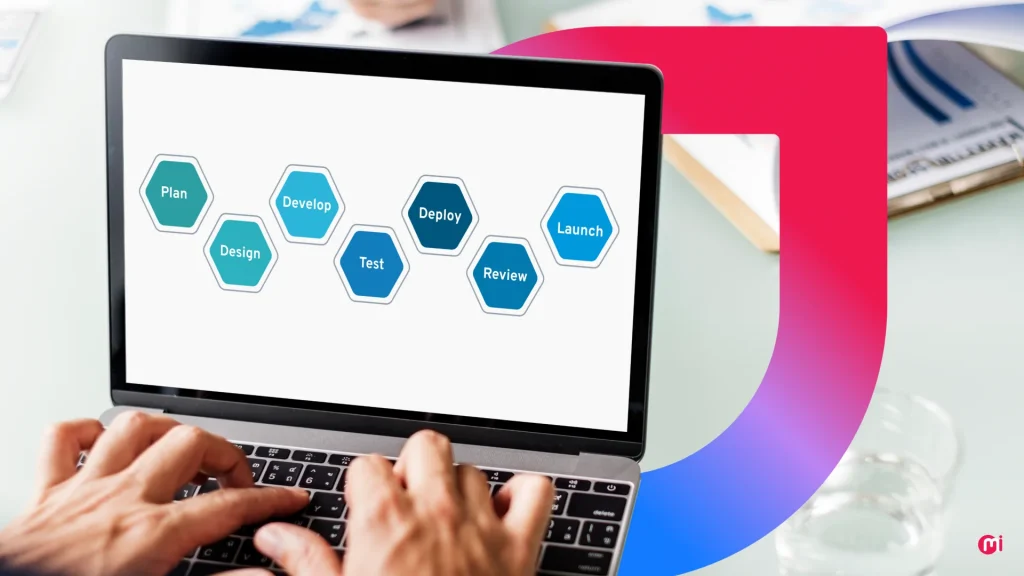
Software Development Life Cycle (SDLC): Phases, Types and Benefits
Maximizing efficiency in the software development process is what most business leaders seek, which is why over 94% of organizations practice Agile. Adopting a systematic development approach like a software…
Top 17 Software Development Trends in 2026 Businesses Should Know
Innovation in technology evolves at lightning speed. Just a decade ago, 4G was making its debut, augmented and virtual reality (AR/VR) were confined to gaming and entertainment, and AI was primarily used…