






AI Medical Scribe Development

Ambient clinical documentation. Structured patient data. Seamless EHR integration.

Turn clinician conversations into structured clinical notes with an AI medical scribe built around your workflows. At MindInventory, we build scribes that connect to your EHR and match your specialty workflows. The AI scribe we built for an AI doctor's copilot has already transcribed 12.5M+ minutes of clinical conversations. Let's scope yours.

Reviewed by Last reviewed: September 2026
Parth Pandya
Parth Pandya Senior Project Manager
Nihir Patel
Nihir Patel Healthcare Technology Expert
AI Medical Scribe Development
Trusted by Global Healthcare Services Providers, Medical Device Manufacturers, and Clinicians
Sully.ai
Passio
OraQ
SensorBio
Claim Clarity
Shoorah
Sully.ai
Passio
12.5M+

Minutes of clinical conversation documented in production

30,000+

Providers using documentation we built

2

Clinical documentation platforms delivered end to end

ISO 42001

Certified for AI management systems

Security, quality and AI certifications

ISO 42001
ISO 13485:2016
HITRUST
AICPA SOC 2
CERTIFIED ISO 27001:2022 COMPANY
CERTIFIED ISO 9001:2015 COMPANY

Who Should Build a Custom AI Medical Scribe?

Our healthcare AI development team builds AI medical scribe software for organizations where documentation is core to the product, the platform, or the scale. Here’s who gets the most from it.

Health Tech and Digital Health Companies

We help health tech companies build documentation into their clinical product, so they keep their margin, roadmap, and data instead of handing them to a third-party scribe.

EHR EMR, Practice Management and Specialty Platform Vendors

We build ambient documentation that vendors can embed in their own EHR and EMR platform, so customers stay inside your product, not a competitor’s.

Health Systems and Large Groups At Scale

For health systems with roughly 300 to 500 clinicians or more, we build and run a scribe you own, which can cost less than per-provider pricing at that scale.

Teams Already Building One

We add healthcare engineers with hands-on experience in speech pipelines, clinical NLP, EHR write-back, and clinician review design. They come from the same team that built Sully.ai and OraQ AI.

Three Ways to Get an AI Medical Scribe Built

If documentation is part of a product you're taking to market, subscribing to someone else's scribe was never the option. The real decision is how you get it built.

Best when
Time to first production release
What it takes from you
Specialty and format fit
EHR integration
What you own
Main risk
Build entirely in-house
Documentation is your core differentiator, and you intend to own the research
12–18 months, most of it before a clinician sees anything
Hiring speech, clinical NLP, EHR integration and MLOps specialists, then keeping them
Whatever you build
Yours to solve, and it's where most timelines slip
Everything
The first eighteen months, and the specialists you can't hire fast enough
License a white-label engine
You need something live this quarter and the note quality bar is standard
Weeks, constrained by what the engine already does
Integration work and a commercial dependency
Whatever the engine supports
Usually limited to what the vendor has already certified
A license, with a royalty or revenue share
Your roadmap and your margin sit inside someone else's product
Build with a specialist partner
You want it owned and specialized, without spending a year assembling the team
Proof of concept in 6–10 weeks, production in 4–8 months
Product direction and clinical access. We bring the specialists
Your specialties, your note formats, your coding rules
Epic and athenahealth in production, plus Cerner, MEDITECH and practice
Everything: source code, model weights, pipelines, evaluation harnesses
Choosing a partner who has built a demo rather than a production system

How an AI Medical Scribes Actually Works

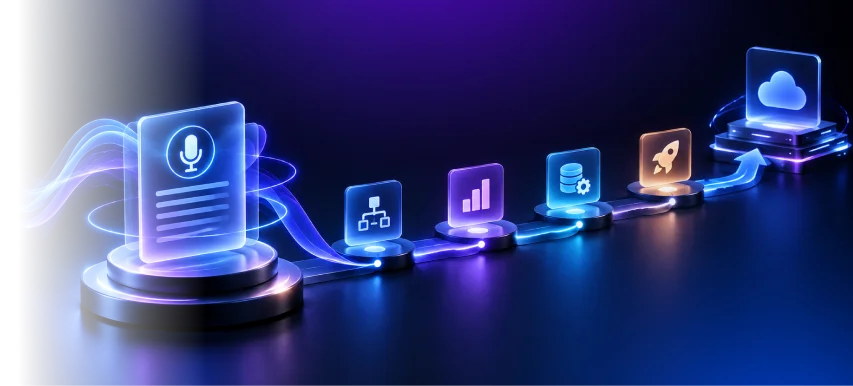
Six-step pipeline. Every ambient scribe on the market runs some version of this, and knowing the steps is how you tell a good build from a demo.
  1. Capture

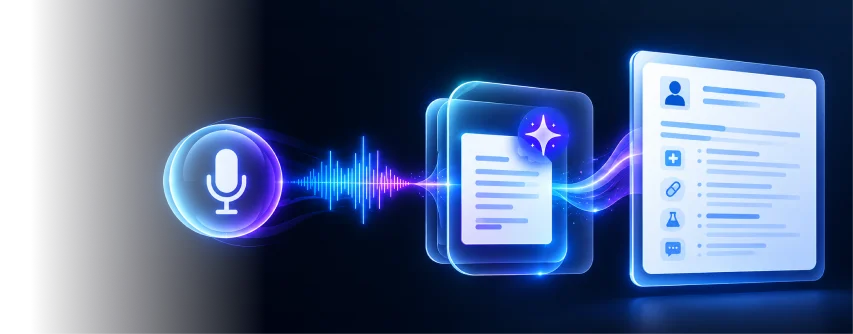
    Consultation room, telehealth session or mobile device. Multi-speakers, noisy, interrupted, and often multilingual. Capture quality sets the ceiling for everything downstream.
  2. Transcribe and Diarise

    Speech to text with speaker separation, so the clinician’s words are distinguished from the patient’s. Medical vocabulary, drug names and specialty terminology need dedicated handling; a general transcription model mangles them.
  3. Extract Clinical Meaning

    Clinical NLP separates history, examination, assessment and plan from small talk and information the patient volunteered, but the clinician never acted on. Most scribes are won or lost here.
  4. Draft the Note

    An LLM composes the notes in the required structure: SOAP, H&P, progress note, procedure note or a specialty template. Retrieval grounds it in the encounter; output schemas constrain what the model can produce.
  5. Map to Codes

    Relevant terms map to ICD-10, SNOMED CT and CPT. This step carries a compliance tail, covered below.
  6. Write Back to the EHR

    The draft lands in the clinician’s workflow inside Epic, athenahealth or your own platform, via FHIR, SMART on FHIR or a native EHR integration. Clinician reviews, edits, and signs. Nothing enters the chart unsigned.

Our AI Medical Scribe Development Success Stories

Sully.ai: Clinical Documentation Engine Inside a Multi-Agent Copilot

MindInventory built the clinical documentation engine within Sully.ai's multi-agent platform, covering audio capture, transcription with speaker separation, clinical extraction, structured note generation, code mapping, and write-back into the patient record. The engine operated natively within Epic and athenahealth, presenting every generated note to the treating clinician for review, editing, and signature before it entered the chart.

Outcomes:

12.5M+ minutes of clinical conversation documented
Used across 100+ healthcare organizations and 30,000+ providers
21x return on agent spend

Read the Sully.ai Case Study

OraQ AI: Structured Clinical Documentation Inside Dental Practice Systems

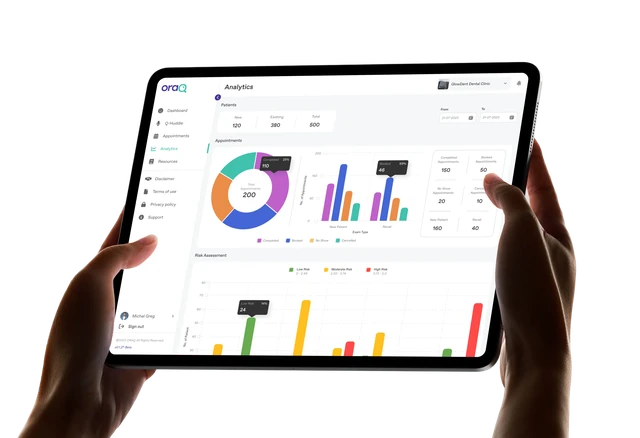
MindInventory built OraQ AI's clinical documentation layer, including a digital odontogram and periodontal charting system. It captures exam findings in one consistent format across clinicians, writes back to five practice management systems, and turns records that varied by practitioner into structured data for risk scoring.

Outcomes:

Case acceptance lifted from 30–40% to 70%
Live inside five practice management systems: Dentrix, OpenDental, ClearDent, Curve and Eaglesoft
Architecture designed to support FDA and Health Canada clearance
Read the OraQ AI Case Study

Building a Clinical Product and Documentation on the Roadmap?

Tell us what you’re building, where it sits on your roadmap, and what it will take to move it into production. We’ll help you define the right path forward.

Healthcare IT Specialist

What the Research Shows About AI Medical Scribe Impact

A multisite JAMA study (April 2026, UCSF and Mass General Brigham) tracked 8,581 ambulatory clinicians across five health systems, using tools from Ambience, Dragon Copilot and Abridge inside Epic.
What was measured
Result
Total EHR time
Reduced by 13.4 minutes
Documentation time
Reduced by 16.0 minutes
Burnout prevalence, Mass General Brigham
Reduced 21.2% after 84 days
Documentation-related wellbeing, Emory
Increased 30.7%
Note time, Cleveland Clinic
Reduced by 14 minutes per day

Two things follow. The time savings are real but modest, so build the business case on minutes. And the wellbeing effect is larger than the time effect, which points to the value sitting in the after-hours charting tail.

Dark navy background with a soft blue glow

The AI Scribe Upcoding Risk Nobody Warns You About

A scribe that documents more thoroughly than a rushed human often support a higher evaluation and management code. That is upside and exposure at the same time. A 2025 Trilliant Health analysis across six health systems found E/M codes shifted upward consistently after AI scribe adoption, and Cigna began automatically reviewing many level 4 and 5 E/M claims in October 2025.

Four requirements follow:

  • Documentation Defends The Code icon

    Documentation Defends The Code

    A note supporting a level 5 contains the elements justifying it, traceable to the encounter.

  • The Clinician Stays Accountable icon

    The Clinician Stays Accountable

    Code suggestions stay suggestions, confirmed by the signing clinician, with the audit trail showing it.

  • Nothing Is Inferred That Wasn't Said icon

    Nothing Is Inferred That Wasn't Said

    A scribe filling gaps with plausible clinical language generates a billing risk, not a better note.

  • The Audit Trail Exists Before You Need It icon

    The Audit Trail Exists Before You Need It

    Every draft, edit, suggestion and confirmation retained, because a payer audit asks for the history.

Ready to Scope Your AI Medical Scribe?

Tell us your specialty, EHR, and timeline. As an AI medical scribe development company, we’ll map, integrate, and a fixed estimate after a short discovery call.

Healthcare IT Specialist

What We Build into Your AI Clinical Scribe

Build AI clinical documentation software that captures conversations, structures clinical notes, and streamlines documentation workflows.

Check Icon

Note Generation

SOAP, H&P, progress, procedure notes, and specialty templates. We structure the output for your EHR, so clinicians never reformat free text.

Check Icon

Specialty and Multilingual Handling

Primary care models write poor cardiology notes, so we tune to your specialty and transcribe multilingual visits directly, with no translation step.

Check Icon

Coding Assistance

ICD-10, SNOMED CT and CPT mapping presented as suggestions for clinician confirmation, with the audit trail described above.

Check Icon

EHR Write-Back

Epic, Oracle Health (Cerner), athenahealth, MEDITECH, NextGen and Allscripts through HL7, FHIR and SMART on FHIR, or into your own platform.

Check Icon

Clinician Review Workflow

The edit experience decides adoption more than model accuracy. A note that takes four minutes to fix is worse than no note, so we design this step with clinicians before optimizing the model.

Check Icon

Consent and Recording Controls

Consent laws vary by jurisdiction, including US two-party consent states. We build consent capture, retention rules, and patient disclosure in from day one.

Check Icon

Evaluation Harness

A fixed benchmark of real encounters scored against clinician-approved notes, so any model change is measured. Without it, clinical governance has nothing to approve of.

AI Medical Scribe Risks and How We Design Against Them

Risk
How we design against it
The note contains something the clinician never said
Retrieval grounds every line in the encounter transcript, output schemas constrain what the model can produce, and a validation layer checks the draft against the transcript before a clinician sees it.
A wrong note reaches the chart
Nothing is filed unsigned. The clinician reviews and signs every note, and the review workflow makes errors visible instead of easy to skim past.
Coding drifts upward
Code suggestions require clinician confirmation, and the documentation supporting each code is traceable to the encounter. Full audit trail of drafts, edits and confirmations.
Accuracy degrades after launch
An evaluation harness scores against a fixed benchmark, with drift monitoring, retraining pipelines and versioned rollback.
Recording creates a consent problem
Consent capture built into the workflow, configured per jurisdiction, with retention and deletion rules set at design time.
PHI ends up somewhere it shouldn't
BAA before any PHI access. Audio and transcripts encrypted at rest and in transit, with retention windows agreed upfront. Model providers configured so your data is not retained or used for their training.

How Much Does It Cost to Build an AI Medical Scribe?

Engagement type
Typical Cost
Typical Timeline
Proof of concept on your own encounter audio
Under $25,000
6 – 10 weeks
Production scribe, single specialty, one EHR integration
$90,000 – $180,000
5 – 8 months
Multi-specialty scribe with coding assistance and multiple integrations
$90,000 – $180,000
8 – 12+ months
Scribe embedded in an existing product you sell
Scoped per engagement
6 – 12 months

Our AI Medical Scribe Development Process

Our AI medical scribe development services follow a structured process from clinical workflow discovery to deployment and optimization.

Step 1

Paperwork First

We sign a BAA and NDA before we see any PHI, encounter audio, or production systems.
Step 2

Encounter and Workflow Discovery

We work with clinicians to map your workflows and define what “good enough to sign” means.
Step 3

Proof of Concept on Your Own Audio

In 6–10 weeks, we test on your real recordings against a benchmark of clinician-approved notes.
Step 4

Pipeline Build

We build six separate stages, from capture to write-back, so each improves without rebuilding the rest.
Step 5

Clinician Review Design

We design and test experience with clinicians alongside the model, as adoption fails here more often.
Step 6

Validation and Controlled Rollout

After design, we verify accuracy, consent, and audit controls, then roll out in stages, starting with willing clinicians.
Step 7

Monitoring and Retraining

Continuously monitor accuracy, detect model drift, retrain by specialty, and safely roll back model versions.

Ready to Turn Your Scribe Plan Into Production?

We’ll help define the architecture, clinical benchmarks, integrations, and rollout path around your requirements.

Healthcare IT Specialist

Hire The People Who Have Built This Before

Speech pipelines behave differently in a consultation room than in a call centre, clinical NLP is not general NLP, and the review workflow is a design problem most healthcare designers have never faced.

If you have a team and need that experience added rather than the build outsourced, we place engineers and designers from the practice that delivered Sully.ai and OraQ AI.

Hire healthcare developers
Role
What they bring to a documentation build
Speech and ASR engineers
Transcription and diarisation on real consultation audio: multiple speakers, background noise, accents, medical vocabulary
NLP and ML engineers
Extracting history, examination, assessment and plan from unstructured conversation, and the evaluation harness that proves it works
EHR integration engineers
HL7, FHIR and SMART on FHIR write-back into Epic, athenahealth, Cerner and practice management systems, in production
Healthcare UX designers
The clinician review and edit experience. A note that takes four minutes to fix is worse than no note, and this is where adoption is won
MLOps engineers
Evaluation suites, drift monitoring, retraining pipelines and versioned rollback for a live clinical system
QA engineers with clinical testing experience
Testing against real clinical scenarios and real clinical pace, not just scripts

Why Choose MindInventory

As a healthcare software development provider, we combine AI engineering, clinical workflows, EHR integration, and compliance to meet every client’s requirement and build production-ready medical scribe solutions.

15+
Years in healthcare software

development, building secure healthcare platforms.

ISO Certified

ISO 9001:2015 and ISO 27001:2013 certified for quality management and information security.

150+
Healthcare platforms

delivered across providers, startups, and enterprises globally.

1,800+ global clients, including Fortune 500 companies, across the USA, UK, Europe, and the Middle East.
300+ In-house engineers with experience in connected devices and IoT integration.
12.5M+ Minutes of clinical conversations documented across 100+ healthcare organizations and 30,000+ providers
Native EHR experience with production deployments inside Epic and athenahealth.
100% Ownership of delivered models and IP, including source code, model weights, and pipelines.
Experience across clinical settings, from ambient scribing to structured clinical charting.

Frequently Asked Questions

Here’s a list of FAQs that will help you to know more about MindInventory.

An AI medical scribe listens to a clinician-patient conversation and automatically drafts a structured clinical note, which the clinician reviews, edits and signs. Most run the same pipeline: capture audio, transcribe with speaker separation, extract clinical meaning, draft the note in a required format such as SOAP, map relevant terms to ICD-10, SNOMED CT and CPT codes, and write the draft back into the EHR for review. Ambient scribes listen to natural conversation; dictation tools require the clinician to narrate the note deliberately.

With dictation, the clinician narrates the note using structured phrasing, changing how they speak in order to produce documentation. With ambient scribing, the tool listens to the natural consultation and produces the note from it, so the clinician does not change how they speak, examine or interact with the patient. Ambient is harder to build, because the system has to work out what matters from unstructured conversation instead of being told.

It depends on how fast you need it and whether you can hire the specialists. A fully in-house build takes 12 to 18 months. MindInventory brings speech, clinical NLP, and EHR integration from an in-house team, reaching a proof of concept in six to ten weeks and production in four to eight months, with ownership passing to you. Below roughly 100 clinicians, health systems often do better subscribe.

Cost depends on the number of specialties, EHR integration, note types, and languages supported. Coding assistance, custom templates, and offline capture add scope. Compliance work, including HIPAA controls, audit trails, and security testing, also shapes the budget. MindInventory scopes each of these upfront, so you see exactly what drives the estimate before you commit.

Accuracy depends on speech recognition quality, medical language models, and how well the system handles accents, noise, and specialty of terminology. Well-built scribes capture most encounter details correctly, but none are perfect. That’s why clinician review before signing is essential. At MindInventory, we build scribes with source traceability, so every statement in the note links back to what was actually said.

The evidence points that way, and the effect on wellbeing appears stronger than the effect on time. In the multisite data, one health system reported burnout prevalence down 21.2% after 84 days and another reported a 30.7% increase in documentation-related wellbeing. The likely reason is that scribes remove the after-hours charting tail without shortening the clinical day itself.

Yes, and it needs managing. A scribe that documents more completely than a rushed human often supports a higher evaluation and management code. National claims analysis has found E/M codes shifting upward after AI scribe adoption, and payers have responded with automated review of higher-level claims. Any scribe influencing coding needs documentation that defends the code, clinician confirmation of every suggestion, and a full audit trail of drafts and edits.

Yes, and the requirement varies by jurisdiction, including two-party consent states in the US and separate rules under GDPR in Europe. Consent capture, patient disclosure, and retention and deletion rules for audio and transcripts belong in the workflow design, not in a pre-launch checklist.

Yes. We build write-back into Epic, Oracle Health (Cerner), athenahealth, MEDITECH, NextGen and Allscripts through HL7, FHIR and SMART on FHIR, and into custom platforms directly. Where a native path exists, such as Epic App Orchard and Toolbox or the athenahealth Marketplace, we use it. A scribe living outside the chart gets abandoned.

Most scribes generate SOAP notes, progress notes, H&Ps, consult notes, discharge summaries, and referral letters. Many also draft patient instructions, orders, and after-visit summaries. Templates can be customized by specialty and clinician preference. Our experts build configurable note templates and output formats, so each note matches your organization’s documentation standards and maps cleanly into EHR fields.

Yes. Not every engagement is a full build. We place speech and ASR engineers, clinical NLP and ML engineers, EHR integration engineers, healthcare UX designers, MLOps engineers and QA engineers with clinical testing experience into teams that already exist. You interview and approve everyone before they start, they work inside your sprint rhythm and tooling, and they report to your leads.

A scribe that transcribes and drafts documentation for clinician review generally falls outside Software as a Medical Device regulation, since it is not diagnosing, treating or informing a treatment decision independently. If the product starts surfacing diagnostic suggestions, classification can change. Settle it early: classification changes the architecture, not just the paperwork.

Protection starts with HIPAA-compliant architecture: encryption in transit and at rest, role-based access, audit logs, and signed business associate agreements. Data retention and de-identification policies matter too, especially for audio recordings. MindInventory experts build security systems into the foundation, including access controls, complete audit trails, and configurable retention, so PHI stays protected and every interaction is traceable.

Yes, with the right configuration. Specialties like primary care, cardiology, orthopedics, and behavioral health each use different terminology, note structures, and coding needs. Workflows also differ across in-person visits, telehealth, and inpatient care. We build specialty-tuned models and adjustable workflows, so one platform can serve multiple clinical departments without forcing clinicians into a generic template.

Healthcare Insights From Our Engineering Team

Written by the people doing the work, for the questions that come up before a project starts.
View Latest Insights
global ai in healthcare report

Global AI in Healthcare Report 2026

This report showcases data from Precedence Research, Grand View Research, Markets and Markets, McKinsey, Doximity, and others prominent research agencies. A comprehensive view provides builders, investors, and healthcare leaders a single, reliable picture of…

post
software development lifecycle phases

Software Development Life Cycle (SDLC): Phases, Types and Benefits

Maximizing efficiency in the software development process is what most business leaders seek, which is why over 94% of organizations practice Agile. Adopting a systematic development approach like a software…

post
top 17 software development trends

Top 17 Software Development Trends in 2026 Businesses Should Know 

Innovation in technology evolves at lightning speed.  Just a decade ago, 4G was making its debut, augmented and virtual reality (AR/VR) were confined to gaming and entertainment, and AI was primarily used…

post