


HIPAA-Compliant Software Development

Built Secure. Audit-Ready. HIPAA-Compliant from Day One.

Build healthcare software that protects patient data and passes security reviews with confidence. At MindInventory, we design HIPAA safeguards into your architecture from the first sprint, not as a check before launch. Our systems handle patient data in production for Sully.ai across 100+ healthcare organisations, ArrowHQ at 1.5B+ claims, and BioStrap across 100 clinical studies.

Reviewed by Last reviewed: September 2026
Parth Pandya
Parth Pandya Senior Project Manager
Nihir Patel
Nihir Patel Healthcare Technology Expert
HIPAA-Compliant Software Development
Trusted by Global Healthcare Services Providers, Medical Device Manufacturers, and Clinicians
Sully.ai
Passio
OraQ
SensorBio
Claim Clarity
Shoorah
Sully.ai
Passio
1.5B+

Claims processed on a HIPAA-aware platform we built

100+

Healthcare organisations using clinical AI we engineered

65+

Healthcare platforms delivered end to end

15+ yrs

Of software engineering expertise

Who We Build HIPAA-Compliant Software For

We build secure, HIPAA-compliant software for healthcare providers, payers, and digital health companies. Our solutions protect patient data and meet compliance requirements without slowing down your product or operations.

Healthcare Providers

  • Hospitals and Clinics
  • Private Practices
  • Specialized Care (mental health, senior care, telehealth)

Payers and Medical Billers

  • Insurance Companies
  • Billing Services

Digital Health Startups and Enterprises

  • mHealth Developers
  • Remote Monitoring Tech
  • AI Health Innovators

Medical Device and Life Sciences

  • Medical Device Manufacturers
  • Pharma and Biotech Companies
  • Laboratories and Diagnostics

Business Associates

  • IT and Software Vendors
  • Analytics and Data Companies
  • Cloud and Hosting Providers

Start Your Compliant Project

Connect now

Why HIPAA-Compliant Development Matters, and What It Delivers

Building HIPAA compliance in from the start costs far less than fixing it later, and it opens doors with hospitals, payers and investors. Here is what it delivers:

HIPAA-compliant development matters
[ 1 ]

Faster security reviews

so healthcare customers can approve you sooner.

[ 2 ]

Lower compliance costs

since fixing security after launch typically costs three to five times more.

[ 3 ]

Reduced breach risk

with encryption, access control and audit logging built into every layer.

[ 4 ]

Stronger investor confidence

as compliance is a standard check in healthcare due diligence.

[ 5 ]

Audit-ready documentation

so your compliance officer has the evidence an assessor asks for.

HIPAA Compliant Development Services We Offer

As a healthcare software development company, MindInventory supports healthcare organizations across HIPAA assessment, secure software development, remediation, vendor review, documentation, and ongoing engineering based on their product architecture and compliance requirements.
  1. HIPAA Compliance Assessment

    We assess your application architecture, PHI and ePHI data flows, access controls, authentication, encryption, audit logging, integrations, infrastructure, and third party services to identify potential HIPAA gaps and the engineering changes required to address them.
  2. Healthcare development team

    We build healthcare applications with security and privacy safeguards considered from the architecture stage. Our healthcare development team implement secure data handling, role based access controls, authentication, encryption, audit trails, secure APIs, and healthcare integrations based on your product requirements.
  3. HIPAA Compliance Remediation

    For existing healthcare platforms, we help remediate technical gaps across authentication, access control, encryption, session management, audit logging, data protection, infrastructure, APIs, and third party integrations without rebuilding the entire application unnecessarily.
  4. BAA and Third Party Vendor Review

    We review third party services that create, receive, maintain, or transmit PHI, assess how healthcare data moves through those systems, and help identify where Business Associate Agreements and additional safeguards may be required.
  5. HIPAA Documentation and Audit Readiness

    We help prepare technical documentation including risk analysis inputs, architecture and data flow diagrams, security controls, access records, system configurations, and supporting technical evidence that compliance teams may require during audits, security assessments, or customer due diligence.
  6. Ongoing HIPAA Engineering Support

    Our healthcare software developers can provide ongoing support for security enhancements, integrations, remediation, infrastructure changes, monitoring, and healthcare product development as your platform and compliance requirements evolve.

How We Helped Our Clients Build Secure, HIPAA-Compliant Platforms

Sully.ai: HIPAA-Ready Infrastructure for a Multi-Agent Clinical AI Platform

MindInventory engineered Sully.ai's HIPAA-ready infrastructure, running six clinical AI agents in isolated Docker environments to limit patient data access for each agent. The platform integrates natively with Epic and athenahealth, with human review on every clinical output and a full record of every action.

Outcomes:

12.5M+ minutes of clinical documentation automated
Used across 100+ healthcare organisations and 30,000+ providers
Native integration with Epic and athenahealth

Read the Sully.ai case study

ArrowHQ: HIPAA-Aware Architecture for AI-Powered Claim Management

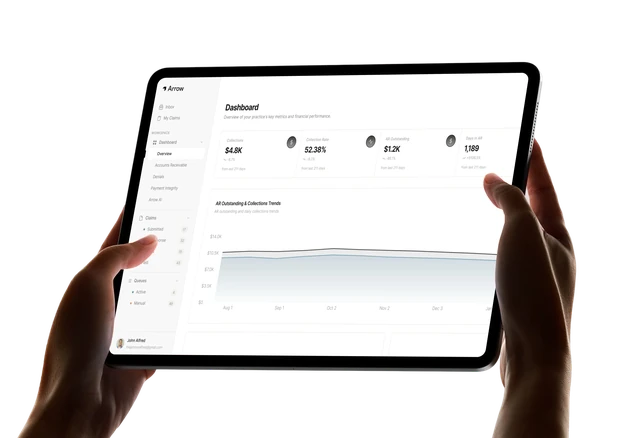
MindInventory developed ArrowHQ's HIPAA-aware architecture across a six-step denial management workflow, with every claim action reviewed and approved by a named human biller before it is submitted. Each action is fully logged and traceable to the person who approved it.

Outcomes:

1.5B+ claims processed
85% reduction in claim denials
A/R days cut from 45 to 18
Read the ArrowHQ case study

BioStrap: HIPAA-Compliant Research Dashboard for Clinical Wearable Data

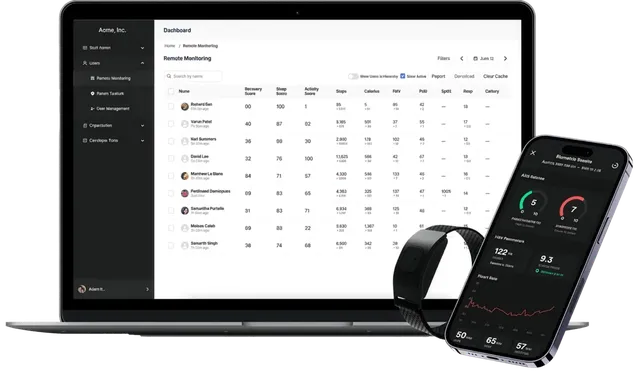
MindInventory developed BioStrap's HIPAA-compliant dashboard, serving researchers, clinicians and business customers from one platform, with access separated by user role. The platform preserves raw biosignal data end to end while restricting access to authorised users.

Outcomes:

Used across 100 clinical studies
Adopted by Stanford, UCLA, NASA, Pfizer, Tulane, CHLA and the NIH
Independently validated against ECG references
Read the BioStrap case study

Received a Security Questionnaire You Can't Fully Answer Yet?

Share it with us. We'll tell you which answers need an architecture change and which just need documentation.

Healthcare specialist reviewing medical data

The Technical Safeguards Your Software Needs

The HIPAA Security Rule (45 CFR 164.312) sets out the technical safeguards your software must meet. Here is what each one means in practice:
Safeguard
What it means for your software
Access control
Every user has a unique login, with permissions based on their role
Emergency access
A documented, logged process for urgent access, never a shared admin account
Automatic logoff
Sessions end after a set period of inactivity
Encryption at rest
Patient data is encrypted wherever it is stored, including backups
Encryption in transit
All data is encrypted as it moves, including between internal services
Audit controls
Every read, change and export of patient data is logged
Integrity controls
Records are protected from being changed or deleted improperly

The BAA Chain: Where Most Teams Have Gaps

A Business Associate Agreement (BAA) with your cloud provider does not automatically cover every service in your technology stack. If another vendor handles PHI on your behalf, you need to assess whether that vendor qualifies as a Business Associate and whether a BAA and appropriate safeguards are required. The gaps often appear in tools that engineers add for monitoring, analytics, communication, or support, such as:

asterisk icon
Error monitoring tools that may capture request data, identifiers, or application errors
asterisk icon
Analytics and session replay tools that can record user activity or inadvertently capture sensitive information
asterisk icon
Log management platforms that store application events, identifiers, or other data from healthcare workflows
asterisk icon
Customer support tools where tickets, screenshots, or attachments may contain PHI
asterisk icon
Email and SMS providers used to send appointment, care, or other patient-related communications
At MindInventory, we map where PHI flows across your application and third-party services during discovery, identify vendors that require closer compliance review, and flag potential BAA or data-handling gaps before they become audit or customer due-diligence issues.

Common HIPAA Mistakes We Help You Avoid

Check icon
Using real patient data in test environments, instead of anonymised or synthetic data.
Check icon
Shared admin accounts, which make it impossible to track who accessed what.
Check icon
Audit logs that nobody reviews, leaving problems undetected.
Check icon
No up-to-date risk analysis, which regulators treat as a finding on its own.
Check icon
Unencrypted database fields added during later development sprints.

Turn HIPAA Safeguards into a Production-Ready Architecture

HIPAA safeguards work when they are built into your software’s architecture and workflows. MindInventory’s healthcare engineering teams implement secure access, encryption, audit controls, and data protection around your product and integration requirements.

Healthcare specialist reviewing medical data

Our HIPAA Compliant Development Process

Our HIPAA focused development process helps healthcare organizations identify risks, design appropriate safeguards, build secure healthcare software, validate technical controls, and maintain the documentation needed to support ongoing compliance.

Step 1

Map PHI and ePHI Data Flows

We identify where PHI and ePHI are created, received, stored, processed, transmitted, and accessed across applications, APIs, databases, cloud infrastructure, healthcare integrations, users, and third-party services.
Step 2

Assess Risks and Define Safeguards

We assess potential risks and vulnerabilities across authentication, authorization, data storage, APIs, integrations, infrastructure, logging, and access to ePHI. Findings are documented and prioritized, so appropriate safeguards can be planned and implemented.
Step 3

Design Secure Healthcare Architecture

Our healthcare engineers design security controls around your application architecture and data flows, including access controls, authentication, encryption, audit logging, secure APIs, secrets management, backups, and infrastructure safeguards.
Step 4

Develop with Security Built In

Security requirements are incorporated throughout development rather than added at the end. Our engineers implement secure data handling, access controls, encryption, audit events, session protection, API security, and other required controls across development sprints.
Step 5

Validate Security Controls

Before launch or major production releases, we validate implemented controls through security testing that may include penetration testing, access control testing, API security testing, authentication checks, encryption validation, audit log verification, and vulnerability assessment based on the application environment.
Step 6

Document Controls and Support Ongoing Compliance

We consolidate PHI and ePHI data flows, architecture documentation, risk analysis inputs, implemented controls, access records, configuration details, and security testing evidence to support your organization’s ongoing HIPAA compliance, audits, security reviews, and customer due diligence.

How Much Does HIPAA-Compliant Development Cost?

Engagement
Typical cost
Typical timeline
HIPAA compliance review
$15,000 – $30,000
3 – 5 weeks
Remediation of an existing platform
$40,000 – $120,000
2 – 5 months
New HIPAA-compliant build
Scoped with your product
Runs with your roadmap
When HIPAA compliance is designed in from the start, it typically adds 20 to 30 percent to development timelines. Fixing it after launch usually costs three to five times more.

Want to Know What Compliance Will Cost for Your Product?

Tell us what you're building, and we'll share a clear estimate for the compliance work involved.

Healthcare specialist reviewing medical data

Why Choose MindInventory for HIPAA-Compliant Development

15+
Years in software

with 65+ Healthcare platforms delivered across providers, startups, and enterprises globally.

ISO Certified

ISO 27001:2022, SOC 2 Type II, and ISO 9001:2015 certified.

Signed BAA before we access any patient data, on every applicable project.
HIPAA-compliant platforms in production for Sully.ai, ArrowHQ and BioStrap.
Audit-ready documentation delivered as part of every project.
You own everything we build, including source code and compliance documentation.

How You Can Work with Us

In both cases, you own the source code, infrastructure code and compliance documentation.

A Dedicated Team Inside Yours

HIPAA-experienced engineers you interview and approve, working in your tools and sprints and reporting to your leads.

A Defined Project We Deliver End to End

A compliance review, a remediation programme or the compliance layer of a new build, owned by our team with a dedicated project manager.

Technology Stack We Use for HIPAA-Compliant Software

Cloud (under BAA)

AWS
Microsoft Azure
Google Cloud Platform

Identity and access

OAuth 2.0
SMART on FHIR
AWS IAM
Microsoft Entra ID
Auth0
MFA

Encryption and keys

AWS KMS
Azure Key Vault
Google Cloud KMS
AES-256
TLS 1.3

Audit and monitoring

AWS CloudTrail
Azure Monitor
Elastic Stack
Datadog

Infrastructure as code

Terraform
Ansible

Back-end

Python
Node.js
PHP
Golang

Databases

PostgreSQL
MySQL
SQL Server
MongoDB

Frequently Asked Questions

Here’s a list of FAQs that will help you to know more about MindInventory.

HIPAA-compliant software development is the process of building healthcare software that protects patient data in line with the HIPAA Privacy, Security and Breach Notification Rules. At MindInventory, this means designing encryption, access control and audit logging into the architecture from day one.

No. Software cannot be HIPAA certified. There is no official HIPAA certification. Software can be built to meet HIPAA requirements and documented so an assessor can verify it, alongside certifications such as SOC 2 Type II and ISO 27001.

Not yet. HHS proposed the update in December 2024, but the final rule has not been published, so the current Security Rule still applies.

No. It covers only that provider’s HIPAA-eligible services. Your team is still responsible for configuration, access control and audit logging, and every other vendor handling patient data needs its own BAA.

Any vendor that stores, processes or transmits patient data for you, including monitoring, analytics, logging, support and messaging tools.

A compliance review costs $15,000 to $30,000, and remediating a live platform usually costs $40,000 to $120,000. For new builds, compliance typically adds 20 to 30 percent when designed in from the start.

Most healthcare products take three to twelve months, depending on scope. A focused app takes three to four months, while a platform with EHR integration and AI features takes eight to twelve.

Civil penalties range from around $100 to $50,000 per violation, with annual caps of about $1.5 million per violation type, adjusted for inflation each year. For software companies, a failed security review or data breach often costs more through lost customers.

No. Test environments should use anonymised or synthetic data. Using real patient data in testing is one of the most common findings in healthcare security reviews.

Yes, if it processes protected health information (PHI), it must comply with HIPAA requirements. Our healthcare AI development approach addresses training data handling, secure model deployment, output logging, and BAAs with vendors handling PHI.

HIPAA has three types of safeguards. Administrative safeguards cover security management, staff training, access management, incident response and contingency planning. Physical safeguards cover facility access, workstation security and device handling. Technical safeguards are the ones built into your software. A development partner owns the technical safeguards and supports the administrative ones, while physical safeguards mostly sit with you and your hosting provider.

Yes. Beyond the technical safeguards above, the items teams most often miss are a data flow map, anonymised data in test environments, a list of vendors with BAA status, a current risk analysis, and a tested incident response plan. Our HIPAA engineering checklist covers all of these.

Ask whether they will sign a BAA on standard terms and when, which of their projects handle patient data in production, how they manage test data, what documentation you will receive, and who owns the code afterwards. A partner who hesitates on signing a BAA has already answered the most important question.

The BAA usually requires data to be returned or destroyed within a set period, often 30 days. This can clash with backup and log retention schedules, so agree the terms during contracting rather than at the end of the contract.

Healthcare Insights From Our Engineering Team

Written by the people doing the work, for the questions that come up before a project starts.
healthcare software development guide blog

A Comprehensive Guide to Healthcare Software Development

The healthcare industry is facing multiple challenges, like managing patient data, streamlining workflows, and ensuring compliance with ever-changing regulations. If not addressed, these medical errors can have serious consequences, falling…

post
healthcare software product development

The Complete Guide to Healthcare Software Product Development in 2026

Picture a product lead at a growing health system. Her team spent months building a patient scheduling tool, and clinicians loved it during the demo. Then the product reached the…

post
top healthcare software features

Modernizing Health-Tech: Top Healthcare Software Features to Define Your 2026 Strategy

In today’s changing medical landscape, technology is no longer just an add-on; it is the backbone of effective patient care. Modern healthcare software features are designed to solve the age-old…

post