






Healthcare Cloud Migration Services

Migrate Securely. Modernize Faster. Stay HIPAA-Compliant.

Migrate Securely. Modernize Faster. Stay HIPAA-Compliant.

Move your healthcare applications and data to AWS, Azure or Google Cloud without disrupting clinical operations. At MindInventory, we plan, migrate and modernize healthcare infrastructure with the compliance boundary and running costs mapped before the first workload moves. One migration we led delivered $1M+ in annual savings and a 5X performance gain.

Healthcare Cloud Migration Services
Trusted by Global Healthcare Services Providers, Medical Device Manufacturers, and Clinicians
Sully.ai
Passio
OraQ
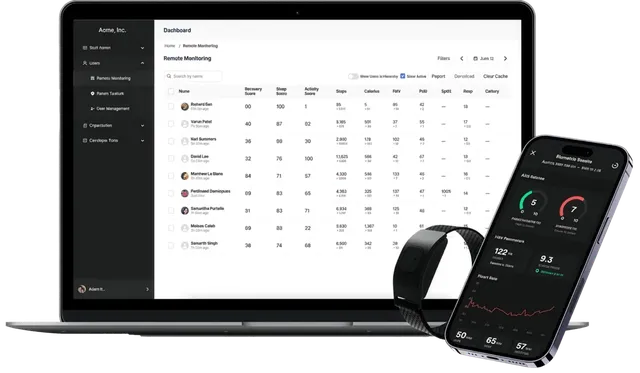
SensorBio
Claim Clarity
Shoorah
$1M+
Annual savings from a hospital network migration
5X
Performance gain on the same migration
400M+
Hours of health data running on cloud pipelines we built
3
Clouds we migrate to and between: AWS, Azure, Google Cloud
HIPAA
HITECH
GDPR
42 CFR Part 2
SOC 2 Type II
ISO 27001

Healthcare Cloud Migration Services We Offer

At MindInventory, we build healthcare AI around how your teams work. Our systems fit your clinical workflows, business processes, existing technology, and the decisions your organization needs AI to support.

Check Icon

Cloud Migration Assessment

Our experts will review your systems, dependencies and patient data flows, and tell you which workloads to move, rebuild, keep or retire before any migration begins.

Check Icon

Rehosting And Replat Forming

We rehost stable workloads quickly and replat form them onto managed databases and storage wherever it lowers costs, without disrupting daily operations.

Check Icon

Legacy Application Modernization

Our engineers rebuild ageing clinical systems step by step, so that the old system keeps running until the new one is ready and fully tested.

Check Icon

Cloud-To-Cloud Migration

We migrate healthcare platforms between AWS, Azure, and Google Cloud, Including managed FHIR services and identity setups, with minimal downtime.

Check Icon

Healthcare Data Platform Setup

Our team sets up FHIR stores and analytics warehouses that make your clinical data ready for reporting and AI across the organization.

Check Icon

Cloud Cost Optimization

Our team trims idle resources and data transfer costs after migration, then sets spend alerts, so cloud costs stay predictable.

Want to Know Which of Your Systems Should Move First?

Share your current setup and we'll help you prioritise a migration plan that keeps care running.

Plan Your Cloud Migration

Should Every Healthcare System Move to the Cloud?

Not always. Most healthcare organisations end up with a mix of approaches, and the right one depends on each system.

Asterisk icon
Modernize when the application works but its architecture holds you back, such as a system nobody can safely change or a data layer that can’t support the reporting your team needs.
Asterisk icon
Retire when a system is no longer used or its function has moved elsewhere. Every assessment we run finds more of these than expected, and retiring a system is the cheapest migration there is.
Asterisk icon
Migrate when your hardware is near end of life, disaster recovery depends on a second site you can’t justify, or you need managed healthcare services that would take years to build.
Asterisk icon
Keep on-premises when systems depend on medical device hardware, are close to end of life, or face data location rules the cloud cannot meet.
Asterisk icon
Go hybrid when on-premises systems still need to share data with cloud applications. For most healthcare organisations, this is the right long-term setup, not an unfinished migration.

How We've Helped Healthcare Organizations Migrate to the Cloud

Cloud Biosignal Pipeline for Clinical-Grade Wearable Data

MindInventory built a cloud biosignal pipeline for BioStrap that moves signal processing off the wearable device and into the cloud while preserving raw PPG, accelerometer, and gyroscope data from sensor to storage intact.

Outcomes:

400M+ hours of biosignal data captured
Used across 100 clinical studies
Independently validated against ECG references

Read the case study

Sully.ai: HIPAA-Ready Infrastructure for a Multi-Agent Clinical AI Platform

MindInventory built the cloud infrastructure for Sully.ai's six clinical AI agents, each running in its own isolated Docker environment, with an orchestration layer that coordinates them, and integrating natively with Epic and athenahealth on HIPAA-ready infrastructure.

Outcomes:

Used across 100+ healthcare organizations and 30,000+ providers
12.5M+ minutes of clinical documentation automated
Native integration with Epic and athenahealth
Read the case study

Ready to Move Your Healthcare Workloads to the Cloud?

Share your current infrastructure and migration goals. We’ll help you define the right approach for a secure, scalable transition.

Healthcare specialist reviewing medical data

Our Healthcare Cloud Migration Process

As a healthcare cloud migration company, we plan every phase so that clinicians can keep working while your systems and patient data move securely to the cloud.

Step 1

Assessment and Discovery

We map every system, dependency and data flow, including integrations that were never documented.
Step 2

Compliance Boundary

We confirm which cloud services are covered by your BAA and design encryption, access control and network isolation before anything moves.
Step 3

Target Architecture

We choose the right cloud setup for each workload and estimate your monthly running costs alongside the migration cost.
Step 4

Pilot Migration

We move one real workload first, test cutover and rollback, and use what we learn to refine the rest of the plan.
Step 5

Phased Migration

We move systems in waves, starting with the lowest risk, with a rollback plan ready for every wave.
Step 6

Validation and Go-Live

We check data accuracy against the source, test performance under real load and verify security before each cutover.
Step 7

Optimization and Support

We right-size resources, monitor costs and keep compliance checks in place after go-live.

How Much Does Healthcare Cloud Migration Cost?

The cost of cloud migration services for healthcare depends on workload size, data volume, and compliance needs, so we scope each project before quoting a fixed price.
Engagement
Typical cost
Typical timeline
Migration assessment and roadmap
$15,000 – $40,000
3 – 6 weeks
Lift-and-shift of a defined workload
$40,000 – $90,000
2 – 8 weeks
Replatforming with managed services
$60,000 – $140,000
4 – 12 weeks
Legacy application modernization
$150,000 – $300,000+
6 – 12 months
Healthcare data platform setup
$120,000 – $250,000
4 – 9 months

Want to Know Which Of Your Systems Should Move First?

Share your current setup and we'll help you prioritise a migration plan that keeps care running.

Healthcare specialist reviewing medical data

Questions to Ask Before You Choose a Migration Partner

Questions to Ask Before You Choose a Migration Partner

Which Of Our Systems Would You Recommend We Don't Migrate?

A partner who can't answer this hasn't properly assessed your setup.

What Will It Cost To Run The Old And New Systems Side By Side, And For How Long?

If this isn't in the estimate, it will show up later as a surprise.

What Went Wrong On Your Last Healthcare Migration, And What Did You Change?

The answer tells you more about a partner than any case study.

How We Build Compliance into Every Cloud Migration

Through our HIPAA compliance solutions, we build encryption, access controls, and audit logs into every migration, so that patient data stays protected before, during, and after the move.

  • Check Signed BAA with your cloud provider before any patient data moves
  • Check Every service checked against the provider's HIPAA-eligible list
  • Check Encryption at rest and in transit
  • Check Network isolation and private connectivity
  • Check Role-based access control with MFA
  • Check Full audit logging retained to policy
  • Check Tested disaster recovery plan

Why Choose MindInventory for Healthcare Cloud Migration

As a healthcare software development company with hands-on experience in EHR systems, HIPAA compliance, and cloud platforms. We deliver cloud migration solutions that move your systems securely and without disrupting care.

15+
Years in Healthcare Software

development experience building secure healthcare platforms.

ISO Certified

ISO 27001:2022, SOC 2 Type II, and ISO 9001:2015 certified.

126 healthtech domain experts across engineering, compliance, and clinical workflows.
AWS, Azure, and Google Cloud migrations, including cloud-to-cloud moves.
$1M+ in annual savings and 5X performance gains achieved through migration.
100% ownership of everything we build, including infrastructure code, runbooks, and documentation.
Experience across clinical workflows, from ambient scribing to structured clinical charting.

How You Can Work with Us

Choose the model that fits your team. We offer healthcare cloud consulting services as a dedicated team inside yours or as a project we deliver end to end.

A Dedicated Team Inside Yours

Named cloud and healthcare engineers matched to your needs and approved by you after an interview. They work in your tools and sprints, reporting to your leads.

A Defined Project We Deliver End to End

An assessment, a migration phase, or a data platform build scoped to your requirements. Our team owns delivery, with a dedicated project manager keeping it on track.

In both cases, you own the infrastructure code, runbooks and documentation when the work is complete.

Disaster Recovery Planned from Day One

Every healthcare system needs a clear recovery time and a clear limit on how much data it can afford to lose. We plan these by system type:
System type
Recovery approach
Clinical systems of record
Multi-zone setup with continuous replication and tested failover
Clinical support applications
Standby environment ready to take over within hours
Analytics and reporting
Regular backups that can be restored within a day
Systems kept on-premises
Documented fallback plan connected to the cloud

We test failover before go-live, so your recovery plan works when you need it.

Why Healthcare Cloud Migration Matters and What It Delivers

Most healthcare teams move to the cloud for one of four reasons: cost, resilience, performance, or access to new services. Here is what each deliver.

Ageing hardware is due for replacement. Migration removes the refresh cost and replaces it with capacity you pay for as you use it. The hospital network we migrated saved $1M+ a year.

Disaster recovery depends on a second site. Cloud recovery removes the cost of running a data centre you hope never to use.

Systems struggle at peak patient volume. Cloud capacity scales with demand, and the same migration delivered a 5X performance gain.

You need services that would take years to build. Managed FHIR stores, analytics and AI services are available immediately.

Your patient data sits in separate systems. Cloud data platforms bring EHR, imaging and claims data together, so reporting and AI draw from one source.

Technology Stack Behind Our Healthcare Cloud Migration Services

Cloud platforms

AWS
Microsoft Azure
Google Cloud Platform

Healthcare cloud services

AWS HealthLake
Azure Health Data Services
Google Cloud Healthcare API

Containers

Docker
Kubernetes

Infrastructure as code

Terraform
Ansible

CI/CD

GitLab CI/CD
Jenkins
GitHub Actions

Monitoring

Prometheus
Grafana
Datadog

Data and analytics

Snowflake
Databricks
Redshift
BigQuery
Azure Synapse

Interoperability

HL7 v2
FHIR R4
SMART on FHIR
Mirth Connect

AWS vs Azure vs Google Cloud: Which Is Right for Healthcare?

Not sure whether AWS, Azure, or Google Cloud suits your healthcare setup? Find the best match that fits your organization.
Your situation
Usually the best fit
Why
Epic-heavy environment
Microsoft Azure
Strong Epic alignment and Microsoft analytics tools
Oracle Health (Cerner) environment
AWS
Oracle Health’s own cloud relationship
Genomics and research data
AWS or Google Cloud
Mature research and data tooling
Medical imaging
The cloud your PACS vendor supports
Imaging costs depend heavily on data transfer
Healthcare AI
The cloud where your data already lives
Moving training data between clouds is costly
Healthcare SaaS selling to hospitals
The cloud your customers already approve
It shortens their security review
Payer and claims analytics
Snowflake with Databricks, on any major cloud
The most common setup for claims-scale analytics
FHIR-based interoperability
Any of the three
AWS HealthLake, Azure Health Data Services and Google Cloud Healthcare API are broadly comparable

We also move workloads between clouds, including Azure to AWS and AWS to Google Cloud, where a platform has outgrown its original choice.

FHIR Store vs Data Warehouse: Do You Need Both?

Yes, in most cases, because they do different jobs.

FHIR Store

A FHIR store (AWS HealthLake, Azure Health Data Services or Google Cloud Healthcare API) connects to your EHR and handles data exchange, patient access and regulatory requests.

Data Warehouse

A data warehouse (Snowflake, Databricks or BigQuery) handles reporting, analytics and AI across large volumes of data.

Using one to do the other's job works at small scale but becomes expensive to change later. At MindInventory, we set up both from the start, with data flowing from the FHIR store into the warehouse. As a guide, AWS lists HealthLake storage at about $0.023 per GB each month, and a mid-size health system running 50 million FHIR records typically spends $3,000 to $8,000 a month, based on published industry figures.

FREQUENTLY ASKED QUESTIONS

Healthcare cloud migration typically costs $15,000 to $300,000 or more, depending on workload size, data volume, system age, and compliance needs. An assessment sits at the low end, and legacy modernization sits at the high end. MindInventory scopes each factor before any work begins, so your quote reflects your environment, not a generic range.

A healthcare cloud migration takes two weeks to 12 months, depending on scope. At MindInventory, a single workload moves in two to eight weeks, replatforming takes four to twelve weeks, and modernizing a large clinical system takes six to twelve months. We confirm the timeline after assessment, so your plan reflects your systems.

Healthcare organizations migrate to the cloud for better uptime, stronger security, scalable capacity, and data that is ready for analytics and AI. We plan each move around HIPAA compliance and continuous clinical access, so you gain these benefits without disrupting care. One migration delivered $1M+ in annual savings and a 5X performance gain.

It depends on your workloads. Azure often suits Epic-heavy environments, AWS often suits Oracle Health and research workloads, and Google Cloud is strong for research collaboration. We recommend the right fit after reviewing your systems.

We prevent downtime by moving workloads in small phases and testing each one before it goes live. The existing system stays running as new one is proven, so clinicians keep working and patient records stay reachable throughout the move.

Yes, healthcare platforms can move between AWS, Azure, and Google Cloud when the original choice no longer fits. MindInventory handles cloud-to-cloud migrations, including managed FHIR services and identity setups, with data transfer and parallel running planned upfront, so clinical systems stay available and patient data stays protected throughout the move.

Your EHR integrations keep running during a healthcare cloud migration, because each HL7 and FHIR interface is tested before it moves. We map every interface during assessment, then runs old and new in parallel, so data keeps flowing through your EHR connections until the cutover is verified.

We tag every resource to a workload owner, set budget alerts per workload, and review sizing after the first few months before committing to reserved capacity.

Yes, legacy healthcare applications can move to the cloud by rehosting, replatforming, or rebuilding. MindInventory starts with an assessment that decides which applications to move, rebuild, keep, or retire. We modernize ageing clinical systems step by step, so the old system keeps running until the new one is tested and ready.

We compare migrated data against the source system, test performance under real clinical load, check every connected interface and verify security settings. Clinical data cannot tolerate any loss, so validation is a full phase of the project, not a final check.

Healthcare Insights From Our Engineering Team

Written by the people doing the work, for the questions that come up before a project starts.
global ai in healthcare report

Global AI in Healthcare Report 2026

This report showcases data from Precedence Research, Grand View Research, Markets and Markets, McKinsey, Doximity, and others prominent research agencies. A comprehensive view provides builders, investors, and healthcare leaders a single, reliable picture of…

post
software development lifecycle phases

Software Development Life Cycle (SDLC): Phases, Types and Benefits

Maximizing efficiency in the software development process is what most business leaders seek, which is why over 94% of organizations practice Agile. Adopting a systematic development approach like a software…

post
top 17 software development trends

Top 17 Software Development Trends in 2026 Businesses Should Know 

Innovation in technology evolves at lightning speed.  Just a decade ago, 4G was making its debut, augmented and virtual reality (AR/VR) were confined to gaming and entertainment, and AI was primarily used…

post