AI Governance Consulting Services

MindInventory helps enterprises govern AI so it can ship, scale, and pass audit. We set up the policies, risk controls, human oversight, and evidence that regulators, customers, and your own board will ask for. We work from practice, not theory: MindInventory is ISO 42001 certified for AI management systems, and we build production AI in healthcare and heavy industry.

Trusted By Global Clients, Including Fortune 500 Companies

Week 2

One AI system assessed against the EU AI Act, ISO 42001, and NIST AI RMF, with gaps ranked and a fixed estimate

Week 6

An AI inventory, a risk classification for every system, and a governance policy your teams can follow

Before each launch

Signed evidence that the system passed its governance gates

After launch

Monitoring, incident handling, and audit records that keep working without us

70+

AI and ML specialists

300+

Engineering specialists

2700+

Projects delivered

1800+

Clients served

15+

Years in business

ISO 42001: 2023

ISO 42001: 2023

ISO 27001: 2022

ISO 27001: 2022

ISO 9001: 2015

ISO 9001: 2015

SOC2 Type II

SOC2 Type II

HIPAA

HIPAA

GDPR

GDPR

Why AI Governance Matters Now

AI governance is no longer something to document after an AI system is built. It can affect whether you can deploy the system, pass a customer security review, meet regulatory requirements, or safely put AI in front of users. At MindInventory, we use these business and regulatory pressures to shape governance requirements before development begins. Three changes make this especially important:

Regulations bring real deadlines

AI laws are introducing specific requirements for transparency, risk management, documentation, and penalties. We map the regulations relevant to your use case and deployment markets so governance work starts with the right requirements.

Enterprise buyers ask for evidence

Customers, insurers, and partners may want proof of how your AI is governed before they approve a deal. We help put the policies, controls, documentation, and audit evidence behind those requirements.

AI can now affect real outcomes

LLMs communicate with customers, and AI agents can trigger actions or influence decisions. We design governance around these risks, including human approvals, access controls, monitoring, and traceability where the use case requires them.

The timeline below highlights regulatory dates that may affect how an AI program is designed, documented, and deployed, as of October 2026.

Date
What changes
Who may be affected
What it means for your AI program
5 July 2023
New York City Local Law 144: bias audits and notices for automated employment decision tools
Employers hiring in New York City
Review AI used in employment decisions and maintain required bias-audit and notice processes.
2 February 2025
EU AI Act: prohibited AI practices banned; AI literacy duty begins
Organizations placing or using AI in the EU
Identify prohibited uses and establish AI literacy measures for relevant teams.
2 August 2025
EU AI Act: obligations for general-purpose AI model providers and penalty regime
Providers of foundation/general-purpose AI models
Assess model responsibilities, documentation, risk controls, and compliance exposure.
2 August 2026
EU AI Act Article 50: transparency requirements for AI interactions and synthetic content
Providers and deployers of chatbots and generative AI
Add appropriate AI disclosures and transparency controls to customer-facing systems.
2 December 2026
EU AI Act: marking requirements for certain synthetic content from systems already on the market before 2 August 2026
Generative AI providers
Review content-generation workflows and prepare required marking mechanisms.
1 January 2027
Colorado SB 26-189: notices and plain-language explanations for automated consequential decisions
Companies using AI for consequential decisions about Colorado residents
Prepare decision notices, explanations, and governance controls for covered AI decisions.
2 December 2027
EU AI Act: obligations for high-risk systems under Annex III, including hiring, credit, education, and essential services
Providers and deployers of high-risk AI
Plan for risk management, documentation, monitoring, human oversight, and other high-risk controls.
2 August 2028
EU AI Act: obligations for high-risk AI embedded in regulated products under Annex I, such as medical devices and machinery
Manufacturers of regulated products using AI
Integrate AI governance with product compliance, risk management, documentation, and oversight.


Not Sure How Much AI You Already Run?

Take MindInventory’s 60-second AI Readiness Check. Four questions return a score out of 12, what your band means, and the first governance step that fits it. No call needed.

Dark robotic hand holding a glowing AI chip against a blue network of connected nodes

AI Governance Frameworks and Regulations

Different AI systems can fall under different laws, standards, and risk frameworks depending on your market, industry, and use case. Managing each one separately can duplicate work and create gaps. Our consultants map the requirements that apply to your AI systems into one governance structure, so shared controls and evidence can support multiple requirements. We most often map across these eight frameworks, standards, regulations, and security resources.

Framework
Type
What it asks for
EU AI Act (Regulation (EU) 2024/1689)
Law, EU
Risk-based duties: banned practices, high-risk system controls, transparency, general-purpose model rules
ISO/IEC 42001:2023
Certifiable standard
An AI management system: policy, roles, risk assessment, impact assessment, controls, internal audit, improvement
NIST AI RMF 1.0
Voluntary framework, US
Four functions: Govern, Map, Measure, Manage; extended for generative AI by NIST AI 600-1
ISO/IEC 23894:2023
Guidance standard
How to run risk management for AI, building on ISO 31000
ISO/IEC 42005:2025
Guidance standard
How to assess the impact of an AI system on people and society
GDPR Articles 22 and 35
Law, EU and UK
Rights around solely automated decisions; data protection impact assessments for high-risk processing
OWASP Top 10 for LLM Applications
Security guidance
The most common LLM vulnerabilities, such as prompt injection and sensitive data disclosure
MITRE ATLAS
Security knowledge base
Known attack techniques against AI systems, used to plan red teaming

The MindInventory Six-Gate AI Governance Lifecycle

Governance that lives in a policy document and nowhere else fails its first audit. MindInventory builds governance into the AI lifecycle as six gates, and each gate produces evidence an auditor can open. A system cannot move to the next stage until its gate is signed, which is how policy becomes practice.

Gate
What is decided
Evidence produced
Intake
Is this use case allowed, and who owns it?
Registered use case, named owner, initial risk tier
Classification
Which risk tier and which laws apply?
Risk classification, applicable obligations, impact assessment if required
Design review
Are data, oversight, and controls fit for the tier?
Data provenance record, oversight design, control checklist
Pre-release testing
Does it meet accuracy, fairness, security, and safety thresholds?
Test reports, red team findings, sign-offs
Release approval
Who accepts the remaining risk?
Signed risk acceptance, model card, user notices
Operation and retirement
Is it still performing, and when should it stop?
Monitoring logs, incident records, change and retirement records

Send MindInventory the system and the objections raised. In five working days, free, we review it against the six gates and tell you exactly which evidence is missing and what it would take to clear review.

Glowing blue digital shield with a keyhole above concentric circuit rings

AI Risks We Help You Manage

Every AI risk needs a named control and a named owner, or it is only a worry on a slide. MindInventory works from a risk register like the one below, scoring each risk for likelihood and impact per system, so effort goes where exposure is highest.

Risk
What it looks like
Control we put in place
Bias and discrimination
A hiring or credit model treats groups differently
Fairness testing before release and on live decisions
Privacy and data leakage
Personal or confidential data appears in outputs or logs
Data minimization, redaction, access controls
Security attacks
Prompt injection, data poisoning, model theft
Threat modeling, input filtering, red teaming
Unreliable output
Confident but wrong answers, hallucinated facts
Evaluation sets, grounding checks, confidence thresholds
Lack of explainability
Nobody can say why a decision was made
Explanation methods, decision provenance logs
Excess autonomy
An agent acts beyond what the task requires
Scoped permissions, approval gates, a kill switch
Third-party model risk
A vendor changes or retires the model you rely on
Vendor terms, version pinning, fallback plans
Performance drift
Accuracy falls as real-world data changes
Monitoring with thresholds and named owners
Intellectual property
Generated content copies protected work
Source controls, content filters, provenance labels

Governing LLMs, Generative AI, and AI Agents

LLMs and agents need governance that classic model risk management never had to cover, because their outputs are open-ended and agents act on systems. MindInventory governs agents by autonomy level: an agent should never hold more authority than its task needs, and it moves up a level only when monitored results show it can.

Autonomy level
What the AI may do
Oversight required
Suggest
Draft text or recommend an action for a person to use
Spot checks and output logging
Act with approval
Prepare an action a named person approves before it runs
Approval on every action, full audit trail
Act within limits
Take routine, reversible actions inside set boundaries
Limits per action type, alerts, daily review
Act and report
Take actions independently and report afterward
Continuous monitoring, kill switch, incident process

Putting an AI Agent Into Production?

Name the agent and the systems it will touch. In two weeks, free, MindInventory sets its autonomy level, the approvals and limits it needs, and the evidence it must produce, with a fixed estimate to build the controls.

Humanoid AI robot with glowing blue eyes standing in a modern glass-walled laboratory

How We Implement AI Governance

MindInventory implements AI governance in six steps, each ending in something your teams can use on its own. A first program covering your highest-risk systems typically takes 8 to 14 weeks.

  1. Step 1

    Inventory and Ownership

    We find every AI system you build, buy, or use, and give each one a named owner.

    You receive: an AI inventory with owners

    Typical time: 1 to 2 weeks

    Moves on when: every system has an owner

  2. Step 2

    Classification and Obligations

    We assign each system a risk tier and list the laws, standards, and contract terms that apply to it.

    You receive: a risk-tiered register with obligations by date

    Typical time: 1 to 2 weeks

    Moves on when: the governance committee accepts the tiers

  3. Step 3

    Policy and Decision Rights

    We write the policy, approval rules per tier, and acceptable use rules, then agree them with legal, security, and the business.

    You receive: an approved AI governance policy

    Typical time: 2 to 3 weeks

    Moves on when: the policy is signed by its executive sponsor

  4. Step 4

    Controls and Evidence

    We put the six gates into your delivery process, with templates, tests, and logging for the highest-risk systems first.

    You receive: working gates with evidence templates

    Typical time: 2 to 4 weeks

    Moves on when: one system passes all six gates

  5. Step 5

    Training and Roles

    We train builders, approvers, and users on what the policy asks of each of them, which also meets the EU AI Act's AI literacy duty.

    You receive: role-based training and records

    Typical time: 1 to 2 weeks

    Moves on when: every named owner completes training

  6. Step 6

    Monitoring and Audit

    We set up ongoing monitoring, incident handling, and an internal audit cycle, so governance keeps working after we leave.

AI Governed System We’ve Built

We have helped teams put governed AI into real-world clinical and operational workflows where reliability and oversight matter. These two systems demonstrate how MindInventory combines AI capabilities with controls, human oversight, and traceability to manage the risks of high-impact AI.

Korial: Bounded AI Decisions in Industrial Inspection

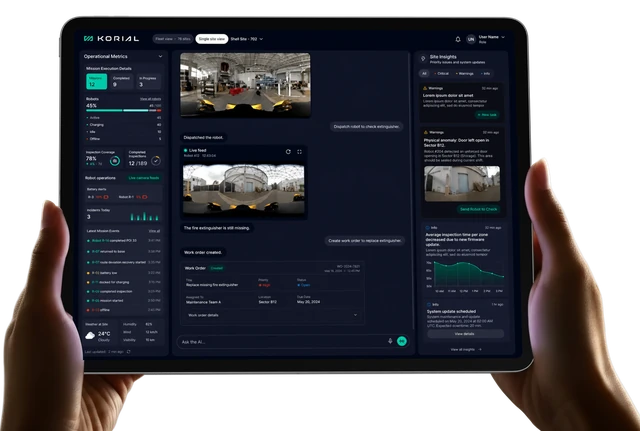
Korial's platform inspects energy and chemical sites for customers including Shell, BP, and Evonik, using robots, drones, and fixed cameras. MindInventory engineered governed agentic workflows that turn raw telemetry into bounded, auditable directives, and an Unreal Engine 5 digital twin where missions are tested before they touch live equipment. The figures are Korial's reported results.

Outcomes:

28%lower inspection costs
40,000+human inspection hours saved
1M+autonomous inspections completed
Read the case study

Sully AI: A Licensed Provider Before Every Patient Record

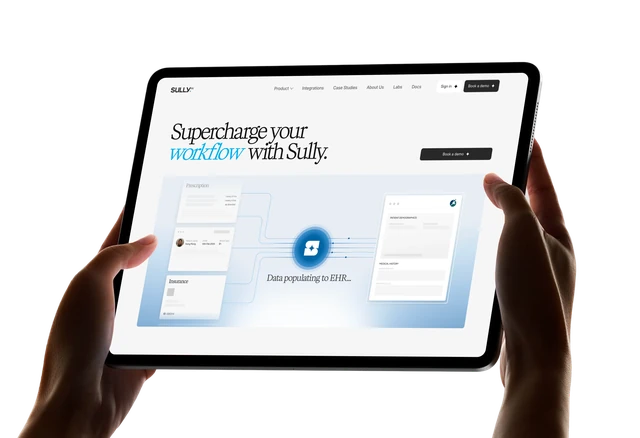
Sully AI's six clinical agents draft notes, suggest codes, and triage patients across thousands of daily interactions. MindInventory built the platform so no drafted note, suggested code, or triage recommendation enters a patient record without a licensed provider reviewing it. Each agent runs in its own container with its own audit trail. The figures are Sully AI's reported results.

Outcomes:

2xthe workload handled by providers, without additional hours
12.5M+minutes of clinical documentation automated
Outputreviewed by a licensed provider before it reaches the record
Read the case study

Is Your AI System Governed and Audit-Ready?

MindInventory assesses your AI systems against governance, risk, security, and compliance requirements to identify gaps, evaluate existing controls, and determine what needs to improve.

Business professional reaching toward a glowing holographic AI governance interface

AI Governance We Build for Regulated Industries

MindInventory applies AI governance where sector rules already exist and AI adds a new layer on top of them. Through our AI Consulting Services, we map each AI system to its sector's rules as well as AI-specific law, so one review covers both.

For Korial, we built bounded, auditable agent directives and simulation-first testing for safety-critical inspection.
For Sully AI, we built a licensed-provider review gate and per-agent audit trails under HIPAA.
We align models with model risk management guidance (SR 11-7) and adverse action notice rules for credit decisions.
We map underwriting and claims AI to the NAIC Model Bulletin on insurers’ use of AI and to state notice laws.
We design bias audits and candidate notices for tools covered by New York City Local Law 144 and the EU AI Act’s employment category.
We prepare AI products for enterprise procurement reviews, security questionnaires, and ISO 42001 certification.

How AI Governance Engagements Are Scoped

MindInventory scopes AI governance by the number and risk of the AI systems involved, not by a fixed package. The free AI Governance Assessment covers one named AI system and ends with a written recommendation and a fixed estimate. A paid discovery covers several systems or your whole portfolio, takes one to two weeks, and is scoped separately. Governance controls built into an AI system we develop are priced inside that build, and organization-wide programs in regulated sectors typically start at $150,000. This page explains how AI governance works; it is not legal advice, and we work alongside your legal counsel.

Engagement
What it covers
Cost
Timeline
AI Governance Assessment
One named AI system against the six gates
Free
2 weeks
Discovery
Several systems or your full AI portfolio
Scoped separately
1 to 2 weeks
Governance built into an AI build
Several systems or your full AI portfolio
Included in the build price
With the build
Large or regulated program
Several systems or your full AI portfolio
$150,000+
8 to 14 months

In-House, Platform, or AI Governance Partner?

MindInventory recommends the lightest model that will hold up in an audit. Many organizations end up combining all three: their own committee and policy, a platform for inventory and workflow, and a partner for assessments, red teaming, and control engineering.

Measure
Build in-house
Buy a governance platform
Bring in a partner
Best for
Mature risk and legal teams with AI expertise
Many AI systems that need one inventory and workflow
Getting a program running fast, or specialist testing
Strength
Deep context on your business
Consistent records and reporting
Experience across frameworks and sectors
Watch out for
Slow to start, hard to staff
A tool without policy or owners changes little
Knowledge leaving with the partner unless handed over

Why Choose MindInventory for AI Governance Consulting

MindInventory is ISO 42001 certified for AI management systems, so we advise from running the same standard ourselves. Our 70+ AI engineers, data scientists, and MLOps specialists build production AI in healthcare and heavy industry, inside a 300+ person engineering organization.
Practitioners, not only advisers icon

Practitioners, not only advisers

We build the controls, logs, and tests our policies call for.
One control set, many frameworks icon

One control set, many frameworks

Evidence is mapped once to every law and standard that applies.
Governance that ships icon

Governance that ships

Gates are sized by risk, so low-risk AI moves fast and high-risk AI gets the scrutiny it needs.
You keep everything icon

You keep everything

Policies, registers, templates, and audit records belong to you.

Govern Your AI Before Someone Asks for Proof

Starting a governance program? MindInventory assesses one AI system in two weeks and returns a gap report and a fixed estimate. Already have AI held up by legal, security, or compliance? We find what is missing in five working days.

Team reviewing printed reports and a laptop beneath a glowing certified-shield hologram

AI Governance FAQs

Explore answers to common questions about AI Governance

AI governance is the set of policies, roles, controls, and evidence an organization uses to keep its AI lawful, safe, fair, secure, and accountable across its lifecycle. In practice it is a policy, approval rules by risk level, controls such as testing and human oversight, and records that prove the controls ran. MindInventory builds all four, sized to the risk of each system.

No, and neither is the same as responsible AI. Responsible AI is the set of principles, such as fairness, transparency, and accountability. AI compliance is meeting specific legal duties, such as the EU AI Act or HIPAA. AI governance is the operating system that connects them: who decides, which controls run, and what evidence proves it. MindInventory builds governance so principles and compliance show up in daily delivery.

Partly. The 2026 Digital Omnibus moved high-risk obligations for Annex III systems to 2 December 2027 and for AI inside regulated products to 2 August 2028. Bans on prohibited practices have applied since February 2025, general-purpose model duties since August 2025, and most transparency duties from August 2026. The delay gives time to prepare, not a reason to wait.

Yes, in many cases. It applies to providers who place AI systems on the EU market and to deployers using AI in the EU, and to providers and deployers elsewhere when their system’s output is used in the EU. A US company selling AI software to European customers is usually covered. MindInventory determines your role and obligations system by system.

Not by law, but buyers increasingly ask for it. ISO/IEC 42001 is a voluntary, certifiable standard for an AI management system, and certification gives customers and auditors independent evidence that your AI is governed. Many organizations build to the standard first and certify later. MindInventory holds the certification and prepares clients for audit by an accredited body.

ISO/IEC 42001 is an international management system standard you can be certified against. NIST AI RMF is a voluntary US framework, organized into Govern, Map, Measure, and Manage, with no certification. They overlap heavily, so MindInventory builds one control set and maps it to both, which suits companies selling in the US and abroad.

An executive sponsor owns it, usually the CIO, CTO, chief risk officer, or general counsel, supported by a cross-functional committee. Each AI system also needs its own named business owner who answers for its decisions. Governance fails most often when everyone is consulted and nobody is accountable.

Start with an inventory and an acceptable use policy, then give people approved tools that are safer than the ones they found themselves. Banning public AI tools outright tends to push use out of sight. MindInventory combines usage discovery, clear rules on which data may be shared, and enterprise versions of the tools teams actually want.

Not when it is sized by risk. Low-risk internal tools pass light gates in days, while high-risk systems get deeper review. Clear rules usually speed delivery, because teams stop waiting for case-by-case approvals and legal reviews start from a standard evidence pack instead of a blank page.
RELATED SERVICES

Explore our other related services to enhance the performance of your digital product

AI Insights From Our Engineering Team
Written by the people doing the work, for the questions that come up before a project starts.