Computer Vision Development Services

MindInventory builds computer vision that checks what your team now checks by eye: detecting objects, classifying images, inspecting products, and reading text in photos and camera frames. Our 70+ AI engineers, data scientists, and MLOps specialists ship vision models to the cloud, edge devices, or your app, from food recognition across 2.5 million items to camera-based indoor navigation.

Trusted by Fast-Growing Startups to Established Enterprises

Week 2

A written vision plan: what the model must detect, at what accuracy, where it runs, and a fixed estimate

Before training

An accuracy target and a test set built from your own images, agreed with you

At launch

A model running where you need it: in the cloud, on an edge device, or inside your app

At handover

Models, labeled datasets, training pipelines, and test reports, owned by you

70+

AI and ML specialists

300+

Engineering specialists

2700+

Projects delivered

1800+

Clients served

15+

Years in business

ISO 42001: 2023

ISO 42001: 2023

ISO 27001: 2022

ISO 27001: 2022

SOC2 Type II

SOC2 Type II

HIPAA

HIPAA

BAAs Signed

BAAs Signed

Computer Vision Development Services We Deliver

MindInventory builds computer vision software that understands images: finding objects, sorting pictures, spotting defects, and reading text. As part of our AI development services, we deliver six computer vision services, from a single detection model to vision running across thousands of phones.

Object Detection and Counting icon

Object Detection and Counting

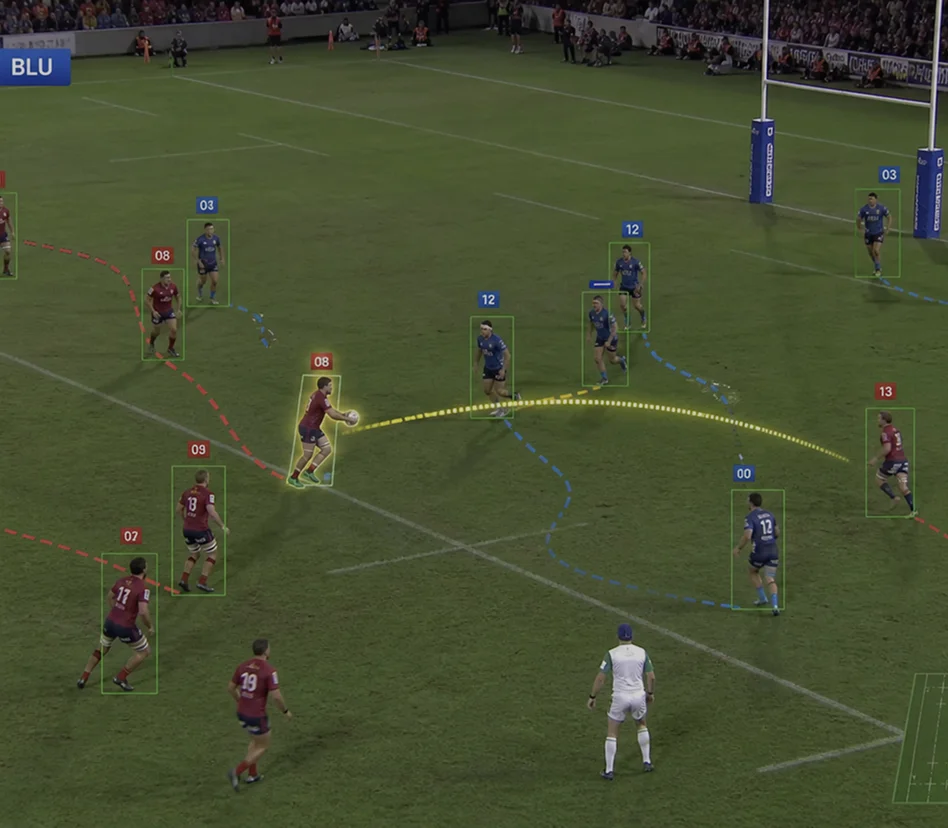
Our computer vision engineers build object detection models that locate and count items in images, helping software track stock, spot missing parts, and flag hazards. We train models such as YOLO and Detectron2 on your own images and camera positions, adding segmentation with Segment Anything when precise outlines matter, such as measuring a crack.

Image Classification and Recognition icon

Image Classification and Recognition

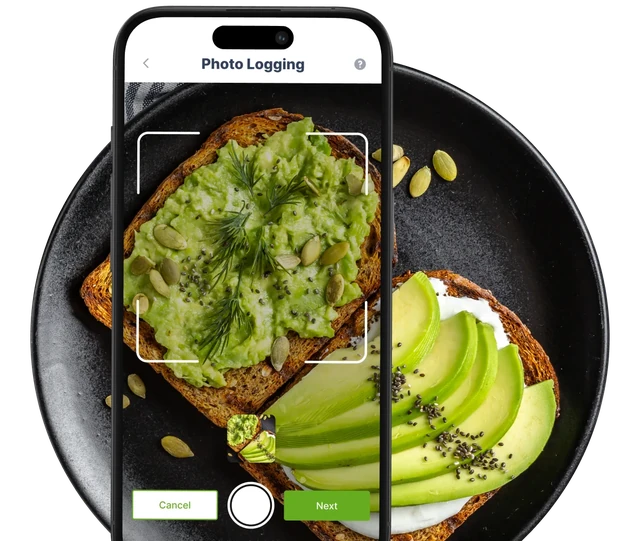
At MindInventory, we build image classifiers that identify what a picture shows, from products and food to different types of damage. Our models can scale to large catalogs, as with Passio.AI’s 2.5 million food items, while fallbacks such as barcode scanning handle cases where the camera is uncertain.

Automated Visual Inspection icon

Automated Visual Inspection

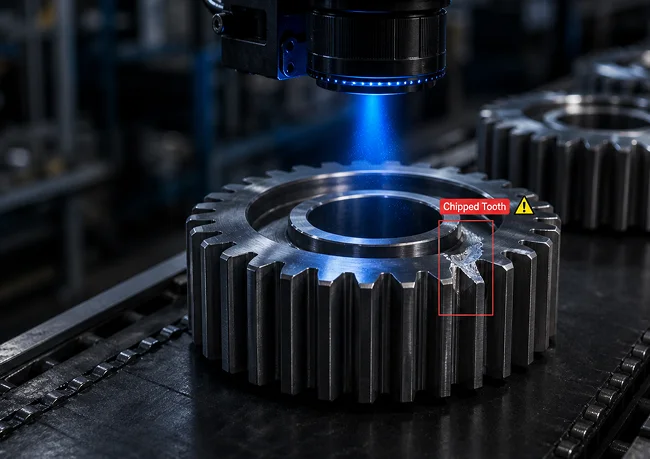
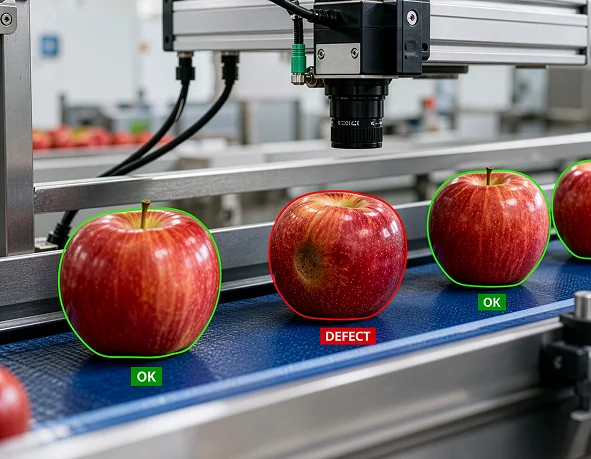
Our approach to visual inspection AI focuses on detecting defects at line speed, including scratches, dents, misalignment, and missing components. We train models around your quality rules and use synthetic examples when real defect data is too limited to train the system reliably.

OCR for Photos, Labels, and Screens icon

OCR for Photos, Labels, and Screens

Our engineers build OCR systems for text found in images rather than documents, including labels, serial numbers, meter readings, and equipment screens. We design them to handle angles, glare, curved surfaces, and worn print, then validate each result against the format it is expected to match.

Medical Imaging AI icon

Medical Imaging AI

At MindInventory, we build medical imaging AI that helps clinicians find and measure findings across X-rays, CT, MRI, ultrasound, dermatology photos, and microscopy. Our teams work with clinical experts to label de-identified images under HIPAA controls. Regulatory clearance remains the device manufacturer’s responsibility; we document the data, training, and testing so the evidence is ready for that process.

Edge and on-Device Vision icon

Edge and on-Device Vision

Many vision systems cannot wait for the cloud. MindInventory compresses models for phones, cameras, and edge devices with Core ML, TensorFlow Lite, ONNX Runtime, or NVIDIA Jetson, and packages them as SDKs, as on Passio.AI. On-device vision keeps images private and works offline.

How We Scope a Computer Vision Request

Our approach starts by classifying every computer vision request into one of six tasks, because the task determines the data, model, timeline, and cost. We identify the task before quoting, since “AI that looks at images” could mean a two-week classification project or a six-month computer vision program.

The task
Example
What it needs
Classify
"Which of 400 products is in this photo?"
Labeled examples per class, a fallback for unsure results
Detect and count
"How many cartons are on this pallet?"
Boxes drawn on images from your real camera angles
Segment and measure
"How long is this crack?"
Pixel-level labels and a known scale
Read
"What does this meter or label say?"
OCR tuned to angles and glare, with format checks
Locate
"Where is this person standing indoors?"
Visual positioning against a mapped space, as on RouteMe
Watch over time
"Did anyone enter the restricted zone?"
Video, not single images: video analytics
Identifying people by face is scoped separately, with legal review. The EU AI Act has banned untargeted scraping of facial images to build recognition databases since 2 February 2025, and treats remote biometric identification as high-risk.

Computer Vision Systems We Have Built

Both projects run on ordinary phones, in real lighting, for people who never see the model.

Passio.AI: Food Recognition From a Single Photo

Nutrition apps lose users to manual food logging. MindInventory's computer vision team built visual food recognition for Passio.AI that identifies meals from a photo across a 2.5 million item database, estimates portion size, and falls back to barcode scanning when the camera alone is not enough. It ships as an SDK, so other health apps can add food recognition without building their own.

Outcomes:

  • 97% recognition accuracy across 2.5M+ food items
  • One photo to estimate portion size
  • SDK for integration into third-party apps
Read Case Study

RouteMe: Indoor Navigation From the Phone Camera

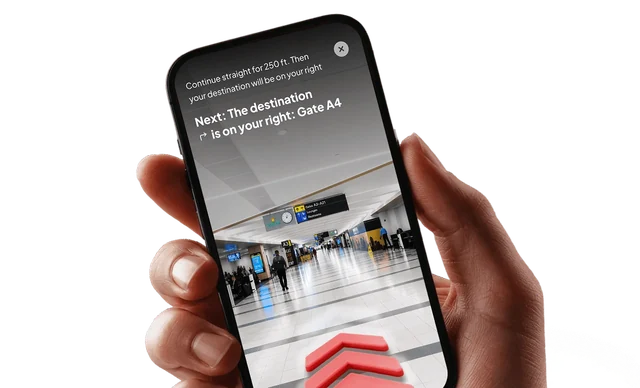
Indoor navigation in airports and hospitals usually needs Bluetooth beacons and an app nobody wants to download. MindInventory's dedicated team built RouteMe's platform to find a person's position with computer vision instead, launched from a QR code with no install, and with voice, haptic, and high-contrast guidance. On MindInventory's own benchmark, positioning stays within roughly half a meter on routes over 200 meters. The figures are RouteMe's reported results.

Outcomes:

  • 94.3% passenger satisfaction
  • 12,000+ routes completed weekly
  • 3,700+ passengers in the Miami International pilot
Read Case Study
The pattern in both: the model had to work on the phone already in the user’s hand, in whatever light they were standing in. That is why both were tested in the field, not on a benchmark.

Have Images Your Team Still Checks by Eye?

Tell MindInventory what needs to be recognized and where the images come from. In two weeks, free of charge, you get a written vision plan with the accuracy you can expect, where the model should run, and a fixed estimate. If a ready-made vision API already does the job, the plan says so.

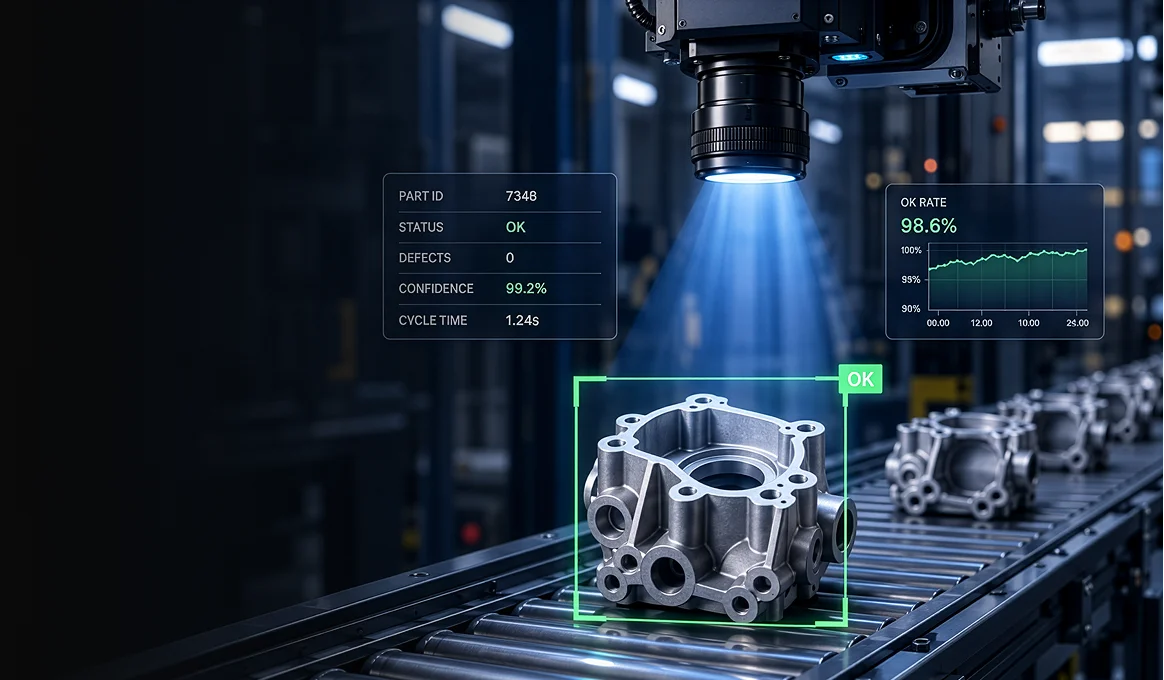
Industrial AI vision inspection system detecting a defect on a metal gear

What Predictive Analytics Changes For Your Planning

MindInventory’s predictive analytics moves your team from reacting to last month’s numbers to acting on next month’s, with the uncertainty stated up front.
Where you are now
Where you are after launch
We order from last year's sales plus a gut adjustment.
Orders follow a forecast by product and location, with a range for safety stock.
We learn a customer is leaving when they cancel.
The retention team sees at-risk accounts weeks earlier, ranked by revenue.
Every case gets the same review, so risky ones wait in line.
High-risk cases reach a reviewer first, with the reasons attached.
Equipment fails, then we fix it.
Crews service assets the forecast flags before they fail.
Nobody knows if the forecast is any good.
Accuracy is reported every cycle against a simple baseline, in money.

The MindInventory Copilot Design Rules

Vision models usually fail on field conditions, not on the test set. Every MindInventory vision model must pass six field conditions before launch, measured on images from your own cameras and users.

Condition

Lighting

What we test

Low light, glare, backlight, shadows, night shifts

What goes wrong if skipped

Defects are missed whenever the light changes

Condition

Angle and distance

What we test

Off-angle shots, far and close range, partial views

What goes wrong if skipped

The model works only when the camera is perfectly placed

Condition

Clutter and overlap

What we test

Crowded scenes, objects touching or hidden

What goes wrong if skipped

Items are counted twice, or not at all

Condition

Real devices

What we test

The phones and cameras people actually use, with compression

What goes wrong if skipped

Accuracy drops on older phones and cheap cameras

Condition

Rare cases

What we test

Classes and defects with few examples

What goes wrong if skipped

The rare defect that matters most is never flagged

Condition

Change over time

What we test

New products, packaging, seasons, wear

What goes wrong if skipped

Accuracy decays quietly after launch

Never accept a single accuracy number for a vision model: ask for it per condition and per class.

The result: a model you can still trust after the next product launch.

Vision Model Failing Outside the Demo?

A model that scored well in testing and struggles in the field usually has a data gap, not a model problem. MindInventory reviews your vision project in five working days, free, against the Field Conditions Test, and sends a findings document naming where it fails and what fixing it takes.

Computer vision camera inspecting apples on a conveyor belt and flagging a defective apple

Our Computer Vision Development Process

MindInventory builds AI voice agents in six stages, from analyzing your real calls to a controlled go-live, with every stage of speech measured against the Voice Latency Budget. A focused voice agent for one call type typically goes live in 8 to 14 weeks.

  1. Step 1

    Use Case Definition and Accuracy Targets

    We agree the classes or defects to recognize, the per-class target, where the model runs, and what a miss or false alarm costs.

    You receive: a vision specification with per-class targets

    Typical time: about 1 week

    Moves on when: targets are signed off

  2. Step 2

    Image Data Collection and Annotation

    We collect images from your real cameras and users and label them in Label Studio or CVAT, with test images from different sites than training images.

    You receive: a labeled dataset and annotation guidelines

    Typical time: 2 to 4 weeks

    Moves on when: label quality checks pass and every class has enough examples

  3. Step 3

    Model Selection and Training

    We fine-tune pretrained models such as YOLO, Detectron2, or vision transformers, and compare each against a ready-made vision API on the same test set.

    You receive: trained candidate models with comparison results

    Typical time: 2 to 3 weeks

    Moves on when: a candidate meets the per-class targets on held-out images

  4. Step 4

    Field Conditions Testing and Error Analysis

    We test the best candidate against the six field conditions and review every error before launch.

    You receive: a field test report with per-class precision and recall

    Typical time: 1 to 2 weeks

    Moves on when: the model passes all six conditions

  5. Step 5

    Model Optimization and Deployment

    We compress the model, export it to ONNX, Core ML, TensorFlow Lite, or TensorRT, and deploy it with low-confidence results routed to a person.

    You receive: the deployed model with confidence routing

    Typical time: 2 to 3 weeks

    Moves on when: speed and accuracy hold on the target hardware

  6. Step 6

    Monitoring and Retraining

    We watch confidence and the incoming image mix, collect corrected images, and retest every new model before it replaces the current one.

    You receive: monitoring dashboards and full handover of models and data

    Typical time: ongoing

    Moves on when: handover is signed off

How Much Does Computer Vision Development Cost?

Computer vision development at MindInventory runs from under $25,000 for a proof of concept to $150,000 for production vision across several use cases, priced in stages so you see accuracy on your own images before the larger build.

Stage
What it covers
Cost
Timeline
Proof of concept
One model on your images, tested against an agreed accuracy target
Under $25,000
6 to 10 weeks
Focused vision system
One use case in production, with app or device integration and monitoring
$25,000 to $60,000
8 to 14 weeks
Production vision
Several use cases, devices, or sites, with retraining pipelines
$60,000 to $150,000
4 to 8 months
Four things move your number: how much labeled data exists, how many classes the model must recognize, where it runs, and the accuracy required. Labeling is often the largest line, and a pretrained model can cut it sharply. Plan for 15 to 20% of build cost each year for monitoring and retraining.

How Long Does It Take To Build A Computer Vision Model?

A proof of concept takes 6 to 10 weeks, and one use case in production takes 8 to 14 weeks. Several use cases or sites take 4 to 8 months. Collecting and labeling images usually sets the pace, not training. The six stages are set out in Our Computer Vision Development Process above.

 Blue gradient background

Know What Your Vision Project Will Cost

Tell us what needs recognizing, how many images you have, and where the model should run. Within two weeks MindInventory returns a fixed estimate, the expected accuracy, and a written recommendation, free of charge.
Get my fixed estimate

The Computer Vision Stack We Build On

MindInventory chooses the vision stack per use case, starting from proven pretrained models and adding custom training only where your images demand it. Training, labeling, and deployment stay separate, so a better model replaces the current one without rebuilding the app. You get vision built on proven parts, where a better model is a swap rather than a rebuild.

Computer vision
YOLO Detectron2 Segment Anything OpenCV Roboflow
Vision foundation models
CLIP DINOv2 GPT Gemini vision-language models from the Claude Qwen families
Training frameworks
PyTorch TensorFlow Keras
Data labeling
Label Studio CVAT Roboflow Labelbox
OCR
PaddleOCR Tesseract Google Cloud Vision Azure AI Vision
Managed vision services
Amazon Rekognition Google Cloud Vision Azure AI Vision
Edge and on-device
Core ML TensorFlow Lite ONNX Runtime OpenVINO TensorRT NVIDIA Jetson
Model serving
Triton TorchServe BentoML
Cloud and MLOps
AWS SageMaker & Bedrock Vertex AI Azure AI Foundry MLflow Kubernetes

Computer Vision We Build for Visual Inspection and Recognition

MindInventory builds computer vision systems that turn images and video into useful information such as identifying objects, detecting defects, measuring visual features, locating people or assets, and spotting events that need attention. We integrate these capabilities into the cameras, mobile apps, and business systems where visual data is already part of the workflow.

For Passio.AI, we built image-based food and product recognition that helps users identify items from photos.
For RouteMe, we built camera-based indoor positioning and wayfinding to help people navigate complex indoor environments.
We apply computer vision to detect product defects, verify assembly steps, and check labels and other visual quality requirements on production lines.
We build vision systems for shelf monitoring, product recognition, inventory visibility, and packaging checks.
We use computer vision to identify safety hazards, inspect assets, and read meters from images captured in the field.
We build computer vision capabilities for medical imaging support, wound measurement, and microscopy analysis where visual data can assist clinical or research workflows.

Cloud, Edge, or on-Device Inference?

MindInventory picks where a model runs by speed, cost per image, privacy, and connectivity. Most projects start in the cloud, then move to the edge or the device once the model is stable.
Cloud
Edge device
On-device (phone or app)
Best when
Volumes vary and heavy models need large GPUs
Cameras sit on a site, a line, or a vehicle
Users take photos in an app, often offline
Speed
Depends on the network
Milliseconds, on site
Milliseconds, in hand
Privacy
Images leave your site
Images stay on site
Images never leave the device
Watch out for
Bandwidth and cost per image at volume
Hardware to buy, install, and update
Model size and battery on older phones

When Computer Vision isn’t the right fit?

Does the meaning come from movement over time rather than a single image? If the system needs to analyze activity, behavior, or events across a video stream, consider: Video Analytics

Are the images mainly scanned forms, invoices, or contracts? If the goal is to extract and process information from business documents, consider: Intelligent Document Processing

It is also not the right fit if:

  • A ready-made vision API already meets your accuracy requirements
  • You cannot collect representative images from the real cameras or users the model will face
  • A sensor, barcode, or RFID tag can answer the question more reliably and cheaply
  • Nobody owns the decision the model's output is meant to inform
  • Nobody owns a business metric the vision system is expected to improve

Not Sure You Need a Custom Model?

Send MindInventory a sample of your real images and what you need to know from them. In two weeks, free, you get a written recommendation on whether a ready-made vision API meets your target or a custom model is worth building, with a fixed estimate.

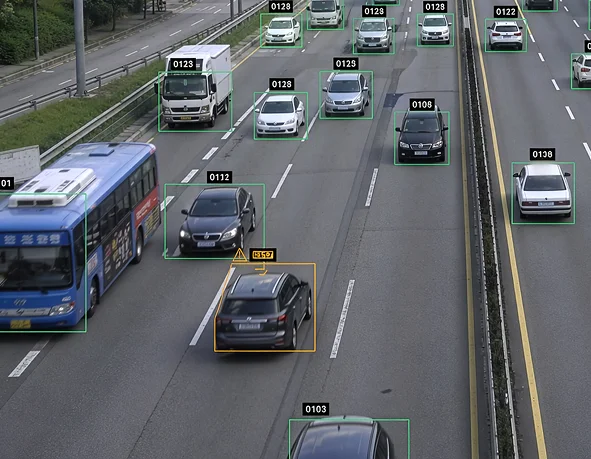
Computer vision detecting and tracking cars on a highway with labeled bounding boxes

Why Choose MindInventory As Your Computer Vision Development Company

MindInventory has built software since 2011, and its 70+ AI engineers, data scientists, and MLOps specialists work inside a 300+ person engineering organization that also builds the apps and cloud systems vision runs on.
Vision and app in one team icon

Vision and app in one team

We build the model and the app or SDK around it, as on Passio.AI and RouteMe.
Tested in the field icon

Tested in the field

Every model passes the Field Conditions Test on your images before launch.
Built for real devices icon

Built for real devices

Models sized for the phones, cameras, and edge hardware your users have.
You keep everything icon

You keep everything

Models, datasets, and pipelines transfer at handover.

Plan Your Vision Project, or Rescue One

Starting fresh? MindInventory assesses one use case in two weeks and returns a vision plan with a fixed estimate. Already have a model that struggles in the field? We review it in five working days and tell you why. Both are free.

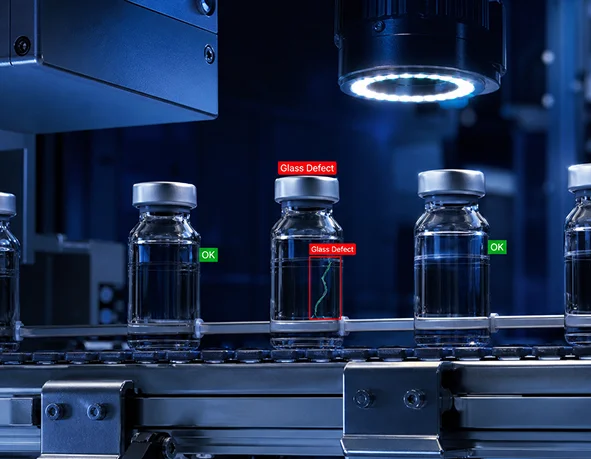
Machine vision camera inspecting glass vials on a production line and flagging glass defects

Computer Vision Development FAQs

Fewer than most teams expect, when you start from a pretrained model. A few hundred labeled images per class often give a working proof of concept, and rare defects or fine-grained classes need more. Variety matters more than volume: images from different cameras, lighting, and angles beat thousands of near-identical shots. MindInventory sizes the dataset against your accuracy target before labeling starts.

Usually a mix. MindInventory sets up the labeling tool and guidelines, pre-labels images with an existing model, and has annotators correct them, which is far faster than starting blank. Your experts label the cases that need domain knowledge, such as defect grades, and review a sample of the rest, so labels match how your team judges.

It depends on the task, so MindInventory measures it on your data during the proof of concept instead of promising a number. We report accuracy per class, along with misses and false alarms separately, because one average hides the class that matters. You approve the target before production, and the model ships only if it meets it.

Start with an API when it already meets your target. Services like Amazon Rekognition and Google Cloud Vision handle common objects and text well. A custom model wins when your objects are specific to your business, when accuracy on rare cases matters, or when cost per image at volume or privacy rules out a cloud API. MindInventory tests both during the assessment.

By keeping only what the task needs. MindInventory blurs faces where identity is not needed, processes images on the device or on site where possible, and keeps training images only with consent and a retention limit. Access is role-based and logged, and health images are de-identified under HIPAA controls.

Often, yes. Most IP cameras can send still frames to a model in the cloud or on an edge box on site, so new hardware is only needed where resolution, angle, or lighting fall short. MindInventory checks sample frames in the first week, before anyone buys new equipment.

Yes. MindInventory packages the model to run inside your iOS or Android app, or as an SDK your app calls, as Passio.AI’s recognition ships to third-party apps. The model is compressed to fit the app’s size and battery budget, and a cloud fallback handles images the phone cannot.

Running cost scales with images processed, not users. In the cloud, you pay per image or per GPU hour; on devices, the cost is mostly the hardware you already have. MindInventory estimates cost per thousand images during the assessment, so the business case includes the full running cost, not only the build.

By watching it on live images. MindInventory tracks confidence, misses confirmed by reviewers, and the mix of incoming images, and alerts when any of them shift. Flagged images are labeled and added to the training set, and the model is retrained and retested against the Field Conditions Test before it replaces the current one.
Related AI Services

Explore our other related services to enhance the performance of your digital product

AI Process Automation

When the base model is not accurate enough on your domain and prompting has stopped helping.

Intelligent Document Processing

Extraction and processing of data from scanned forms, invoices, and contracts.

Machine Learning Development

Custom models for prediction, classification, and recommendation, built on your data.

MLOps Consulting
MLOps Consulting

Evaluation suites, drift monitoring and retraining, for systems already in production.

AI Insights From Our Engineering Team
Written by the people doing the work, for the questions that come up before a project starts.