AI Process Automation Services

MindInventory builds AI process automation that takes repetitive, document-heavy work off your team: reading inputs, making routine decisions, updating your systems, and sending exceptions to a person with the context attached. Our 70+ AI engineers, data scientists, and MLOps specialists automate inside the tools you already run, from insurance claims handling to content takedowns at web scale.

Trusted By Global Clients, Including Fortune 500 Companies

Week 2

A written automation plan: which steps go to rules, AI, or a person, and a fixed estimate

Before the build

The exception path designed, so every case the automation cannot finish has somewhere to go

At launch

Automation running inside your current systems, with an exception queue your team works from

At handover

All workflows, code, prompts, and dashboards, owned by you

70+

AI and ML specialists

300+

Engineering specialists

2700+

Projects delivered

1800+

Clients served

15+

Years in business

ISO 42001: 2023

ISO 42001: 2023

ISO 27001: 2022

ISO 27001: 2022

SOC2 Type II

SOC2 Type II

HIPAA

HIPAA

BAAs Signed

BAAs Signed

AI Process Automation Services We Deliver

We build AI process automation workflows that take repetitive, document-heavy work off your team’s plate reading unstructured inputs, applying your business rules, updating the systems you already use, and routing exceptions when human judgment is needed. As an AI Development Company, we bring the same engineering discipline to the automation layer, covering the journey from identifying the right process to modernizing bots you already run.

Process Discovery and AI Automation Consulting icon

Process Discovery and AI Automation Consulting

Our approach starts with the process, not the technology. We map how work actually moves across your systems and teams using system logs, process mining, and input from the people doing the work. Our experts measure volume, handling time, error rates, and human intervention to identify where AI can deliver measurable value. You get a ranked automation shortlist, an Automation Split for the top process, and a fixed implementation estimate.

Document-to-Decision Workflows icon

Document-to-Decision Workflows

We build document-to-decision workflows that turn claims, invoices, contracts, and emails into completed actions not just extracted data. The workflow reads and validates each input, applies your business rules, then completes the next step or sends the case to a person with the relevant evidence attached. That is where the real efficiency gains come: automating what happens after the document is understood.

RPA Modernization icon

RPA Modernization

Our experts modernize RPA without forcing you to start over. We add AI steps to UiPath, Automation Anywhere, or Power Automate bots when they encounter unstructured inputs, replace fragile screen scraping with API integrations, and retire bots where the underlying task no longer needs one. Your existing automations keep running while we modernize them around the systems and processes you already depend on.

AI Workflow Automation Across Your Systems icon

AI Workflow Automation Across Your Systems

Our approach connects your inbox, CRM, ERP, and case platforms through an orchestration layer that follows each case from start to finish, retries failed steps, and keeps a complete audit trail. AI handles judgment-based tasks such as request classification or reply drafting within defined guardrails, while cases that exceed those limits pause for human approval. This keeps automation moving without giving AI unchecked control.

Exception Handling and Human-in-the-Loop Review icon

Exception Handling and Human-in-the-Loop Review

Exceptions decide whether automation saves time or just moves the work, so MindInventory designs the exception path before the happy path. Every case the automation cannot finish lands in a queue with the reason, the source documents, and a suggested next step. Each resolution is recorded, so repeat exceptions become new rules.


How We Scope an Automation Request

Automate the process, not the step. MindInventory sorts every request into one of six process types before quoting, because each needs a different mix of rules, AI, and people, and one of them is not process automation at all.
Process type
Example
What it needs
Intake
Claims, invoices, or applications arriving by email and upload
Document reading, field checks, and routing
Data movement
Orders copied from a portal into the ERP
APIs or RPA, validation, and retry-safe writes
Routine approval
Refunds or credits within a set limit
Rules first, AI for edge cases, a person above the limit
Reconciliation
Statements matched against ledger entries
Matching rules, AI for fuzzy matches, an exception queue
Customer request
Address changes or status questions by email
Classification, a drafted reply, and a system update
Open-ended investigation
"Find out why this account churned"
Not a fixed process: an AI agent or a person

AI Process Automation We Have Built

Both projects automate work where volume outpaces people and every error carries a cost.

Ceartas: Content Protection Automated at Web Scale

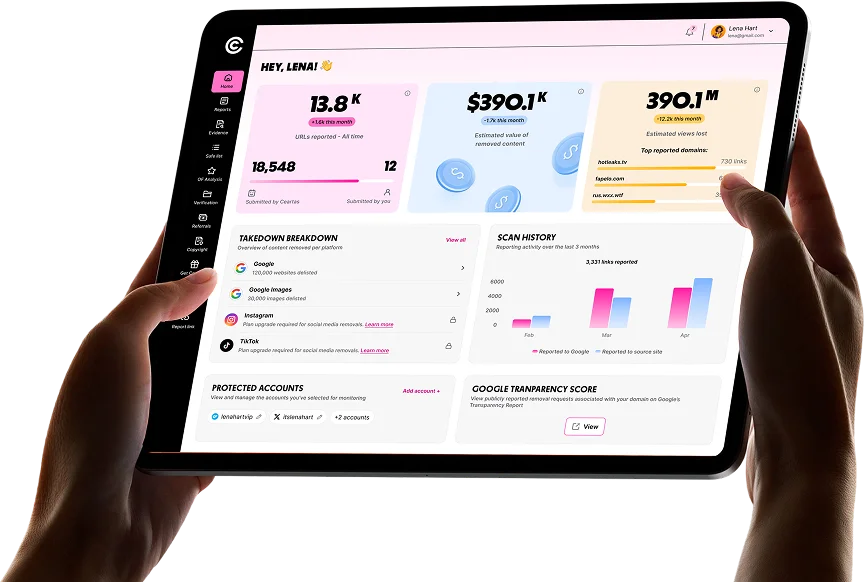
Protecting a creator's content means finding each copy, confirming it, and filing a notice, one case at a time. Ceartas runs that process across the web: scanning continuously, flagging leaks and impersonators with lightweight AI models, sending each case to a human specialist, then enforcing through DMCA and other legal frameworks. MindInventory's dedicated team modernized the live platform without pausing monitoring. The figures are Ceartas's reported platform results.

Outcomes:

$6M+in stolen content removed in 10 weeks
600,000+unauthorized images and videos removed
75 millionsites and 2,000+ platforms monitored
Read Case Study

ClaimClarity: Workers' Compensation Claims, Ready to Assess

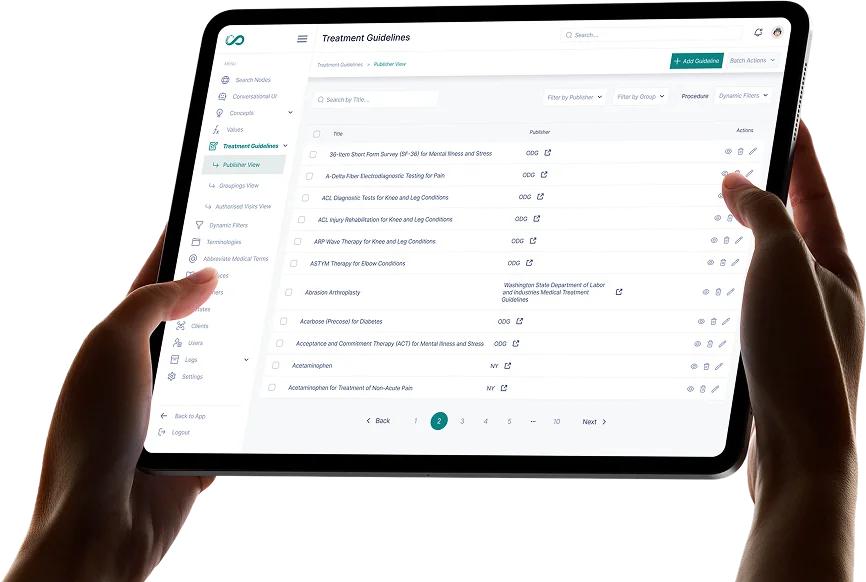
Workers' compensation claims stall in the reading: adjusters work through medical narratives, correspondence, and forms before a claim can be assessed. MindInventory built NLP-driven automation for ClaimClarity that extracts and structures the key facts from those documents, so each assessment starts from organized facts instead of a stack of PDFs. ClaimClarity reports these results.

Outcomes:

20%faster claims processing
33%lower claim handling costs
3document types structured: narratives, correspondence, forms
Read Case Study

Have a Process Your Team Still Does by Hand?

Tell MindInventory which process takes the most hours. In two weeks, free of charge, you get a written automation plan showing which steps go to rules, AI, or a person, and a fixed estimate. If an off-the-shelf tool already covers the process, the plan says so.

Hand drawing a process flowchart on paper beside a calculator

What AI Process Automation Changes for Your Team

MindInventory’s automation takes the reading, rekeying, and routine routing off your team, so people spend their time on the cases that need them.
Where You Are Now
Where You Are After Launch
Staff rekey data from emails and PDFs into two or three systems.
Documents are read once, checked, and written to every system that needs them.
Our bots break every time a vendor changes a screen or a form.
AI reads varied inputs, and APIs replace screen scraping where systems offer them.
Backlogs build at month end and in peak season.
Automation absorbs the volume, and people work only the exception queue.
Nobody can say where a case is or who touched it.
Every case has a status and a full history from intake to close.
Staff rekey data from emails and PDFs into two or three systems.
Exceptions carry their context, and repeat exceptions become new rules.

The MindInventory Automation Split

MindInventory assigns every step of a process to one of three owners, rules, AI, or a person, before building anything. If a step has one right answer, it does not go to AI. Automation then handles the volume while people keep the consequential decisions, as on Ceartas, where specialists review every case before enforcement. This also fits GDPR Article 22, which limits solely automated decisions with legal or similarly significant effects.
Step type
Who handles it
Example
If assigned wrong
Fixed rule, structured input
Rules and code
Check a total, copy a field, apply a policy limit
AI adds cost and variation to a step with one right answer
Unstructured input
AI reads and structures it
A claim narrative, an email request, a scanned form
Templates and screen scraping break on the first new format
Routine judgment within policy
AI decides above a confidence threshold
Classify a request, prioritize a queue, draft a reply
Low-confidence calls pass through unchecked
Consequential or irreversible decision
A person approves; AI prepares the case
Pay, deny, file a legal notice, change a medical record
Nobody is accountable when the decision is challenged
New kind of case
A person resolves it; the case feeds back
A document type the process has never seen
Exceptions pile up, or the automation guesses

Why AI Process Automation Fails to Scale

Most automation programs stall after the pilot, not during it, because the work moves somewhere nobody planned for. MindInventory traces each stall to one of six causes, listed in the order they surface, and fixes each against the Automation Split.
What you see
Why it happens
How we fix it
Bots break after every screen change
Screen scraping where an API exists
APIs first, AI reading for varied inputs
Savings far below the business case
One step automated, handoffs still manual
End-to-end orchestration of the whole process
Confident wrong decisions slip through
No confidence threshold per step
Per-step thresholds, with review below them
An exceptions inbox nobody can clear
Cases stop without reason or evidence
An exception queue designed before the happy path
The team won't trust the output
It went live without a parallel run
Two weeks side by side with the manual process
It fails silently when a form changes
No monitoring per step
Drift alerts on accuracy and straight-through rate

Bots Breaking or Exceptions Piling Up?

Recognize one of these? MindInventory reviews your automation in five working days, free, against the Automation Split, and sends a findings document naming what is failing and what fixing it takes.

Stalled AI Process Automation

How We Automate a Business Process With AI

MindInventory automates a business process in six stages, from process mining to a monitored cutover, and runs every automation alongside your team before it takes over. One end-to-end workflow typically reaches production in 8 to 14 weeks.

  1. Step 1

    Process Discovery and Process Mining

    We map how the process actually runs from event logs, process mining tools such as Celonis, and the people who do the work, and record today's cost per case.

    You receive: a process map with variants and a cost-per-case baseline

    Typical time: 1 to 2 weeks

    Moves on when: the process and its baseline are agreed

  2. Step 2

    Automation Split and Exception Design

    We assign every step to rules, AI, or a person, set a confidence threshold for each AI step, and design the exception queue before the main path.

    You receive: the Automation Split document and a fixed estimate

    Typical time: about 1 week

    Moves on when: every step has an owner and every exception has a route

  3. Step 3

    Proof of Concept on Historical Cases

    We run the automation on several hundred past cases and compare its results with what your team actually decided.

    You receive: a measured proof of concept

    Typical time: 2 to 3 weeks

    Moves on when: accuracy and straight-through rate meet their thresholds

  4. Step 4

    Workflow Orchestration and Integration Build

    We build on an orchestration layer such as Temporal or Camunda, connect systems through APIs or RPA, and add AI steps with a full audit trail.

    You receive: the production workflow with its exception queue

    Typical time: 3 to 4 weeks

    Moves on when: end-to-end tests pass on real case types

  5. Step 5

    Parallel Run Against the Manual Process

    The automation processes live cases alongside your team for two weeks or more, and we tune thresholds until the outcomes agree.

    You receive: a parallel-run comparison report

    Typical time: about 2 weeks

    Moves on when: results match the agreed accuracy and straight-through rate

  6. Step 6

    Cutover, Monitoring, and Continuous Improvement

    We cut over in stages, track straight-through rate and cost per case, and turn the most common exceptions into new rules each month.

    You receive: dashboards, a runbook, and full handover

    Typical time: 1 to 2 weeks, then ongoing

    Moves on when: the manual process is retired

How Much Does AI Process Automation Cost?

MindInventory prices AI process automation in stages, from under $25,000 for a proof of concept to $150,000 for several production workflows, using the same bands as our AI development services. Your number depends on the systems involved, input variety, human approvals, and compliance. Running cost is mostly model usage per case, plus 15 to 20% of build cost a year for monitoring.
Stage
What it covers
Cost
Timeline
Proof of concept
One process run on real past cases, measured on straight-through rate and accuracy
Under $25,000
6 to 10 weeks
Focused automation
One end-to-end workflow in production, with exception queue, logging, and dashboards
$25,000 to $60,000
8 to 14 weeks
Production automation
Several connected workflows across systems, with monitoring
$60,000 to $150,000
4 to 8 months

How Long Does It Take to Automate a Business Process?

A proof of concept on one process takes 6 to 10 weeks, and one end-to-end workflow in production takes 8 to 14 weeks. Several connected workflows take 4 to 8 months. System access and the number of exception types usually set the pace, not the AI. The six stages are set out in How We Automate a Business Process With AI above.

 Blue gradient background

Know What Automating Your Process Will Cost

Tell us the process, its monthly volume, and the systems it touches. Within two weeks MindInventory returns a fixed estimate, the Automation Split for each step, and a written recommendation, free of charge.

Get my fixed estimate

The AI Process Automation Stack We Build On

MindInventory chooses the automation stack per process, keeping fixed steps in code or your existing RPA platform and adding AI only where a step needs it. The orchestration layer stays separate from the models and bots it calls, so either can be replaced without rebuilding the workflow. You get automation built on platforms your team may already license, with AI added only where it earns its cost.

Frontier models
Claude GPT Gemini Grok
Open-weight models
Llama Mistral DeepSeek Qwen Gemma Phi
RPA platforms
UiPath Automation Anywhere Microsoft Power Automate Blue Prism
Workflow orchestration
Temporal Apache Airflow Camunda n8n
Queues and events
Celery RabbitMQ Apache Kafka Amazon SQS
Process mining
Celonis UiPath Process Mining Power Automate Process Mining
Agent orchestration
LangGraph CrewAI AutoGen OpenAI Agents SDK Google ADK
Document processing
Unstructured LlamaParse Docling OCR
Observability
Langfuse Arize Phoenix Helicone OpenTelemetry Datadog
Evaluation
Ragas DeepEval Promptfoo Braintrust LangSmith
Cloud and MLOps
AWS SageMaker & Bedrock Vertex AI Azure AI Foundry MLflow Kubernetes
Tools and interoperability
MCP Function calling RBAC Structured output

AI Process Automation We Build for High-Volume Workflows

MindInventory builds AI-powered process automation for workflows that handle large volumes of documents, requests, or transactions and require people to review, decide, or take action at multiple steps. We combine AI with business rules, system integrations, and human review where needed to reduce manual work while keeping important decisions traceable.

For ClaimClarity, we built automation for claim intake, document review, and preparation so adjusters can spend less time processing information manually.
For Ceartas, we built AI-powered detection, review queues, and enforcement workflows that help rights teams identify and act on issues at web scale.
We automate administrative workflows such as prior authorizations, referrals, billing follow-up, and payer correspondence while keeping human teams involved where review is required.
We automate invoice and statement processing, reconciliations, KYC checks, and customer onboarding to reduce repetitive manual processing.
We automate order exceptions, shipping-document processing, and supplier communication to help operations teams resolve routine issues faster.

Rule-Based RPA, AI Process Automation, or a Full Rebuild?

MindInventory recommends the lightest option that handles your real inputs: rules where steps are fixed, AI where inputs vary, and a rebuild only when the underlying system is the problem.
Measure
Rule-based RPA
AI process automation
Full system rebuild
How it works
Bots follow fixed steps on screens or APIs
Rules plus AI that reads varied inputs and makes routine decisions
The system the process runs on is replaced
Best when
Inputs are structured and the steps never change
Inputs vary, volume is high, and some judgment is routine
The system itself blocks the process, not the manual work
Watch out for
Breaks when screens or formats change
Needs confidence thresholds and an exception path
Longest timeline and the most risk to daily operations
Build and upkeep
Lowest to build, rising maintenance
Moderate, with model monitoring
Highest, but removes the old system's limits

When AI Process Automation Isn’t the Right Fit?

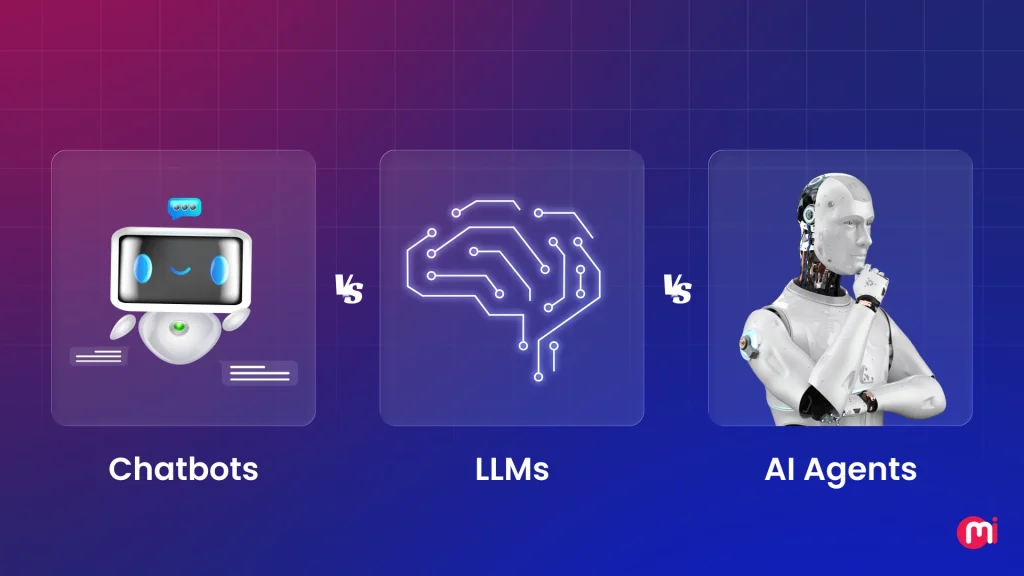
Does the work need to decide its own route across tools? If the system must determine what to do next, choose between tools, and act with limited human intervention rather than follow a defined workflow, consider: AI Agent Development

Is document extraction the main challenge? If the hard part is accurately extracting information from complex, unstructured, or variable documents before it enters a workflow, consider: Intelligent Document Processing

It Is Also Not the Right Fit If

  • The process runs only a few times a month, so the automation is unlikely to deliver a meaningful payback
  • Fixed rules already handle every case, making basic RPA or a no-code tool sufficient
  • The underlying process is broken or inconsistent; automation would only make the mistakes happen faster
  • Nobody owns the process or the systems the automation needs to update

Not Sure Which Process to Automate First?

Send MindInventory your three most manual processes and their monthly volumes. In two weeks, free, you get a written ranking of which to automate first, which to leave alone, and a fixed estimate for the first.

Rank my processes

Why Choose MindInventory as Your AI Process Automation Company

MindInventory has built software since 2011, and its 70+ AI engineers, data scientists, and MLOps specialists work inside a 300+ person engineering organization that connects to the systems your processes already run on.
People stay where the stakes are

People stay where the stakes are

Consequential decisions always wait for a named person.

Exceptions designed first

Exceptions designed first

The exception path and its queue are planned before the first rule is written.

Change without stopping work

Change without stopping work

We modernize live processes one step at a time, as on Ceartas's always-on platform.

You keep everything

You keep everything

Workflows, code, prompts, and dashboards transfer at handover.

Plan Your Automation, or Fix One That Stalled

Starting fresh? MindInventory assesses one process in two weeks and returns an automation plan with a fixed estimate. Already have bots or AI automation that keep breaking? We review it in five working days and tell you what is failing. Both are free.

A developer seen from behind working on a laptop and a second monitor full of code

AI Process Automation FAQs

Explore answers to common questions about AI Process Automation

RPA follows fixed steps; AI process automation can also read and decide. An RPA bot clicks through screens and copies fields exactly as scripted, so it fails when a form or input changes. AI process automation adds models that read unstructured documents, classify requests, and make routine decisions within limits. Most MindInventory builds use both: rules and RPA for fixed steps, AI where inputs vary.

Yes. Both platforms, and Microsoft Power Automate, can call external AI services, so MindInventory adds AI steps where your bots meet unstructured inputs such as emails, scanned forms, or free-text notes. The bot keeps the fixed steps it already handles well. Where a bot only exists to scrape a screen that now has an API, we replace it with a direct integration.

Start with a process that has high volume, a clear finish line, and a cost you can measure today. Good first candidates are document-heavy intake, routine approvals within policy, and data moves between systems. Avoid processes that change every quarter or depend on judgment nobody has written down. MindInventory ranks your candidates on volume, handling time, input variety, and exception rate during the feasibility assessment.

Accurate enough on your own cases, at a threshold your process owner sets. MindInventory measures accuracy on a set of real past cases before launch, then sets a confidence threshold for each step: above it the automation proceeds, below it the case goes to a person. Thresholds start strict and loosen only as measured accuracy holds, so the share of cases handled automatically grows safely.

It stops and hands the case to a person with everything needed to finish it: the reason it stopped, the source documents, and a suggested next step. MindInventory tracks every exception type, so the most common ones become new rules or model improvements, and the exception queue shrinks over time instead of growing.

By comparing cost per case before and after. MindInventory records today’s handling time, error rate, and cost per case during the assessment, then tracks the same numbers after launch, along with straight-through rate: the share of cases finished with no human touch. Running costs are counted per case too, so the return reflects the full cost, not just time saved.

It changes what your team does more than its size. Automation takes over rekeying, routine routing, and first-pass review, and people move to exceptions, approvals, and the conversations that need judgment. On MindInventory projects, the people who ran the manual process help design the exception path, because they know where cases go wrong.

Yes, in how much the system decides on its own. AI process automation follows a defined workflow, with AI handling specific steps inside it. Agentic process automation lets an AI agent choose the steps itself, calling tools until a goal is met. It suits open-ended tasks but needs tighter limits and more testing. MindInventory uses agents only for steps a fixed workflow cannot cover.

Every case keeps a full history of each step, the data it used, the rule or model version behind each decision, and who approved what. MindInventory applies role-based access, limits personal data to what each step needs, and signs BAAs for health data. Consequential decisions wait for a named person, so an auditor sees who decided and on what evidence.

By monitoring them like any production system. MindInventory tracks straight-through rate, exception rate, accuracy on sampled cases, and handling time, with alerts when any of them drifts. When a supplier changes a form or a system renames a field, the alert shows which step broke, so it is fixed before a backlog builds.
Looking for other Services?

Explore our other related services to enhance the performance of your digital product

AI insights from our engineering team
Written by the people doing the work, for the questions that come up before a project starts.
post
How to Build an LLM? Definition, Use Cases, and Steps

Developing your enterprise-grade AI solution and need to make it live faster? Let’s opt for ready-to-integrate, general-purpose LLMs! But wait, are you ready to tackle challenges generic LLMs create, like…