









Generative AI Development Company

MindInventory builds generative AI applications: systems that produce a draft, a summary, a document, or a structured record, then put that output in front of the person or the system that has to accept it. Generation is the easy part. What decides whether the system is worth running is the evaluation, the grounding, and the review step around it.

Clinical notes generated inside Epic and athenahealth. Appeal narratives drafted from evidence assembled across payer systems. Tax documents interpreted into structured records before a licensed advisor signs them.

Trusted By Global Clients, Including Fortune 500 Companies

Measured before built

We agree what a good output looks like, on your real cases, before the first prompt is written.

PoC on your data

No production build starts without a proof of concept against your own content and your own reviewers.

Output someone can sign

Every generated artifact carries its sources and a defined release step.

You own all of it

Prompts, pipelines, evaluation sets, and scoring functions transfer at handover.

70+

AI and ML specialists

300+

Engineering specialists

2700+

Projects delivered

1800+

Clients served

15+

Years in business

ISO 42001: 2023

ISO 42001: 2023

ISO 27001: 2022

ISO 27001: 2022

ISO 9001: 2015

ISO 9001: 2015

SOC2 Type II

SOC2 Type II

HIPAA

HIPAA

GDPR

GDPR

Generative AI Applications We Build

We build custom generative AI applications for enterprise workflows where a person currently produces a document from scattered inputs, that document follows a known shape, and somebody already reviews it. Those three conditions predict success better than industry, data volume, or model choice.
Clinical and case documentation icon

Clinical and case documentation

A structured note, summary, or record drafted from an encounter, a file, or a call, filed after professional review.
Correspondence and response drafting icon

Correspondence and response drafting

Appeals, claim responses, complaint replies, and customer correspondence composed from evidence held across systems.
Knowledge summarization and briefing icon

Knowledge summarization and briefing

Long or scattered source material reduced to a briefing that names its sources, for a person who has to act on it.

Structured capture from unstructured input

Forms, contracts, and statements interpreted into schema-valid records, with a confidence route to a reviewer.
Report and narrative generation icon

Report and narrative generation

Recurring reports written from live data, where the numbers are computed deterministically and only the narrative is generated.
Marketing and product content at scale icon

Marketing and product content at scale

Descriptions, variants, localizations, and campaign assets produced against a brand specification and a review workflow.
Multimodal and personalized assembly icon

Multimodal and personalized assembly

Content assembled per customer, account, or patient across text, image, and audio, from templates the model fills rather than invents.
Software and test generation icon

Software and test generation

Code, test cases, migration scripts, and documentation produced inside an existing review and CI process.

How we scope a request before we build it

Four different jobs get grouped under one label. They have different economics and different failure modes, so the first thing an engagement does is decide which one you have.
The job
What it means
What it needs
Generate
Produce something that did not exist, where several answers are acceptable
A generative model. The output needs review, not marking against a key
Transform
Restate existing content: summarize, translate, reformat, change register
A generative model, and the easiest of the four to evaluate, because the source is the reference
Extract
Pull specific values out of a document into fixed fields
Constrained generation over a schema, scored on field accuracy. Links to Intelligent Document Processing
Decide
Choose, score, route, or predict
Classification or a forecasting model. A generative model here is slower, costlier, harder to audit, and less accurate

The modalities, honestly

Text, image, video, audio, and code are usually presented as equally available. They are not, and the difference changes what is worth scoping.
Modality
Production readiness
The real constraint
Text and structured output
Ready. Most enterprise value sits here
Grounding and review capacity, not model quality
Code
Ready inside a developer workflow with tests and review
Review load, and code is exempt from EU synthetic-content marking
Image
Ready for concepting, variation, and templated assets
Rights and provenance, plus brand consistency across a set
Audio and voice
Ready for narration and synthesis
Consent for cloned voices, and disclosure duties
Video
Viable for short assets, not for controlled long-form
Cost, iteration time, and continuity across shots

GENERATIVE AI SYSTEMS WE HAVE BUILT

Three production systems. Different industries, different output types, and one shared architecture: the model generates into a system of record, and a named accountable person releases it. The numbers are from after launch.

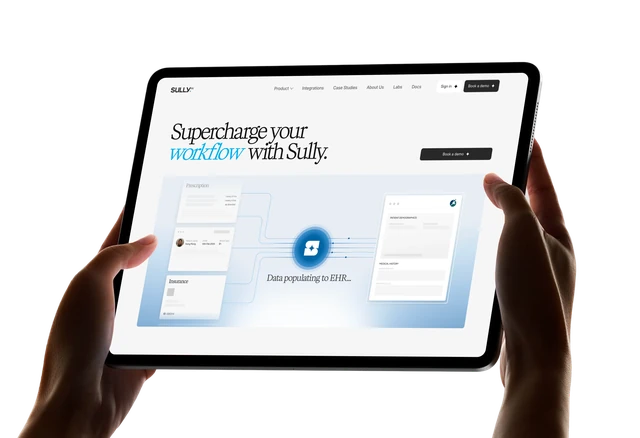
Sully AI - clinical copilot and AI workforce

A US healthcare SaaS company wanted to give clinicians a team of AI colleagues, not one more tool to open. We built six agents, covering reception, triage, scribing, clinical consultation, medical coding and care coordination, with an orchestration layer that decides which one handles a given task. It integrates natively with Epic and athenahealth and was built HIPAA-ready throughout.

Outcomes:

2xProviders handling the workload without additional hours
12.5M+minutes of clinical documentation automated
21xreturn on advertising spend

Read Case Study

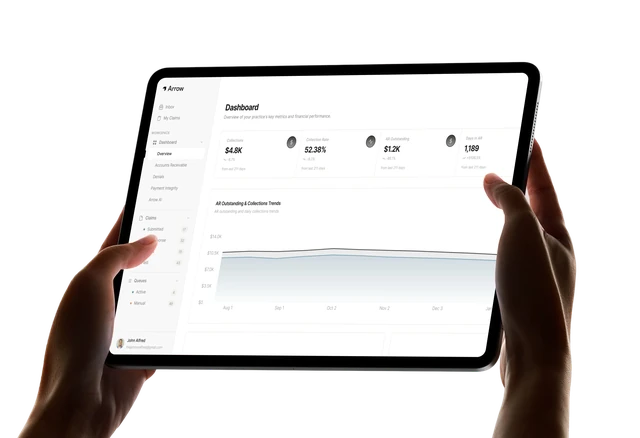
Arrow - healthcare revenue cycle AI

Claim denials are a documentation problem more than a clinical one, and the evidence needed to overturn them sits scattered across systems that don't talk to each other. We built a human-in-the-loop platform for denial investigation, appeal drafting and payer follow-up. It works as a connectivity layer over the EHR and clearinghouse systems the client already ran, replacing none of them.

Outcomes:

85%Claim denials reduced by
18 DaysAccounts receivable days cut from 45
1.5B+Claims processed through the platform
Read Case Study

BUILD, LICENSE, OR PARTNER FOR GENERATIVE AI

The first question is commercial rather than architectural: should you build this at all? For most generative use cases the honest answer is not the one that bills the most hours.
Engagement
Build
License
Partner
You get
A system shaped to your workflow and data
A vendor product configured to your setup
A capability embedded in a platform you already run
Time to value
8 weeks to 8 months
Days to weeks
Weeks, subject to a roadmap you do not control
Cost shape
Capital cost, then a running cost you control
Per-seat or per-use, rising with adoption
Bundled, often opaque
Right when
The workflow is your differentiation, or no product fits it
A product fits, and the workflow is not where you compete
The data already lives there and moving it is the hard part

HOW WE BUILD GENERATIVE AI APPLICATIONS

Five stages. Stage three comes before the build, because a system with no agreed definition of a good output cannot be improved, only argued about.

01

Use case and route selection (1 to 2 weeks)

We classify the job as generate, transform, extract, or decide, test it against build, license, or partner, and name the business metric with its owner. Ends in a written recommendation and a fixed estimate, sometimes recommending you do not build.

02

Source and output design

What the model may draw on, what it must return, and in what shape. Output schemas are specified here, because a constrained output is easier to validate than a free one.

03

Evaluation set before the system

A few hundred real cases with outputs your domain experts agree are good, plus the failure cases you already know about. Written before the system exists, so it measures the requirement rather than the build.

04

Proof of concept against your reviewers (6 to 10 weeks)

The system runs your real workload. We measure acceptance rate, review time, and cost per accepted output. The production decision is made against those three numbers.

05

Production hardening and handover

Grounding and citation, abstention behavior, output validation, cost controls, a regression suite in CI, and monitoring on acceptance rate. Then everything transfers to you.

Generative systems degrade differently from models. Nothing in the code changes, the provider updates a model, and output style shifts enough that reviewers start rejecting work they used to accept. That is why acceptance rate is monitored continuously rather than measured at launch.

EVALUATING GENERATIVE AI OUTPUT WITHOUT A REFERENCE ANSWER

Layer
What it measures
Where it is used
Programmatic checks
Schema validity, required fields present, forbidden content absent, numbers matching the source
Everything. Cheapest and most reliable layer
Reference comparison
Similarity to a known good output, where one exists
Transformation tasks: summaries, translations, reformatting
Rubric scoring
Named dimensions scored independently: factual support, completeness, tone, structure, safety
Open generation, where no reference exists
Human preference
Which of two outputs a qualified reviewer prefers, and whether they would release it unedited
The ground truth the other three are calibrated against

On using a model as the judge

Rubric scoring at any useful volume means a model scores the output. That works, and it is easy to do badly.

Calibrate the judge against human labels first

Score a few hundred cases both ways and measure agreement. A judge that disagrees with your experts is measuring its own preferences.

Score one dimension at a time

A single overall quality number hides the case where the output reads well and states something false.

Re-calibrate when the judge model changes

A judge upgrade shifts your measurement baseline, and results before and after are not comparable.

Never let the judge share the generating prompt

A model evaluating output produced under its own instructions grades generously.

What we report after launch

Acceptance rate

The share of outputs released without substantive edit. The only number the business case depends on

Edit distance on accepted output

Distinguishes accepted-and-untouched from accepted-after-rewriting, which look identical in acceptance rate

Escalation and abstention rate

Rising abstention is healthy. Falling abstention with flat acceptance means the system has started guessing

Cost per accepted output

Calculated on accepted work, not on generations, so retries and rejects are visible

Grounding, citation, and knowing when to abstain

Abstention is the control most often missing and the cheapest to add. A system with no way to decline will always produce something, and what it produces when it has nothing is the output that costs you trust. Design the refusal path early.

One rule carries more weight than the rest: a generative model should never compute a figure. Calculate deterministically, generate the narrative around the result. All three systems above work this way.

A generative model produces the most plausible continuation, not the true one, and has no internal signal for the difference. The controls sit around the model rather than inside it.

The model answers from supplied source material rather than from training. Where source documents are the ground truth, this links to retrieval-augmented generation work

A schema defines what may be returned. A model that can only emit valid fields cannot invent a sixth category

A separate step, outside the call that produced the output, checks claims against the source and numbers against the system of record

"Not supported by the source" is a valid outcome, routed to a person. Most systems have no such path, which is why they guess

For anything entering a record, a named accountable person releases it

WHAT DECIDES WHETHER A GENERATIVE SYSTEM PAYS FOR ITSELF

Most generative business cases assume the model does the work. It does not. It produces a candidate, and a person decides whether to keep it. That second step decides the economics, and it is usually missing from the business case.

A generative system saves time only when the time saved on accepted output exceeds the time spent reviewing everything.

Which gives one number worth calculating before you build: break-even acceptance rate is review time divided by manual time. If a task takes 20 minutes by hand and review takes 6, you need 30% of drafts accepted to break even. If review takes 16 minutes, you need 80%, and you almost certainly should not build it.

Manual time
Review time
Break-even acceptance
Result at 70% acceptance
20 minutes
6 minutes
30%
Saves 8 minutes per item
20 minutes
12 minutes
60%
Saves 2 minutes per item
20 minutes
16 minutes
80%
Loses 2 minutes per item
45 minutes
10 minutes
22%
Saves 21.5 minutes per item

Three things follow, and they change how the system gets built.

Cutting review time beats improving the model

Output that cannot be checked quickly fails even at high acceptance. This is the strongest argument for citations and source links, which reduce review time more than any prompt change reduces rejection.

Long, high-value tasks are the better first target

The last row is a far better candidate than the first. Teams usually pilot on short frequent tasks because they are easy to instrument, and short frequent tasks have the worst break-even.

Verification creep inverts the math quietly

If reviewers stop trusting the system they check more carefully, review time rises, and the system starts costing more than it saves while acceptance rate still looks fine. Watch edit distance and review time, not just acceptance.

RIGHTS, PROVENANCE, AND DISCLOSURE FOR GENERATED CONTENT

Generative systems raise questions no other AI category does: who owns the output, what happens if it resembles someone else's work, and what has to be disclosed. These belong in the architecture, not in a legal review two weeks before launch.

Who owns the output

Provider terms differ on commercialization, retention, and whether prompts and outputs are used for training. Check enterprise tier terms, not consumer ones.

What must be marked

EU AI Act Article 50 transparency obligations for synthetic content, plus any sector rules.

RIGHTS, PROVENANCE, AND DISCLOSURE FOR GENERATED CONTENT

What indemnity exists

Several providers offer copyright indemnity on output for paid enterprise use. The attached conditions are the important part.

What must be disclosed

Where a person is interacting with an AI system, and where content is a deepfake or public-interest text.

On EU transparency obligations

If any of your output reaches EU users this applies, regardless of where you are established. Article 50 of the EU AI Act has applied since 2 August 2026. It requires providers of systems generating synthetic audio, image, video, or text to mark that output in a machine-readable format detectable as artificially generated, to tell people when they are interacting with an AI system, and to disclose deepfakes visibly. Systems already on the EU market before that date have until 2 December 2026 to meet the marking obligation.

Machine-readable marking is a separate obligation from human-visible disclosure, so meeting one does not meet the other. Classification against the Act, and the evidence a tier requires, is AI governance work rather than a build task.

On EU transparency obligations

CONTENT GENERATION AI AT SCALE

Content generation is the most attempted and least well-engineered generative application. Producing one good asset is a prompt. Producing ten thousand that are on-brand, accurate, differentiated, and legally clean is a systems problem, and that gap is where most content programs stall. Four problems appear at volume, and a better model solves none of them.

Sameness

Generated variants converge. Ten thousand descriptions built from one instruction share a rhythm that becomes obvious in a category listing. The fix is structural: vary the input rather than the prompt, feed different source attributes per item, and measure lexical diversity across the whole set rather than reading a sample of five.

Brand voice as a specification, not an adjective

"On-brand" cannot be evaluated. A usable specification names what is required, what is forbidden, what register applies to which surface, and how the product is described at three lengths, with worked examples of near-misses. That becomes rubric dimensions in the evaluation set, so voice drift is a measured number rather than an argument in a review meeting.

Factual anchoring

Copy that invents a specification, a capacity, or a compliance claim is a product liability rather than an editing problem. Product attributes come from the system of record and are inserted, never generated. The model writes around facts it is handed.

Review capacity

A pipeline that generates faster than it can be reviewed moves the bottleneck and adds cost. The economics in section 9 apply directly: measure acceptance rate per content type, route high-risk types to full review and low-risk types to sampling, and set the generation rate to match review capacity rather than model throughput.

Translating already-approved copy is a transformation task, the easiest generative job to evaluate and the safest to scale. Generating fresh copy in a market you do not staff is a different risk, because nobody on the team can judge whether it is good.

GENERATIVE AI CONSULTING

Some engagements should not start with a build. Generative AI consulting is the work of deciding what is worth building, in what order, and by which route, before budget is committed to a system.

It is the right starting point when the mandate is broader than the use case: leadership has asked for a generative AI strategy, several teams have candidate ideas, an earlier pilot did not convert, or procurement needs a defensible position on build versus buy across a portfolio. The engagement covers four things.

01

Use case portfolio and sequencing

Every candidate is classified against the scoping boundary below, because a substantial share of what arrives as a generative use case is an extraction or decision problem wearing the wrong label. What remains is scored on value, data availability, integration difficulty, review burden, and regulatory exposure, then sequenced so the first build is the one most likely to reach production.

02

Route decisions per use case

Build, license, or partner, applied case by case rather than as a company-wide policy. A portfolio of ten use cases usually resolves to a small number of builds, a larger number of licenses, and several that should not proceed.

03

Feasibility against real data and real reviewers

Whether the source material supports the output, whether anyone can define a good output, and whether the people who would review the output have capacity to do so. The third question kills more projects than the first two and is almost never asked.

04

Governance and disclosure posture

Which obligations attach to which use case, what has to be marked or disclosed, and what evidence must exist. Establishing this at portfolio level costs a fraction of retrofitting it per system.

The output is a written recommendation: a sequenced set of use cases, a route per case, a fixed estimate for the first build, and an explicit list of what not to build and why. Broader AI strategy and roadmapping across categories sits with AI Consulting Services.

GENERATIVE AI DEVELOPMENT COST AND TIMELINE

A scoped generative AI proof of concept comes in under $25,000 and runs 6 to 10 weeks. A focused production application, integrated into one system of record with an evaluation harness and a review workflow, lands between $25,000 and $60,000 over 8 to 14 weeks. Systems spanning several content types, several source systems, or a regulated workflow run between $60,000 and $150,000 over 4 to 8 months. Model and inference cost is rarely the driver. These five are.

Cost driver

Evaluation ground truth. Someone senior has to define a good output across a few hundred real cases

Source access. Grounding needs source material that is reachable, current, and permissioned

Review workflow. Where output is checked, by whom, with what record. Product work, not model work

Output surface. Generating into an EHR, a claims platform, or a CMS costs more than generating into a chat window

Regulatory evidence. Marking, disclosure, provenance, and the documentation a tier requires

What reduces it

Scope that expert time explicitly. It is the most commonly underestimated line

Name a data owner per source system before kickoff

Design the review surface during the PoC, not after it

Start with the one system carrying the most volume

Establish the posture at stage 1, not at go-live

31% of average ROI is achieved by enterprises that invest strategically in AI.

31% of average ROI is achieved by enterprises that invest strategically in AI.

Let MindAI initiatives help you know where and how AI can deliver such outcomes across your value chains!

GET AN ESTIMATE FOR YOUR USE CASE
AI robot holding an AI chip

THE GENERATIVE AI STACK AND WHERE WE APPLY IT

Model choice is the most replaceable decision in the system and the one buyers spend the most time on. We architect so a model can be swapped without rebuilding around it. What you own is the layer above and below it: the output contracts, the evaluation sets, the grounding, and the controls.

Frontier models
Claude GPT Gemini Grok
Open-weight models
Llama Mistral DeepSeek Qwen Gemma Phi
Agent orchestration
LangGraph CrewAI AutoGen OpenAI Agents SDK Google ADK
Tools and interoperability
MCP Function calling RBAC Structured output
Retrieval
LangChain LlamaIndex GraphRAG Hybrid search Reranking
Vector stores
Pinecone Weaviate Qdrant Milvus Pgvector Chroma
Document processing
Unstructured LlamaParse Docling OCR
Fine-tuning
LoRA QLoRA Axolotl Unsloth Hugging Face TRL
Inference and serving
vLLM SGLang TensorRT-LLM Triton BentoML Ray Serve Ollama
Model gateways
LiteLLM Portkey OpenRouter
Evaluation
Ragas DeepEval Promptfoo Braintrust LangSmith
Observability
Langfuse Arize Phoenix Helicone OpenTelemetry Datadog
Guardrails
NeMo Guardrails Guardrails AI Llama Guard
Data engineering
Python PySpark Polars Airflow Dagster dbt Databricks Snowflake
Machine learning
PyTorch TensorFlow Scikit-learn XGBoost LightGBM
Computer vision
YOLO Detectron2 Segment Anything OpenCV Roboflow
Voice and multimodal
Whisper Deepgram ElevenLabs Cartesia LiveKit Pipecat
Cloud and MLOps
AWS SageMaker & Bedrock Vertex AI Azure AI Foundry MLflow Kubernetes

Where the base model is not accurate enough on your domain and prompting has stopped improving it, that is LLM Development & Fine-Tuning rather than an application build.

AI Solutions Designed for Industry-Specific Challenges

Be it an AI-enabled demand forecasting system for retail, a fraud detection system for a financial institution, or a medical imaging solution for healthcare, we provide AI development services to build solutions for specific use cases.
We build and embed AI in healthcare from clinical decision support systems and medical imaging AI to remote patient monitoring and patient engagement assistants. They help healthcare organizations improve diagnosis accuracy, streamline care delivery, and unlock insights from clinical data while supporting regulatory compliance.
  • HIPAA-compliant AI development
  • Medical Imaging & Diagnostics AI
  • AI-Powered Remote Patient Monitoring
  • Healthcare Predictive Analytics
  • Conversational AI for Patient Engagement
We integrate AI in fintech, building AI-powered fraud detection systems, credit risk scoring models, intelligent underwriting platforms, and financial assistants. These systems enable fintech companies to reduce risk, improve decision-making, and deliver faster, more personalized financial services.
  • AI Fraud Detection Systems
  • Credit Risk Scoring Models
  • Algorithmic Trading Systems
  • Intelligent Loan Underwriting
  • AI-Powered Financial Assistants
We implement AI in real estate platforms, like recommendation engines & demand forecasting systems for dynamic pricing platforms and inventory intelligence solutions. These solutions help retailers boost revenue, optimize operations, and deliver customized experiences to customers.
  • AI Property Valuation Models
  • Predictive Market Analytics
  • AI-Powered Lead Scoring Systems
  • Virtual Property Assistants
  • Computer Vision for Property Analysis
We build solutions to implement AI in education. These solutions range from adaptive learning platforms and AI tutors to automated grading systems and student performance analytics, enabling institutions to deliver personalized learning experiences.
  • Adaptive Learning Systems
  • AI Tutoring Platforms
  • Automated Assessment & Grading
  • Student Performance Analytics
  • Conversational AI Learning Assistants
From recommendation engines and demand forecasting systems to dynamic pricing platforms and inventory intelligence solutions, we integrate AI in retail, enabling retailers to boost revenue, optimize operations, and deliver tailored shopping experiences.
  • AI Recommendation Engines
  • Demand Forecasting Systems
  • Dynamic Pricing Algorithms
  • Retail Chatbots & Virtual Assistants
  • Computer Vision for Inventory Management
We implement AI in sports by building athlete performance analytics platforms, injury prediction systems, AI scouting tools, and fan engagement solutions. Using these solutions, sports organizations improve performance, optimize talent development, and strengthen audience engagement.
  • Athlete Performance Analytics
  • Injury Prediction Models
  • Computer Vision for Game Analysis
  • AI Scouting & Talent Analytics
  • Fan Engagement AI Platforms
We architect solutions to implement AI in manufacturing, ranging from predictive maintenance systems and AI-powered quality inspection to production optimization and digital twin intelligence. With these solutions, manufacturers reduce downtime, improve product quality, and increase operational efficiency.
  • Predictive Maintenance Systems
  • AI-Based Quality Inspection (Computer Vision)
  • Production Line Optimization AI
  • Digital Twin Intelligence Systems
  • Autonomous Robotics & Process Automation
We develop and deploy AI in energy management by building energy forecasting systems, smart grid optimization platforms, load balancing solutions, and predictive maintenance tools that help organizations improve energy efficiency, reduce costs, and optimize infrastructure performance.
  • AI Energy Consumption Forecasting
  • Smart Grid Optimization Systems
  • AI-Based Load Balancing Platforms
  • Predictive Asset Maintenance
  • Intelligent Energy Monitoring & Analytics
Glowing AI chip mounted on a circuit board

Why Teams Choose Us for Generative AI Builds

(01)

Output that someone can sign

The three systems above each generate into a system of record behind a named human release gate: providers in Epic, billers in a claims workflow, licensed advisors in a tax engine.

(02)

Integration engineers, not only model engineers

A 300+ person engineering organization with fifteen years of systems work behind it. Generative projects fail where the output meets the system that has to accept it.

Mesh Gradient Background

Have a generative AI pilot that will not ship?

Five working days, at no cost. We audit what exists: what the system is grounded in, whether an evaluation set exists and what it measures, where output is validated, what the review workflow costs per item, and where the acceptance rate actually sits. You get a findings document naming what is missing and what it would take. Most stalled generative pilots are missing an evaluation set and a review design rather than a better model.

Book A Stalled Pilot Review

Starting from a use case instead?

Two weeks, at no cost. We review one use case against your real content and your real reviewers, classify it, test it against build, license, and partner, and return a written recommendation with a fixed estimate. Sometimes the recommendation is to license something instead. You get that in writing too.

Get A Feasibility Assessment

Frequently Asked Questions

Explore answers to common questions about Generative AI Development capabilities.

Yes, in three situations: privacy rules block the release of real training data, a rare failure case appears too infrequently in production data for a model to learn from, or a test environment needs realistic volume without a copy of live records. Generative models can produce artificial records that carry the statistical shape of real ones without carrying real people in them. Two limits decide whether it is worth doing. Synthetic data inherits the biases and the gaps of whatever generated it, so it cannot create signal that was never in the source. And a model trained mostly on synthetic output degrades, which means synthetic records supplement a real dataset rather than replace one. Where the underlying problem is an unreliable pipeline rather than scarce data, the fix is data engineering for AI instead.

A generative AI application produces new output rather than a label, a score, or a prediction. Text, structured records, images, audio, video, or code. The practical test is whether several different outputs could all be correct. If exactly one answer is right, you have a classification, extraction, or forecasting problem, and a generative model is the wrong tool for it.

Five situations, and we turn projects down in all of them. When the job is a decision rather than a generation, because scoring and routing belong to a classifier that gives you a threshold to tune. When nobody has capacity to review the output, because the system moves the bottleneck instead of removing it. When nobody can define a good output, since two experts disagreeing without being able to say why is a specification problem no model solves. When the output must be exactly correct every time with no review. And when a demo in three weeks at the lowest price is the binding constraint, because an evaluation set, a proof of concept on your data, and a designed review workflow make us slower and more expensive than a vendor shipping quickly. We also do not train foundation models from scratch or run managed GPU clusters.

Usually not, unless the workflow is where you compete or the data cannot leave your environment. A vendor feature costs a fraction of a build and brings its own compliance and review tooling. Two things to check before waiting: whether the roadmap date has slipped before, and whether the vendor version will reach your system of record or stop at their own product boundary. Where it stops short, the thin layer is the answer rather than a full build.

Under the enterprise terms of the major providers you generally own the output, but terms differ on retention, on whether prompts and outputs may be used for training, and on permitted commercial use. Several providers offer copyright indemnity for paid enterprise use with conditions attached, and the conditions are the part that matters. Establish this per provider before the build, because it can rule out a model.

If your output reaches EU users, some of it. Article 50 of the EU AI Act has applied since 2 August 2026 and requires machine-readable marking of synthetic audio, image, video, and text, disclosure that a person is interacting with an AI system, and visible disclosure of deepfakes. Source code, short strings, and standard editing such as spellchecking and translation are exempt; summaries and substantive rewrites are not. Systems already on the EU market before 2 August 2026 have until 2 December 2026 for the marking obligation. This describes the obligation generally and is not legal advice on a specific system.

Partly. The generation step is genuinely useful for interpreting messy documents into structured records, and we run that in production. But the work is dominated by parsing, layout handling, confidence scoring, and exception routing rather than by generation, and it is scored on field-level accuracy against a key. That is Intelligent Document Processing, and treating it as a generative project underestimates it.

Running cost scales with output volume and length rather than with the number of users, which is unlike most software your finance team has budgeted for. Rejected output is paid for and thrown away, so a quality problem appears in the bill before it appears in a complaint. Budget 15 to 20% of build cost annually for evaluation, monitoring, and retuning.

Little, if the system was built for it. Model access sits behind a gateway, the output contract and the evaluation set belong to you rather than to the model, and swapping means running the regression suite and comparing acceptance rate. What breaks portability is prompt logic tuned to one model’s quirks and an evaluation set built after the fact. Assume roughly two model generations inside a normal system lifetime.

RELATED SERVICES

Explore our other related services to enhance the performance of your digital product

LLM Development & Fine-Tuning

LLM Development & Fine-Tuning

When the base model is not accurate enough on your domain and prompting has stopped helping.

RAG Development

RAG Development

When answers must be grounded in your own documents and cite them.

Intelligent Document Processing

Intelligent Document Processing

When unstructured documents need to become structured records at accuracy.

AI Governance Consulting

AI Governance Consulting

For EU AI Act classification, marking and disclosure posture, and decision provenance.

AI INSIGHTS FROM OUR ENGINEERING TEAM

Written by the people doing the work, for the questions that come up before a project starts.